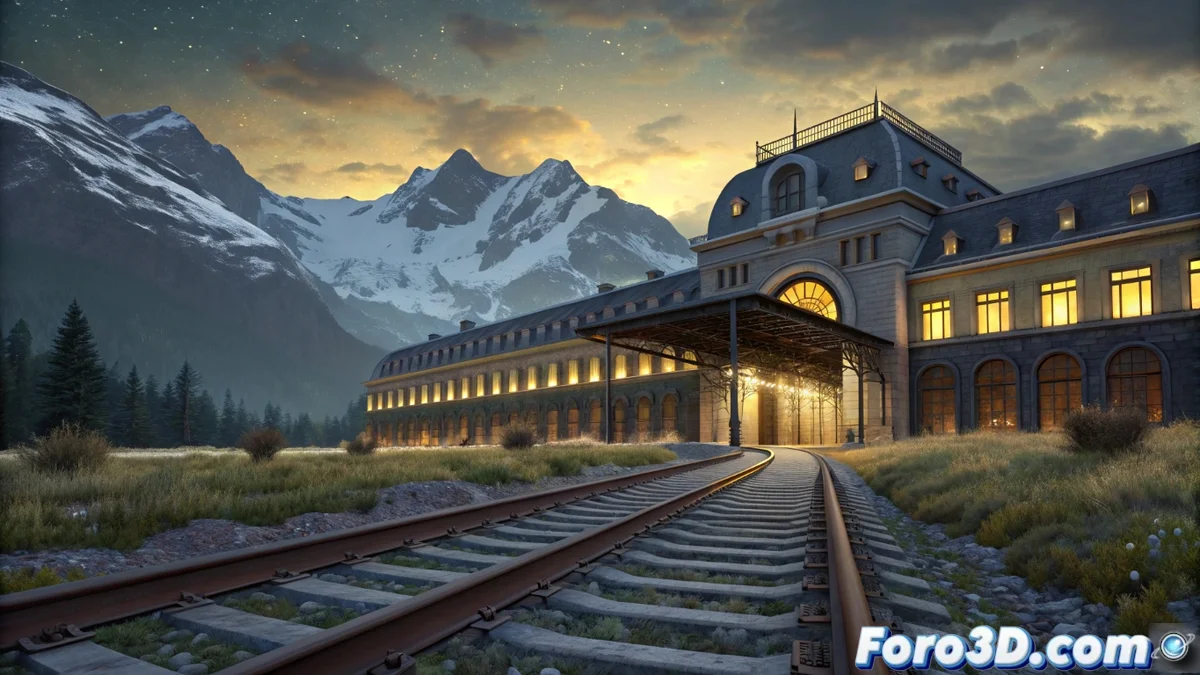
The International Station of Canfranc: an unfinished railway dream
Nestled in the Oscense Pyrenees, the Canfranc International Station stands as a stone colossus whose history is a fascinating tale of ambition, abandonment, and partial rebirth. Its imposing building, a true jewel of railway architecture, has found a second life as a luxury hotel, but this transformation only accentuates the paradox of its existence: its soul as a great international link remains, literally, half-done. 🚂⛰️
A stranded giant: the disconnection that defines its present
The splendor of its hotel rehabilitation contrasts dramatically with the silent reality of its tracks. The French side railway section has been closed and inoperative since 1970, as a result of an accident that damaged a key bridge. This closure transformed the station, often nicknamed the "Titanic of the Pyrenees", into a monument to disconnection. Despite recurrent political announcements and reopening projects, the active international connection remains the great loose end of this epic.
The current duality of Canfranc:- Real function: It only acts as a terminal for a Spanish regional line, a destination far removed from its epic original conception as a cross-border gateway.
- Symbolic function: It has become a tourist magnet that capitalizes on its nostalgic aura and spectacular architecture, while awaiting an uncertain future.
- Pending function: Its foundational purpose, to be a communication hub between Spain and France, remains in a state of technical and bureaucratic hibernation.
"The Canfranc station is an iron and stone dream that still awaits its awakening."
Between memory and utility: the challenges of an uncertain future
Efforts to reopen the international line are progressing with proverbial slowness, facing a complex tangle of technical challenges, million-dollar investments, and administrative procedures between two countries. This situation generates a fascinating duality: the building is both a success of heritage rehabilitation and a physical reminder of a colossal infrastructure awaiting completion.
Factors complicating the reopening:- Investment and cost: The modernization of tunnels, tracks, and safety systems in mountainous terrain requires a colossal investment.
- Binational coordination: Any project must overcome the bureaucracy and interests of two different railway administrations.
- Dubious profitability: There are debates about the real economic viability of a line that competes with other more direct corridors.
Conclusion: a symbol of projects suspended in time
In short, the history of Canfranc is a powerful symbol of how the most grandiose projects can remain suspended in time, trapped between a glorious past and a future always promised. Its architectural rehabilitation is an undeniable achievement, but the full realization of its function as a connector remains the pending subject. So, for now, you can stay in a railway palace full of history, but to cross to France by train from its platforms, the wait, indeed, could be as long as the station's own history. 📖⏳