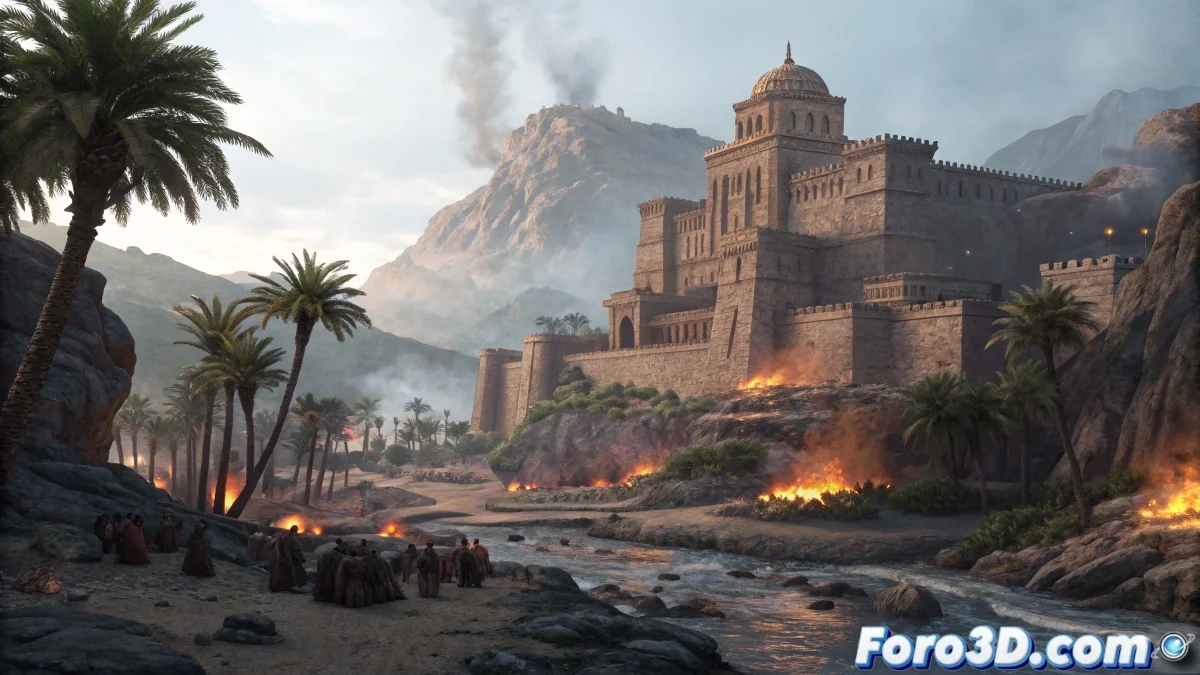
When History Needs 15 Versions of Reality
For the series Time Bandits (2024), DNEG didn't create simple sets - they built a tangible multiverse spanning 15 historical eras and fantastical realms, each with its own physics, light, and atmosphere. From primordial glaciers to the bustle of 1920s New York, the studio proved that time jumps can be visually impeccable. ⏳🌎
"Each world needed to breathe on its own, even if it only appeared for 3 minutes" - DNEG Supervisor
Technology That Defies Time
The revolutionary workflow combined:
- StageCraft with LED volumes:
- 6,000 sq ft of high-resolution LED screens
- Real-time rendering with Unreal Engine
- Scene changes in minutes during filming
- Complete environments in Clarisse:
- 3D modeling of historical locations
- Texturing with archaeological references
- Lighting based on real astronomical data
Colossal Infrastructure
To handle this unprecedented project:
- Technical resources:
- 14,000 dedicated render cores
- 8 petabytes of network storage
- 400 artists working across 3 continents
- Custom software:
- Temporal tracking tools for continuity
- Multiverse asset management system
- Specialized plugins for era transitions
The Fortress of Darkness: A Character in Itself
This set required:
- Impossible architecture:
- 787 individual structures modeled
- Custom physics for floating lava
- Spatial distortion effects
- Interactive atmosphere:
- Fog simulation with 12 density layers
- Ash particles responding to movement
- Lighting that alters depth perception
Production Timeline
- Development: 18 months of technical pre-production
- Filming: 9 months with active LED volumes
- Post-production:
- 4,200 hours of Houdini simulations
- Continuous rendering for 6 months
- Final integration in Nuke
Recognitions and Legacy
- Awards:
- Innovation Award at SIGGRAPH 2024
- Emmy nomination for Visual Effects
- Academic impact:
- Case study at USC School of Cinematic Arts
- Masterclass at FMX 2025
- Technical legacy:
- Techniques applied in 5 subsequent productions
- Advances in real-time rendering for TV
- New standards for virtual production
Historical Reconstruction with Fantastical Precision
For the historical worlds:
- Ice Age:
- Snow simulation with realistic accumulation
- Scientifically accurate visible breath effects
- Ice textures with geological layers
- Maya City:
- 87,000 procedurally generated plants
- Digital hieroglyphs based on real codices
- Limestone moisture simulation
- 1920s New York:
- 2,800 buildings modeled from historical photos
- Period vehicles with realistic mechanics
- Digital crowds with period-accurate clothing
Key Technical Innovations
DNEG developed:
- Era transition system with:
- Geometry morphing
- Material transformation
- Temporal distortion effects
- Pipeline for:
- Fast asset exchange between teams
- Distributed rendering across 3 continents
- Version control for parallel worlds
The Art of the Invisible
Details that go unnoticed but are vital:
- Subtle changes in image grain according to era
- Depth of field variations by historical period
- Lens effects specific to each timeline
- Procedurally generated ambient sound
As the director said: "We wanted each time jump to feel like changing planets, not sets". And DNEG achieved it - creating not sets, but alternate realities that feel lived-in before rendered. Because in Time Bandits, the best effects are the ones that make you forget you're watching effects... until a river of lava decides to float against the laws of physics, reminding you that the magic of cinema is still alive. 🎥✨