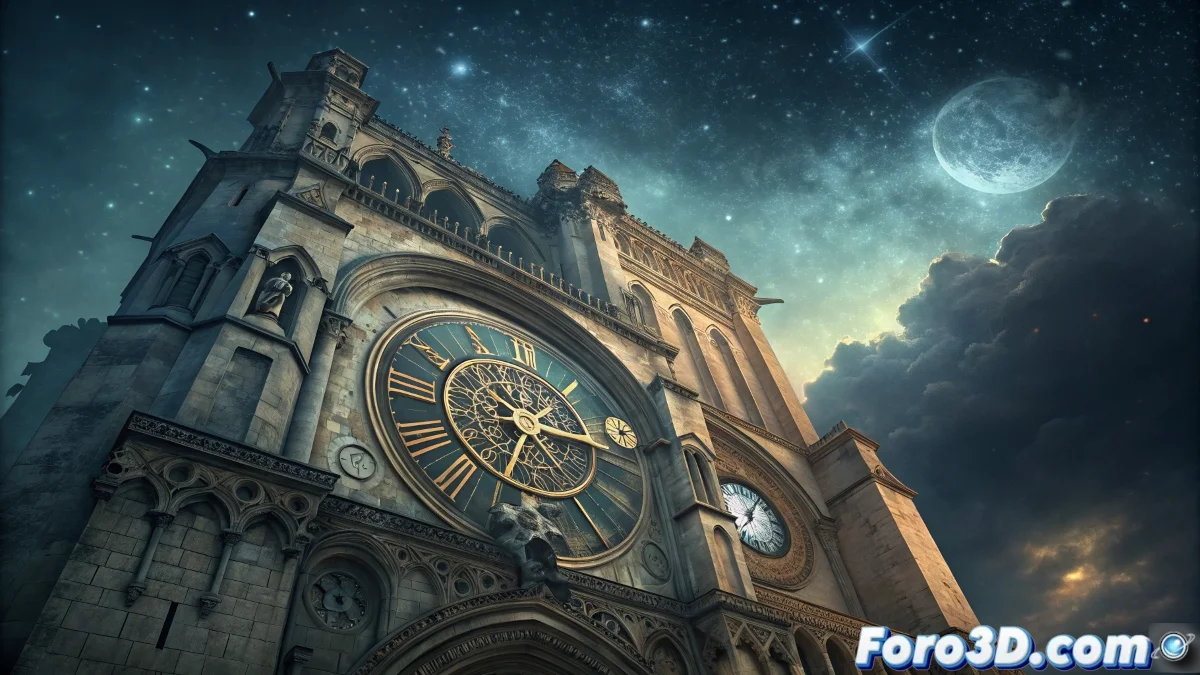
When Time Loses Its Sense: The Clock That Marks the Impossible
Within the centuries-old walls of Cuenca Cathedral hides one of the city's most fascinating mysteries: a clock that, according to witnesses, marks hours that do not exist in any human calendar. The legend speaks of hands that stop at thirteen o'clock, temporal intervals that defy all logic, and mechanisms that seem to obey unknown physical laws. ⏰ For any 3D artist, this enigma represents the perfect challenge to explore the boundaries between the real and the supernatural in Blender, creating not just an animation, but an entire narrative experience that captures the essence of this inexplicable phenomenon.
A Story That Spans Centuries
The first records of this anomalous clock date back to the 17th century, when the original mechanism was installed in the cathedral tower. Chroniclers of the time already documented strange behaviors: unexplained advances, inexplicable delays, and, most disturbingly, stops in positions that did not correspond to any logical hour. 🔍 Over time, the people of Cuenca began to associate these anomalies with omens and divine warnings, weaving a web of superstitions around the device that endures to this day. Each generation has added its own chapter to this legend, proving that some stories grow stronger with the passage of time.
Key Elements of the Legend:- Hands pointing to thirteen o'clock and other impossible positions
- Erratic behaviors documented over centuries
- Association with historical events and omens
- Multiple failed attempts at repair and explanation
Recreation in Blender: Bringing the Mystery to Digital Life
Recreating this phenomenon in Blender requires an approach that combines technical precision with narrative creativity. It's not just about animating a clock, but about conveying that sense of unease described by those who have witnessed the phenomenon. 🎬 The key is to treat the mechanism not as an inanimate object, but almost as a character with a will of its own, deciding when to obey the laws of time and when to rebel against them. Every element, from the smallest gear to the texture of the centuries-old stone, contributes to building this illusion of altered reality.
Practical Guide: From Basic Modeling to Temporal Magic
The process begins with modeling the tower and the clock, where attention to the Gothic architectural style is crucial for historical authenticity. Creating the hands requires special care, as they will be the protagonists of the entire supernatural animation. 🏰 Applying aged materials and wear textures is not just visual embellishment; it is essential to communicate the passage of centuries and the aura of mystery surrounding the mechanism. Every crack in the stone and every trace of oxidation on the metal tells part of the story.
Essential Workflow in Blender:- Modeling the tower with precise architectural references
- Creating the clock mechanism and its components
- Setting up aged materials with PBR textures
- Preparing the animation system for impossible movements
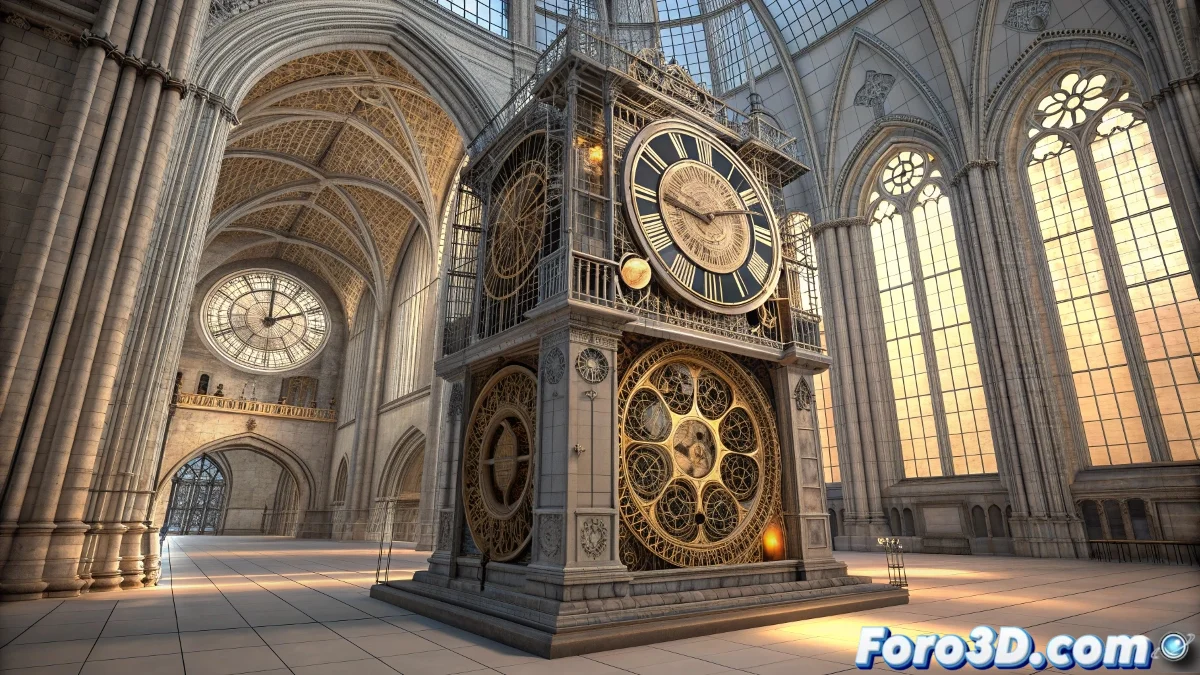
Animating the Impossible: When the Hands Come Alive on Their Own
The most challenging and fascinating part of the project is animating the hands moving to impossible temporal positions. Blender offers multiple tools to achieve this effect, from traditional keyframes to noise modifiers that create that unsettling tremor described by witnesses. 🔧 Curve interpolation must be set up to create irregular and unnatural movements, deliberately breaking the smoothness that characterizes functional clocks. The goal is for the viewer to feel they are witnessing something beyond a simple mechanical failure.
Lighting and Atmosphere: Building the Visual Mystery
Lighting is perhaps the most important element for conveying the emotional weight of this legend. Nighttime lighting with dim light sources creates the atmosphere of mystery and anticipation that the story requires. 🌙 The strategic use of volumetrics adds density to the air, as if time itself were becoming tangible around the clock. Shadows must be deep but with visible details, maintaining that balance between the revealed and the hidden that so fuels supernatural intrigue.
Advanced Techniques for the Supernatural Effect:- Keyframe setup in rotation for impossible positions
- Use of Noise Modifier for spasmodic and erratic movements
- Volumetric lighting for dense and mysterious atmosphere
- Depth of Field to direct attention to the hands
Render and Post-Production: The Final Touch of Mystery
The render phase must be configured to maximize realism while maintaining the supernatural charge that defines the project. Cycles offers the necessary shadow and lighting quality to achieve the required level of realism. 🎭 Post-processing can add subtle effects like vignetting, selective contrast adjustments, and perhaps even slight visual distortions that reinforce the sense of altered reality. Every technical decision must serve the main narrative: we are showing not a clock, but a phenomenon that challenges our understanding of time.
Recreating legends in 3D allows us to explore the mystery from the safety of the digital realm, but without ever losing respect for the stories that have survived the passage of time
The Mystery Continues, Now in Code and Pixels
While the real clock of Cuenca Cathedral continues to defy explanations, its recreation in Blender offers us a unique opportunity to interact with the legend from a creative perspective. This guide not only teaches specific modeling and animation techniques, but invites reflection on how 3D software can become a bridge between the tangible and the inexplicable. ⏳ After all, what better way to honor a centuries-old mystery than by recreating it with such detail that we can almost hear the tick-tock of those rebellious hands. And who knows, perhaps after animating thirteen o'clock, we'll understand why some clocks prefer to mark their own temporal rhythm. 😉