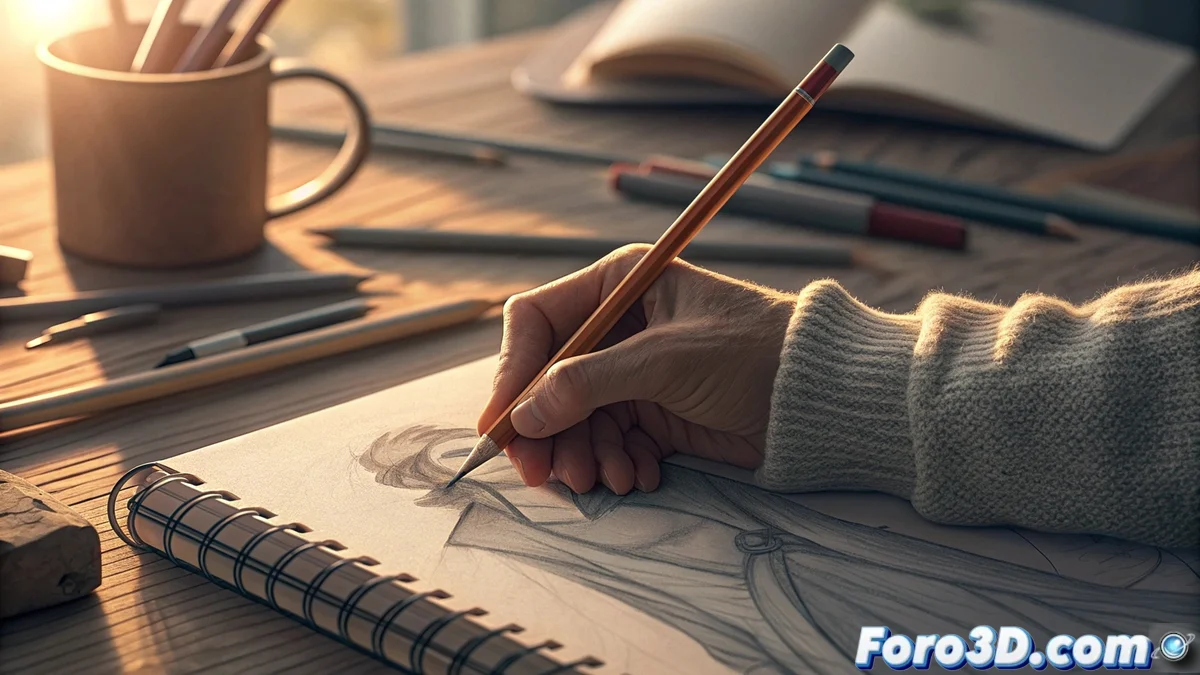
The Importance of a Consistent Drawing Routine for Artists
Developing solid artistic skills requires establishing a regular practice routine that strengthens the essential connection between what we observe and how we execute it manually. Starting with short but consistent sessions allows our brain to gradually assimilate the fundamental principles of form, proportion, and shading without overwhelming our concentration capacity 🎨.
Designing Your Personalized Practice Plan
An effective routine must adapt to your time availability and specific goals, always prioritizing quality over quantity. If you opt for daily practice, dedicating 15 to 30 minutes to focused exercises like gesture drawing, anatomical study, or representation of everyday objects generates significant progress. For those who prefer a weekly pace, longer sessions of one to two hours allow deepening complex techniques like advanced perspective or chiaroscuro handling.
Key Elements for a Balanced Routine:- Thematic variety to avoid monotony and challenge different abilities
- Rotation between materials like pencil, charcoal, and digital tools
- Constant commitment even when progress seems minimal
The secret of great artists was not avoiding clumsy lines, but persisting until the eraser stopped winning the battle against perseverance.
Progressive Transformation of Your Skills
Visual memory is actively exercised by mentally reproducing objects before physically drawing them, while confidence in the stroke grows through familiarization with various tools and surfaces. This methodical approach transforms initial insecurity into natural fluency, making each line reflect greater technical precision and expressive weight over time ✏️.
Evolutionary Benefits of Sustained Practice:- Substantial improvement in manual dexterity and eye-hand coordination
- Development of an analytical mindset to break down complex scenes
- Sharpening in identifying lights, shadows, and volumes
The Journey Toward Artistic Mastery
Consistent practice not only perfects your technical skills but also cultivates an analytical vision of the environment around you. Over time, you will begin to visually decompose complex scenes into basic shapes, identifying luminous nuances and shadows with renewed perceptual acuity. This evolution translates into more dynamic and coherent creations, where each line acquires conscious intentionality and shading conveys volume convincingly 🖼️.
The confidence gained through discipline will propel you to experiment with personal styles, overcoming the fear of mistakes and enjoying the creative process as a space for continuous exploration. Patience and consistency become natural allies, transforming each practice session into a significant step toward artistic mastery, remembering that all great masters began with imperfect strokes that they refined through systematic dedication 💫.