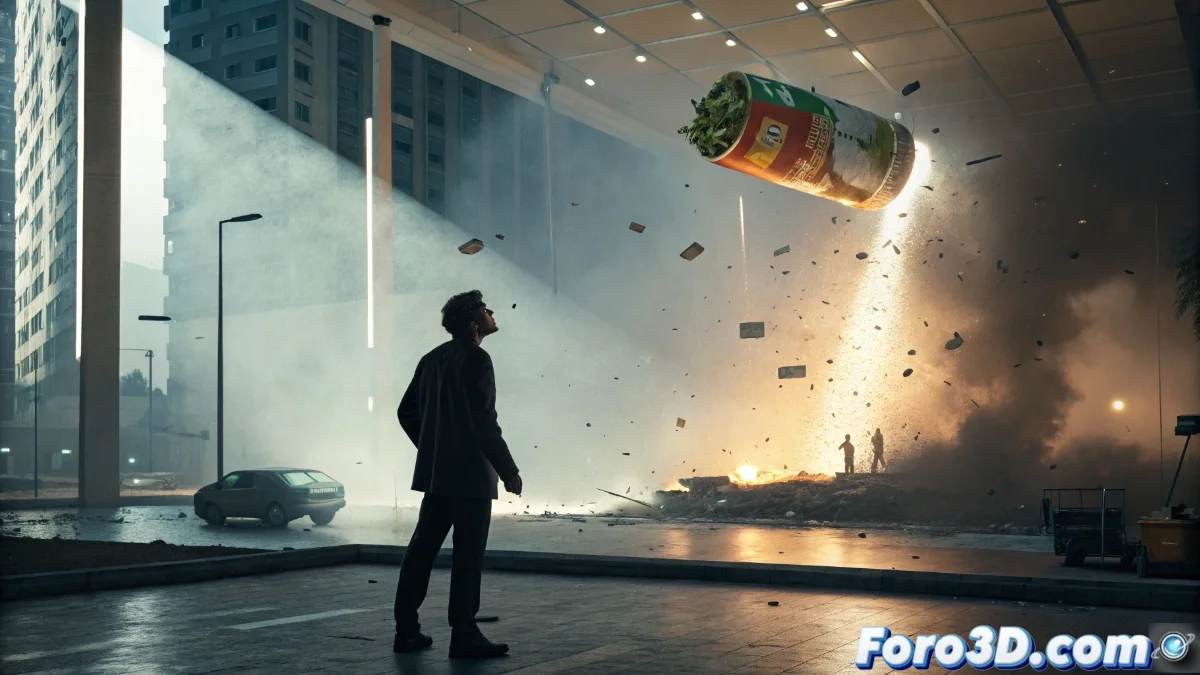
The Impact of Visual Clutter on Graphic Design Effectiveness
When the components of a graphic piece appear disproportionate and placed without organizational criteria, the receiver immediately experiences perceptual disorientation. The view wanders erratically among multiple elements vying for attention simultaneously, making it impossible to identify a defined focal point. This lack of hierarchical structure produces cognitive discomfort and significantly diminishes the communicative capacity of the message, as our mind instinctively seeks harmonic configurations to assimilate information optimally. 🎯
Fundamentals of Balanced Visual Composition
Professional design systematically applies concepts such as coherent alignment, deliberate contrast, and grouping by proximity to trace intuitive visual paths. Each component must be arranged according to its communicative relevance, explicitly defining the visual reading order. The golden ratio and the rule of thirds constitute established methodologies that facilitate balanced spatial distribution, while global visual balance is calculated by weighting the dimensions, chromaticism, and complexity of each component.
Essential Compositional Principles:- Systematic alignment that generates structural coherence
- Chromatic and dimensional contrast to establish hierarchies
- Grouping by functional and semantic proximity
Visual harmony is not an accident, but the result of consciously applying perceptual organization principles
Repercussions of Compositional Disorganization
An unbalanced arrangement not only provokes aesthetic rejection but also severely compromises communicative functionality. Viewers abandon more quickly those compositions where they must exert excessive interpretive effort to locate relevant information, and the main message frequently gets diluted among discordant components. The resulting perceptual tension activates psychological avoidance mechanisms, drastically reducing content retention and the probability of desired conversion or action.
Critical Consequences of Visual Chaos:- Premature abandonment due to perceptual fatigue
- Loss of the central message among competing elements
- Drastic decrease in conversion and recall rates
Final Reflection on Visual Planning
It is evident that certain compositions seem to have been conceived through random methods, as if the designer closed their eyes and distributed elements haphazardly, trusting that they would organize automatically through magical effects. Reality demonstrates that only through the conscious application of fundamental compositional principles and a deep understanding of perception psychology can we create effective visual experiences that communicate clearly and generate lasting engagement. ✨