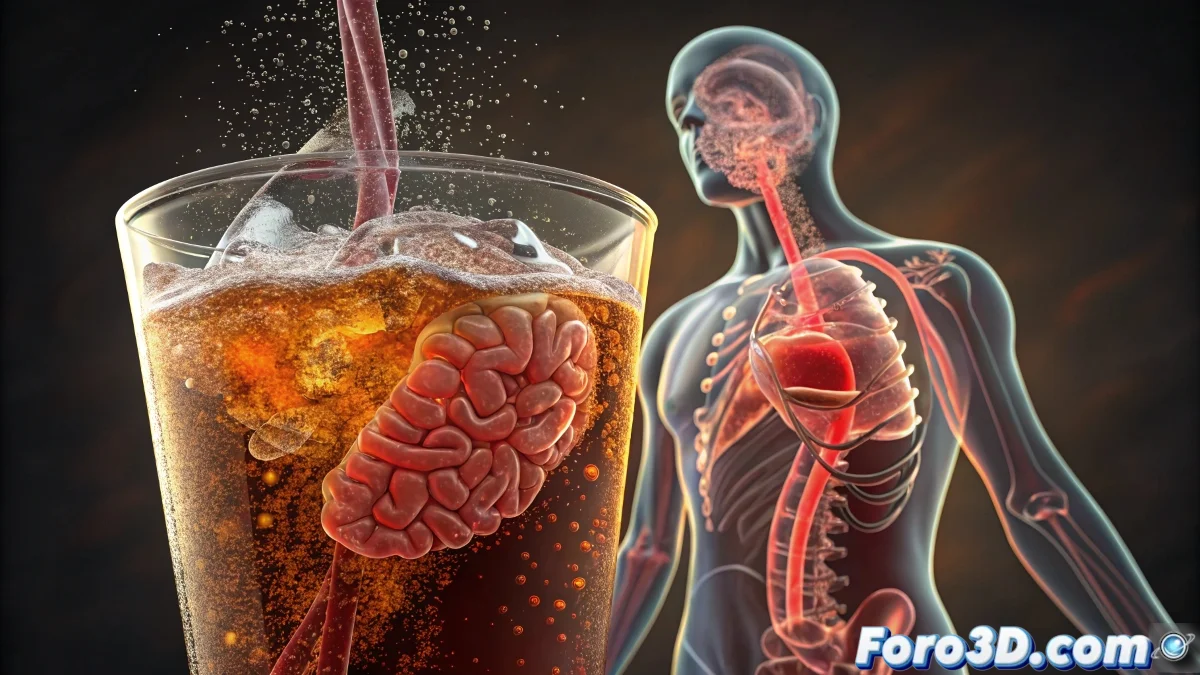
The Impact of Sugary Drinks on Health and Their Visual Representation with Krita
The consumption of sugary drinks has become a daily habit for millions of people, but behind their sweet taste lies a worrying reality for public health. Sodas, processed juices, energy drinks, and sweetened teas contain exorbitant amounts of added sugars that negatively impact our bodies. Understanding these effects is crucial for making informed decisions about our diet. In parallel, as visual creators, we have the opportunity to use tools like Krita to represent these concepts in a powerful and persuasive way, transforming complex data into images that raise awareness.
The Negative Effects of Liquid Sugar on the Body
Sugary drinks represent one of the most significant sources of empty calories in the modern diet. A single can of soda can contain up to 40 grams of sugar, equivalent to 10 teaspoons. This liquid sugar is particularly harmful because it is absorbed quickly, causing abrupt spikes in blood glucose levels. Regular consumption is directly associated with the development of obesity, type 2 diabetes, cardiovascular diseases, non-alcoholic fatty liver disease, and dental cavities. Furthermore, unlike solid foods, sugary drinks do not generate the same feeling of fullness, leading to excessive calorie consumption without reducing the intake of other foods.
Main Health Consequences:- Weight gain and obesity due to excess calories
- Insulin resistance and type 2 diabetes
- Increased risk of heart disease
- Non-alcoholic fatty liver disease
- Dental cavities and enamel erosion
- Higher risk of gout and high blood pressure
The Physiological Mechanism Behind the Damage
When we consume a sugary drink, the liver becomes overloaded as it has to process large amounts of fructose quickly. This excess is converted into fat, contributing to the development of fatty liver. Simultaneously, the pancreas must release large amounts of insulin to normalize blood glucose levels. Over time, this repetitive cycle can lead to insulin resistance, where the body's cells stop responding properly to this hormone. This metabolic state is the precursor to type 2 diabetes and is linked to chronic inflammation and vascular damage.
Drinking one can of soda per day can increase the risk of type 2 diabetes by 26%.
Planning Our Illustration in Krita
To visually represent these concepts with Krita, we must first plan a composition that effectively communicates the message. A powerful approach is to use visual metaphors that immediately connect with the viewer. We could create an illustration where a soda can transforms into a syringe injecting sugar directly into the bloodstream, or show a heart being surrounded by fat emerging from a bottle. The key is to find an image that visually summarizes the cause-effect relationship between consumption and health consequences.
Visual Concepts to Develop:- Transformation of packaging into negative medical symbols
- Visualization of sugar as a toxic or addictive substance
- Comparisons of sugar quantity per container
- Internalized bodily effects (visceral fat, damaged teeth)
- Contrasts between healthy and unhealthy options
Illustration Techniques in Krita for the Message
Krita offers ideal tools for creating impactful illustrations. We can use textured brushes to give an organic feel to bodily elements, while using adjustment layers to create specific color palettes that evoke different emotions. For representing sugar, pattern brushes can create convincing crystalline textures. The layer mask function will allow us to make smooth transitions between the different elements of the visual metaphor, such as the transformation of a drink into body fat or medical instruments.
Composition and Visual Narrative
The image