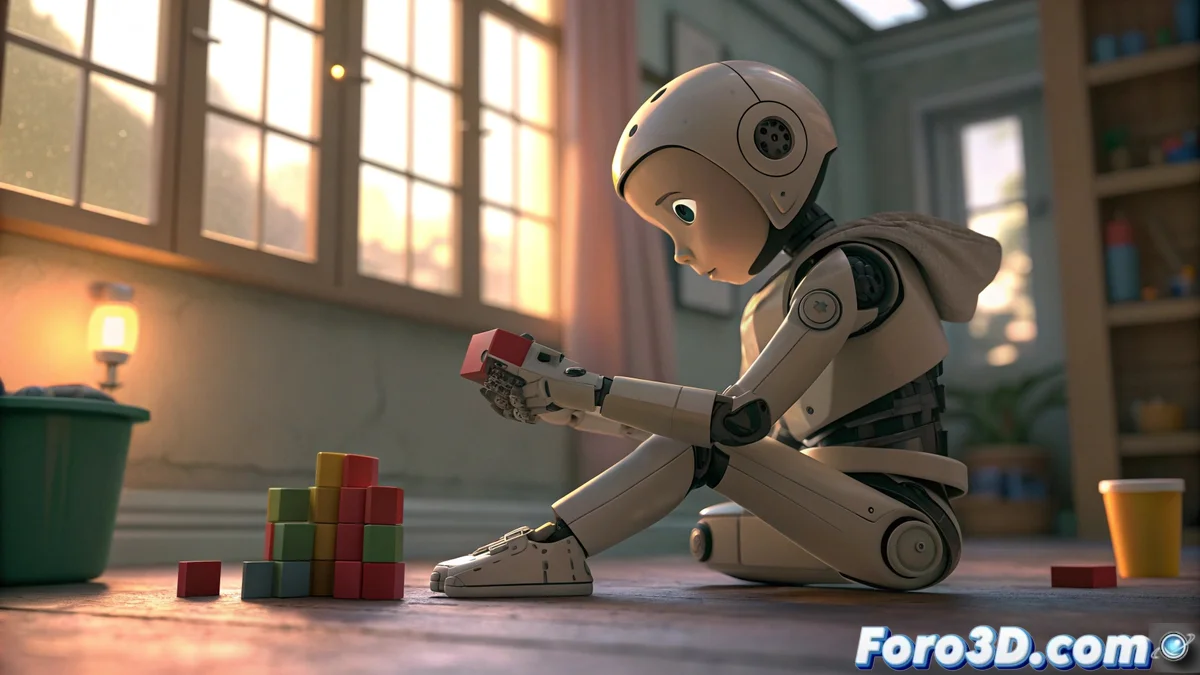
The iCub Robot: An Open Platform for Studying Cognition
In the field of robotics and artificial intelligence, the iCub stands out as a unique project. Developed by the Italian Institute of Technology, this humanoid has the stature and features of a small child, an intentional design to explore the mysteries of the human mind. 🤖
A Robotic Child to Decipher Learning
Its main objective is not to perform household tasks, but to act as a living testbed. Researchers use it worldwide to analyze how cognitive skills are formed, from coordinating movements to understanding social interactions. Its architecture replicates the natural discovery process experienced by an infant.
Fundamental Features of the Project:- Open Platform: Any laboratory can access its blueprints and software, fostering a global scientific community that shares findings.
- Focus on Cognition: Priority is given to understanding how intelligence and perception emerge, rather than mere operational efficiency.
- Childlike Morphology: Its size and proportions are key to posing questions about early development.
The open-source philosophy accelerates progress in areas such as seeing with cameras, controlling movements, and processing language, allowing direct comparison of results.
Senses and Movements that Emulate the Human
To interact with the environment in a believable way, the iCub is equipped with a suite of advanced sensors. Stereo cameras grant it vision, microphones capture sound, and artificial skin with tactile sensors allows it to perceive contact. Its joints offer a wide range of motion, essential for grasping and manipulating objects like a person would. 👁️✋
Components that Enable an Immersive Experience:- Visual and Auditory Perception: Electronic eyes and ears that capture environmental stimuli.
- Sensory Skin: Distributed across its surface to detect touch and pressure.
- Articulated Actuators: Motors that allow fluid and precise movements in arms, legs, and torso.
A Robotic Mirror for Our Own Childhood
Although its fixed gaze and gestures may seem mechanical, this almost childlike quality is precisely its greatest value. By observing how the iCub "learns" to see, touch, and listen, scientists gain unique insights into how humans build our understanding of the world from the early years. Its existence challenges and enriches our view of cognitive development. 🧠