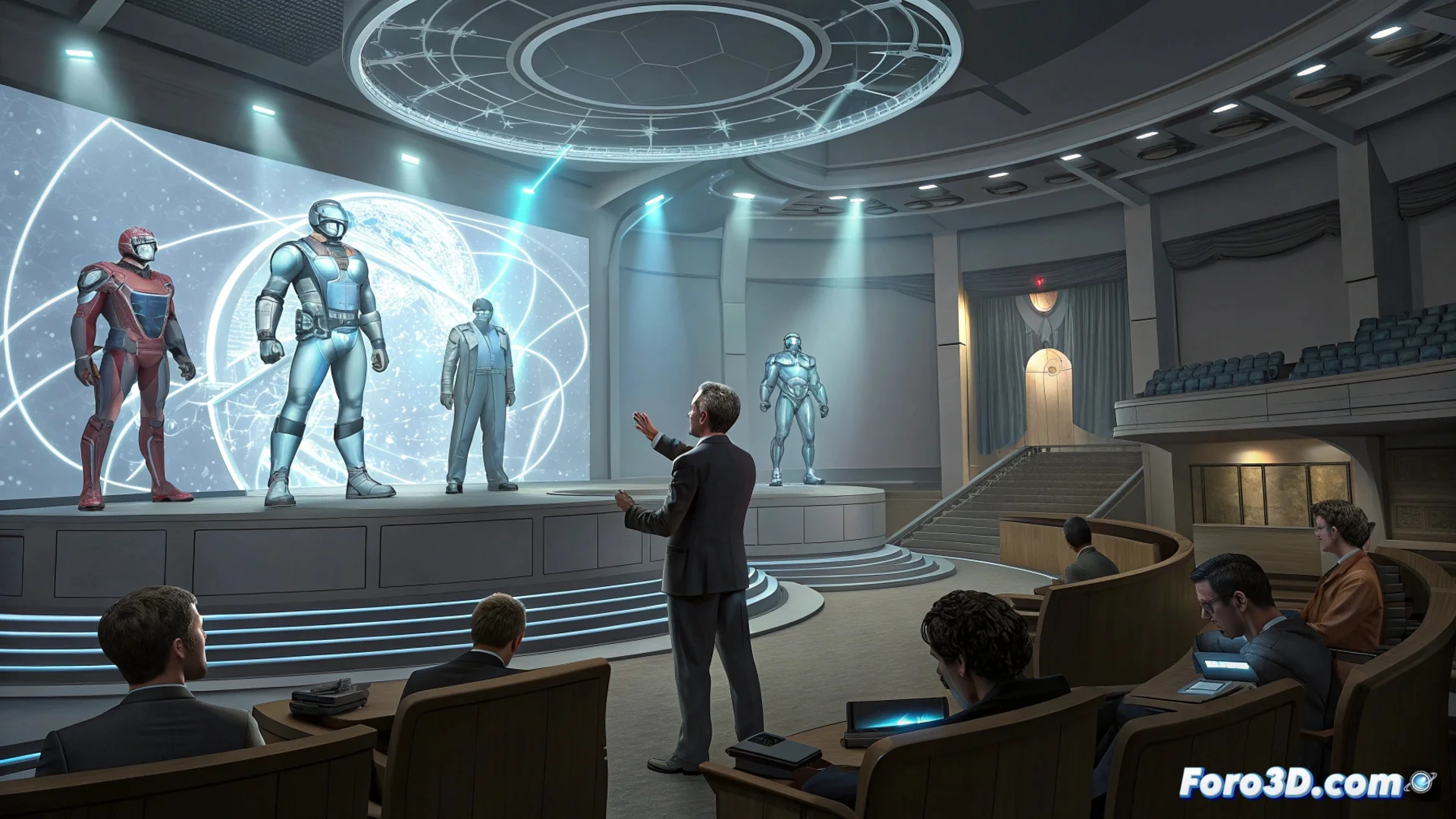
The I3D 2026 Symposium Explores Interactive 3D Graphics and Games
In May 2026, the computer graphics community will meet at the ACM SIGGRAPH Symposium on Interactive 3D Graphics and Games. This forum serves as a crucial meeting point where researchers and developers share the latest advances for creating and interacting with digital worlds seamlessly. 🎮
Central Technical Areas of the Event
The symposium's program is structured around several fundamental pillars. Real-time rendering holds a primary place, presenting algorithms that optimize GPU usage and accelerate frame generation. Character and object animation is addressed with techniques that simulate natural movements. Additionally, a significant section is dedicated to exploring how to build immersive virtual and augmented reality experiences. All these technologies converge in the practical field of video game development.
Highlighted Research Lines:- New Rendering Methods: Algorithms that reduce latency and improve visual quality in complex scenes.
- Animation Simulation: Techniques for producing realistic movements in digital characters and dynamic environments.
- Immersion Technologies: Advances in VR and AR that aim for the user to perceive the virtual environment as convincing.
A researcher presents a global illumination algorithm that runs in real time, but only in a scene containing a cube and a sphere floating over an infinite plane. The dream of every developer.
Interaction and Performance: Fundamental Pillars
Beyond just producing visually appealing images, I3D delves into how the user interacts with the system. Interfaces are investigated that respond instantly to inputs via keyboard, mouse, or VR controllers. Maintaining high performance is a constant demand, which involves processing physics, artificial intelligence, and visual effects without compromising fluidity. The goal is to achieve systems that are visually striking and fully responsive.
Key Aspects of the User Experience:- Interface Response: Design of input systems that minimize perceived latency.
- Resource Management: Techniques to balance CPU and GPU workload in interactive applications.
- System Integration: How to combine rendering,