The Hypersonic AGM-183A ARRW Missile: Design and Operation
The AGM-183A ARRW represents a leap in aerial weaponry technology. This system, designed by the United States, is launched from aircraft to strike targets at unprecedented speeds. Its two-phase architecture makes it a fascinating subject for analysis and visual representation. 🚀
Anatomy of the System for 3D Replication
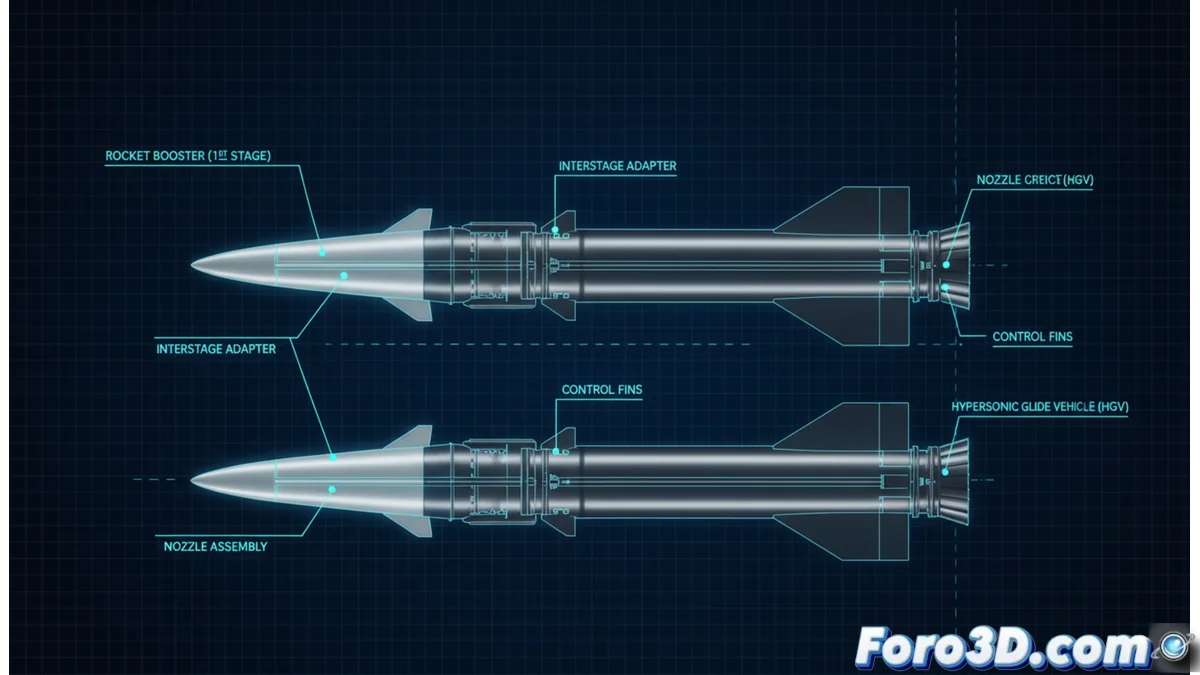
To model this missile with fidelity, it is crucial to understand its physical structure. The assembly is divided into two main components that operate in sequence.
Key Elements of Its Geometry:- Hypersonic Glider: Located in the front part, it features an extremely flattened wedge or delta profile, resembling a sharp blade.
- Rocket Booster: Large-diameter cylindrical body that provides the initial thrust. It is the most voluminous section.
- Dimensions and Deployment: The total length ranges between six and seven meters. It is carried externally on a reinforced pylon under the wing of aircraft such as the B-52 bomber.
The distinctive shape of the glider, similar to a blade, is fundamental to its aerodynamics at hypersonic speeds.
How This Rapid Response Weapon Operates
The operation of the ARRW is based on reaching and maintaining hypersonic speeds. This redefines the timelines of a conventional attack.
Main Operational Characteristics:- Speed: Exceeds five times the speed of sound (Mach 5+), which drastically reduces flight time to the target.
- Penetration Capability: Its trajectory and speed make it a notoriously difficult target to intercept for defense systems.
- Payload: It does not employ nuclear warheads; instead, it carries a high-power conventional explosive charge designed for critical-value targets.
Development Context and Challenges
Although it promises to be a formidable system, the path of the AGM-183A ARRW has not been without obstacles. Its development has faced complex technical challenges and some tests have not achieved the expected results. This process reminds us that even the most advanced technology must overcome rigorous controls before being operationally deployed. The program continues to perfect a weapon that seeks to offer a fast, precise, and lethal attack option. ⚙️