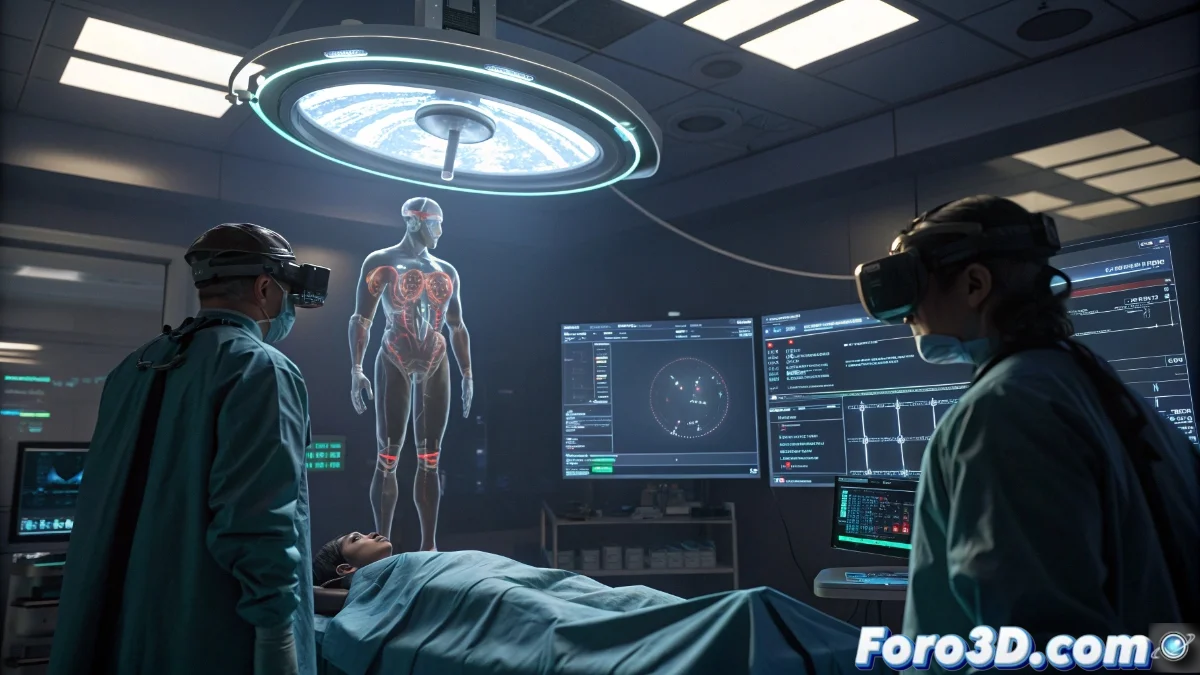
The Holographic Revolution in Operating Rooms with Artificial Intelligence
The surgical field is experiencing a radical transformation through the implementation of three-dimensional holographic technologies combined with artificial intelligence systems. These innovations allow specialists to visualize complex anatomical structures through interactive projections that overlay directly onto the operative field 🩺.
Real-Time Anatomical Visualization
Surgeons now access dynamic three-dimensional representations that fuse preoperative medical images with updated information during the procedure. This continuous visualization capability not only increases the accuracy of procedures but also substantially minimizes risks by offering personalized visual guides for each patient.
Main advantages of surgical holograms:- Improved precision through overlay of 3D models on real anatomy
- Reduction of error margins with adaptive visual guides
- Dynamic anatomical maps that update according to surgical progress
"I prefer having a holographic map that shows me exactly where not to cut" - Experienced Surgeon
Training through Mixed Reality
Mixed reality systems enable unlimited surgical training using holographic replicas generated from CT scans and MRIs of specific patients. Professionals can perform numerous simulations that faithfully reproduce real intervention conditions 🎯.
Benefits of virtual training:- Technical perfection through unlimited repetition
- Reduction of preoperative anxiety through case familiarization
- AI analysis to optimize approaches and predict complications
Intraoperative Data Fusion
During actual interventions, integrated systems combine holographic projections with live information from vital signs monitors, ultrasound devices, and other medical equipment. Artificial intelligence processes multiple data streams to constantly adjust the three-dimensional models, alerting to deviations from the initial plan or unforeseen anatomical changes.
Features of data integration:- Continuous processing of information by AI systems
- Automatic alerts on surgical plan variations
- Informed decision-making without diverting eyes from the operative field
Technological Adaptation in Surgery
Although some traditional surgeons nostalgically recall when their main technological support was a magnifying glass, they now recognize the incalculable value of having holographic maps that indicate critical areas to avoid. This technological evolution represents a significant advancement in surgical safety and efficacy, marking a turning point in modern medicine 💫.