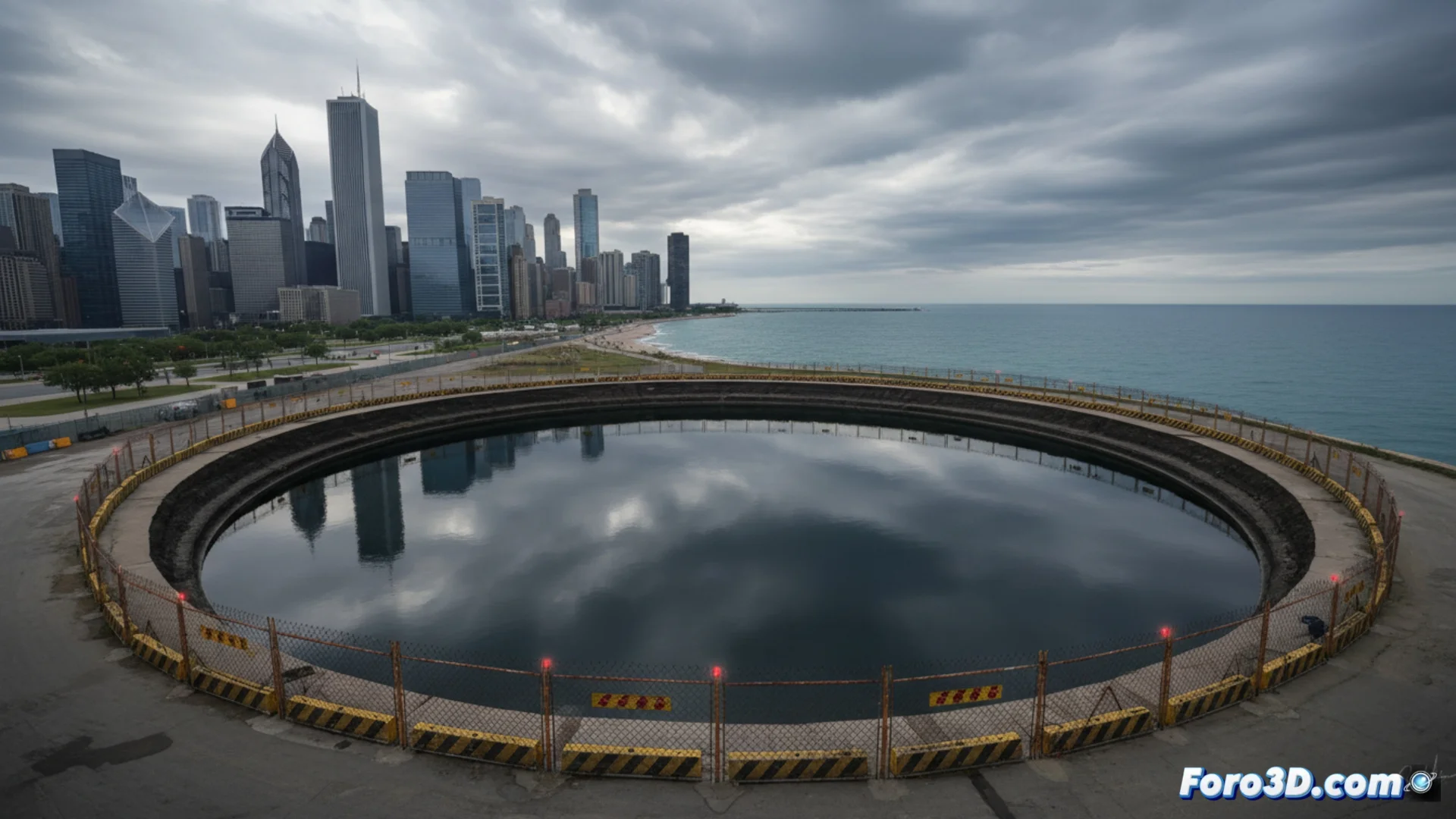
The Chicago Spire Hole: the skyscraper that never rose
On the Chicago lakefront, facing Lake Michigan, a circular void in the ground remains as a silent witness to a truncated architectural ambition. This hole marks the site where the Chicago Spire was supposed to be built, a luxury residential tower that aspired to be the tallest in the United States. Designed by the Spanish architect Santiago Calatrava, its construction began in 2007 but was buried by the global economic crisis the following year. 🏗️
A sculptural design that twisted toward the clouds
Calatrava's vision for this colossus centered on a unique helical form, similar to a giant spiraling column. The plans detailed a slender structure of concrete and steel that twisted progressively as it rose, creating a dynamic and unmistakable profile. The project not only sought to break height records, surpassing 600 meters, but also to become an aesthetic icon for a city famous for its innovative architecture. The apartments would include private terraces to enjoy complete panoramic views.
Key features of the original design:- Helical form: Structure that twists gently, evoking an ascending spiral.
- Record height: Projected to exceed 600 meters in height.
- 360° views: Apartments with terraces for a total panorama of the lake and the city.
The hole earned the ironic nickname of "the only underground skyscraper with a lake view."
From foundation to urban eyesore: the legacy of "The Hole"
After construction stopped, the hole more than 20 meters deep —nicknamed "The Hole" by locals— filled with water and became a constant logistical and safety challenge. The fenced and abandoned lot was the subject of multiple failed plans to revive the project or build something else. Finally, the site hosted part of the new One Chicago Square complex, although the exact location of the excavation was not used for construction. Instead, it was conditioned as a green area and a temporary ice rink, putting an end to more than a decade of uncertainty.
Phases of the site after abandonment:- Abandonment and stagnation: The hole floods, creating a safety problem.
- Revival attempts: Several unsuccessful plans emerge to resume construction.
- Final solution: Part of the lot is used for the new One Chicago Square, and the hole becomes a park.
A closed chapter in Chicago's architectural history
The story of the Chicago Spire summarizes how global economic factors can topple even the most ambitious architectural dreams. What was to be a symbol of modernity and luxury ended up as an urban curiosity and a reminder of the fragility of large real estate developments. Although the hole no longer exists in its original form, its legend persists as an example of a pharaonic project that the 2008 financial crisis prevented from seeing the light. 🏙️