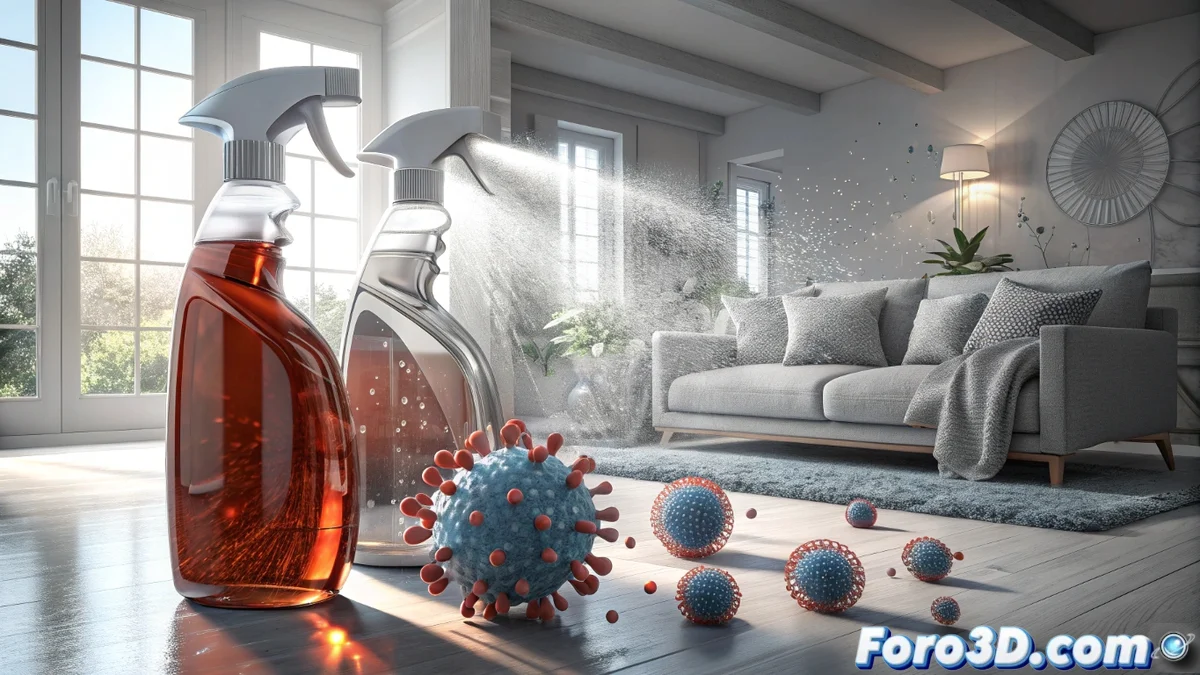
The Hidden Truth About Antibacterial Cleaners
The market is saturated with cleaning products advertised as antibacterial or anti-germ, promising near-total disinfection. This commercial narrative creates the perception that they are indispensable for a safe home, but the reality for common household settings is very different 🧼.
The Myth of Total Disinfection
The communication from these brands focuses on the elimination of 99.9% of germs, a figure that, although technically true in laboratory conditions, does not translate into a tangible benefit in daily cleaning. For most household surfaces, traditional methods with water and soap are just as effective for maintaining hygiene, without the need for aggressive chemical agents.
Problems generated by these products:- They encourage excessive and unnecessary use of potent chemicals in situations where they are not required.
- They offer no significant advantage over conventional cleaning in standard household contexts.
- They generate additional economic expense for supposed protection that is redundant in many cases.
We pay for a false sense of security that could leave bacteria smarter than us.
Health and Environmental Risks
The constant and widespread use of these cleaners carries serious consequences. One of the most concerning is their contribution to the development of bacterial resistance, a phenomenon where microorganisms adapt and become harder to eradicate over time.
Documented negative impacts:- Antimicrobial resistance: Surviving bacteria can develop defense mechanisms, reducing the future efficacy of treatments.
- Environmental contamination: The released chemicals end up in water systems and soil, affecting ecosystems.
- Unnecessary exposure: Users are exposed to compounds that provide no real benefit in their daily cleaning.
Towards Smarter Cleaning
The irony of marketing is that, while they sell us an ultimate shield, we may be weakening our defenses in the long term. Opting for basic cleaning with simple products is not only sufficient for most situations but is also a more responsible practice. The key is to discern between real need and that created by advertising, prioritizing personal and environmental health over the promises of aggressive campaigns 🏡.