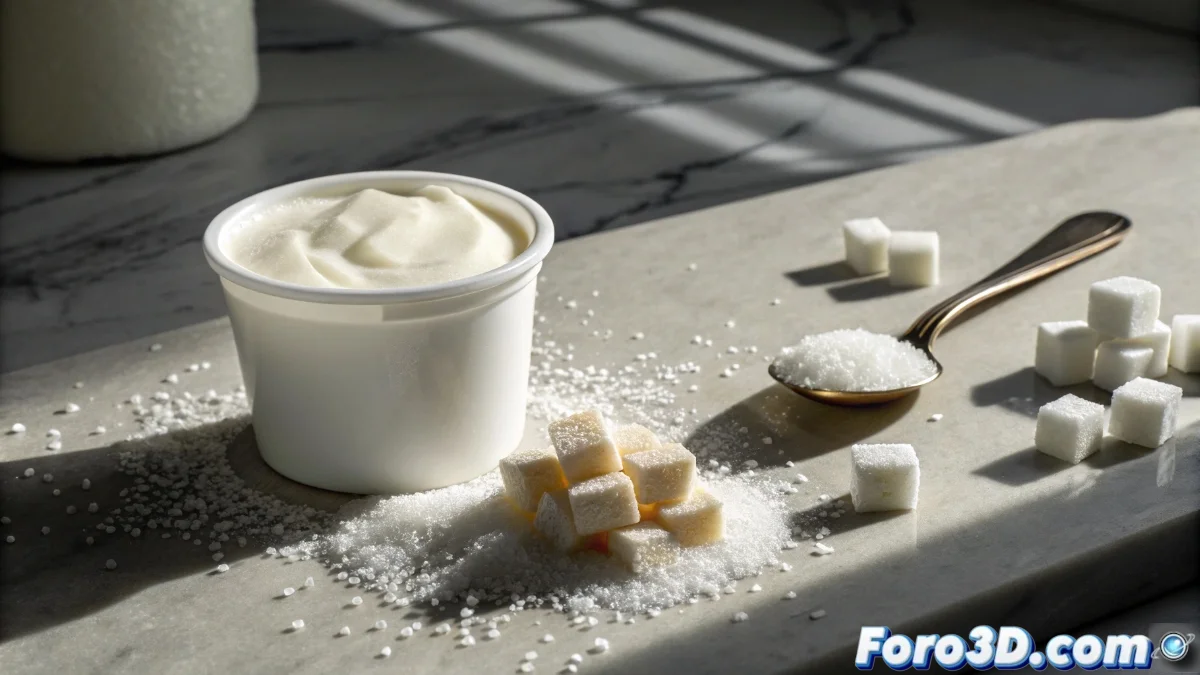
The Hidden Truth Behind 0% Fat Products
When we come across products labeled as 0% fat on supermarket shelves, our mind immediately categorizes them as healthy options. However, this initial perception is often a carefully designed marketing strategy that frequently compromises the true nutritional quality of what we consume 🛒.
The Nutritionally Questionable Trade-off
To compensate for the absence of fat, which naturally provides flavor and texture to foods, companies resort to compensatory ingredients that can be counterproductive. This systematic replacement produces products that maintain similar organoleptic characteristics but with potentially more problematic nutritional compositions than their original versions 🍶.
Commonly Added Components:- Simple sugars and syrups to mask the lack of flavor
- Artificial sweeteners that generate complex metabolic effects
- Salts and glutamates to enhance the lost flavor
The consumer believes they are avoiding a nutritional problem while potentially creating others of equal or greater magnitude.
Strategies to Identify Genuine Healthy Options
The solution lies in developing a critical mindset as consumers, learning to correctly interpret the complete nutritional information and not just the most eye-catching advertising claims. A product that boasts zero fats but contains high concentrations of added sugars can hardly be considered a nutritionally intelligent choice 📊.
Practical Recommendations:- Examine the complete list of ingredients carefully
- Compare nutritional values between similar versions
- Prioritize foods with simple and recognizable compositions
Final Reflection on Conscious Consumption
It is paradoxical how the food industry convinces us to make apparently healthy decisions while substantially altering the composition of products. A true balanced diet begins with informed and conscious consumption, where our nutritional judgment is not in "0% activation" mode when doing the weekly shopping ⚖️.