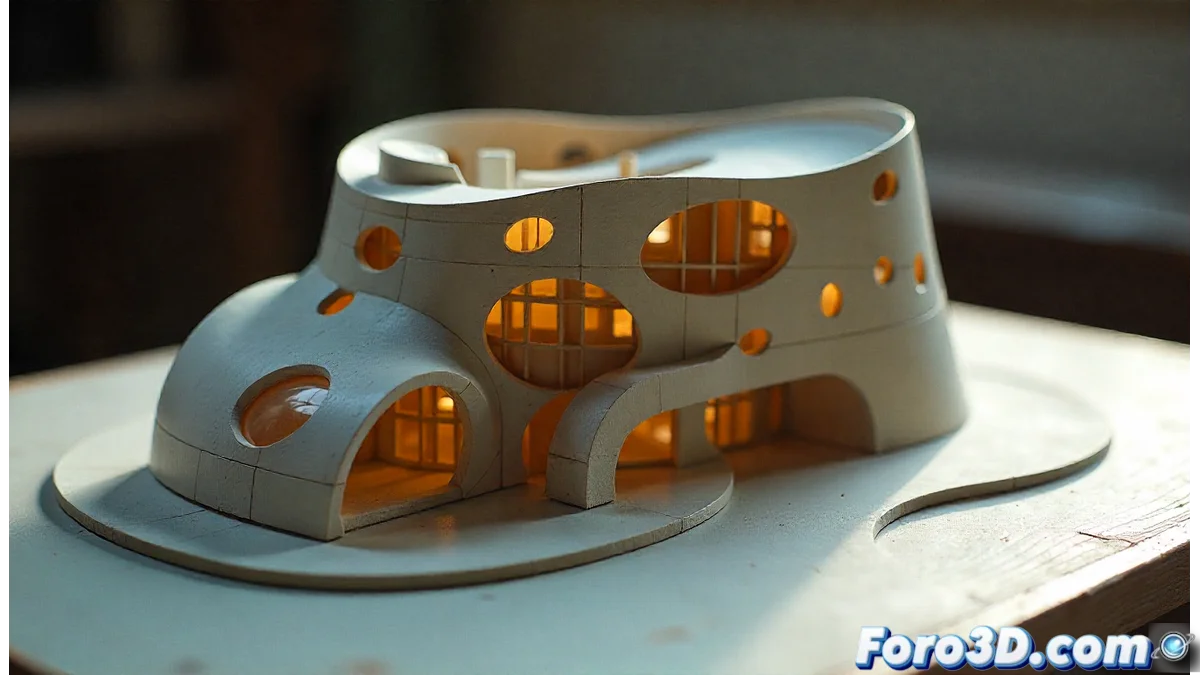
The Guggenheim that Vizcaya Did Not Build: When Nature Stopped Gehry
In the first decade of the 21st century, an ambitious initiative emerged to build a second Guggenheim museum on Spanish soil. The chosen location was the heart of the Urdaibai Biosphere Reserve, in Vizcaya. The commission went to the renowned architect Frank Gehry, who conceived a structure with organic lines and metallic skin that sought to dialogue with the environment. The cultural and economic expectation promised to replicate the successful "Bilbao effect". 🏗️
Social Resistance Organizes
The plan faced firm opposition from the very beginning. Various groups, from ecologists to neighborhood associations and political sectors, raised their voices. Their central argument was clear: a complex of that magnitude would irreversibly degrade a protected natural space. They warned that building there and attracting a large flow of tourists would alter the fragile marsh and estuary ecosystems. The debate moved to the media and public opinion, generating deep social division. 🚫
Key arguments of the opposition:- Ecological impact: The construction and massive influx of people would endanger the biodiversity of the protected area.
- Lack of integration: It was considered that the design, despite its organic inspiration, did not guarantee true harmony with the landscape.
- Political cost: Promoting the project against the opinion of a significant part of the citizenry posed a high risk to the institutions.
The regulations protecting the reserve as an area of special interest became the main legal obstacle.
Environmental Legislation Delivers the Verdict
The legal framework designed to preserve the reserve became the definitive barrier. The promoters could not convincingly demonstrate that the museum could be built without violating the natural values protected by law. The procedures stalled in an administrative labyrinth, and the technical difficulties in adapting Gehry's ambitious design to the strict regulations became insurmountable. The lack of social consensus was the final blow.
Factors that led to the stalemate:- Legal obstacles: The existing legislation for protected areas did not allow exceptions for a project of that magnitude.
- Insufficient studies: The environmental impact reports failed to dispel doubts about the damage to the environment.
- Technical paralysis: Adapting Gehry's complex architecture to comply with all environmental restrictions proved unfeasible.
A Legacy in Renders
Ultimately, the initiative ended up in permanent limbo. It was never resumed, and the museum went down in history as an unfulfilled architectural promise. Today, its only existence is reduced to physical models and digital rendering files, a graphic testament to what could have been. This case demonstrates an outcome where the natural landscape prevailed over titanium and urban ambition, setting a precedent on the limits of development in protected spaces. 🖼️