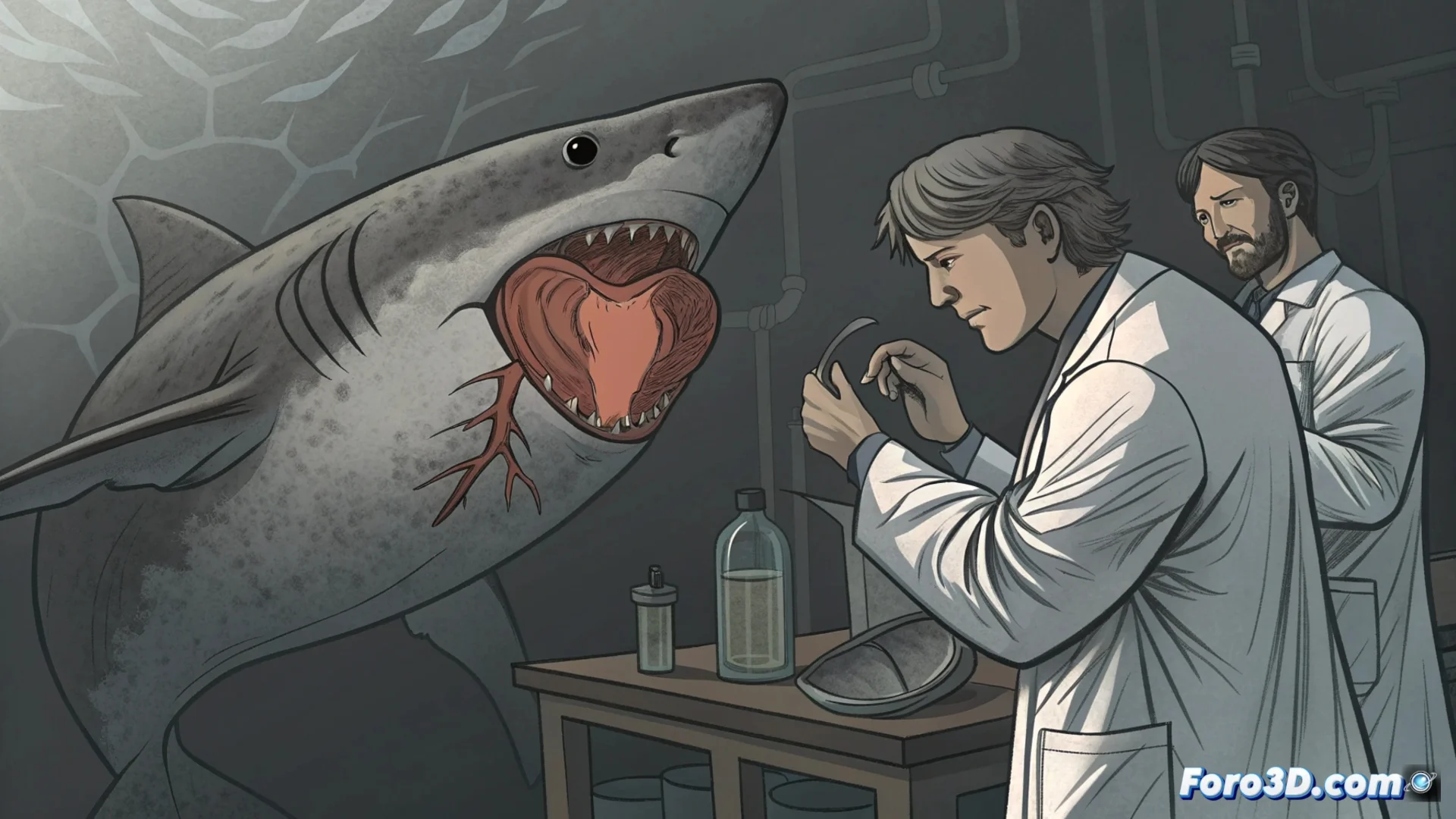
The Greenland Shark's Heart Accumulates Extreme Damage with Age
A recent study focuses on the heart of a deep-sea giant: the Greenland shark. This predator, which can live over four centuries, shows massive wear in its vital organ. Scientists are analyzing how such a long-lived vertebrate manages cellular deterioration. 🦈
Centuries of Marks in a Single Organ
The study found that the cardiac tissue of these sharks harbors enormous accumulations of markers linked to the passage of time. Severe scars and other alterations in muscle structure are observed. These findings are consistent with an animal that holds the longevity record among vertebrates with a backbone.
Key Findings in the Tissue:- Presence of extensive scarring in the myocardium.
- Profound changes in the composition and shape of the cardiac tissue.
- Accumulation of damage that in mammals would signal organ failure.
The paradox is that this advanced cardiac deterioration does not harm the animal's overall health or its ability to live for hundreds of years.
A Revealing Functional Paradox
The research highlights a fascinating contradiction. The heart, despite a condition that would lead to death in any mammal, continues to function effectively for the shark's demands. This indicates that the species has developed exclusive biological mechanisms to tolerate or compensate for the damage accumulated during its exceptionally long life.
Implications of the Discovery:- The heart maintains its function despite structural injuries.
- There are compensation strategies unknown in other species.
- Longevity is not compromised by organ deterioration.
Keys to Unraveling Aging
Scientists emphasize that investigating these resilience mechanisms can offer valuable clues. Understanding why aging markers are not lethal for this shark opens new paths in aging biology and comparative physiology. The goal is not to live like a shark, but to decipher the principles that allow it to maintain its vital functions. This knowledge contrasts with human fragility in the face of accumulated wear. ❄️