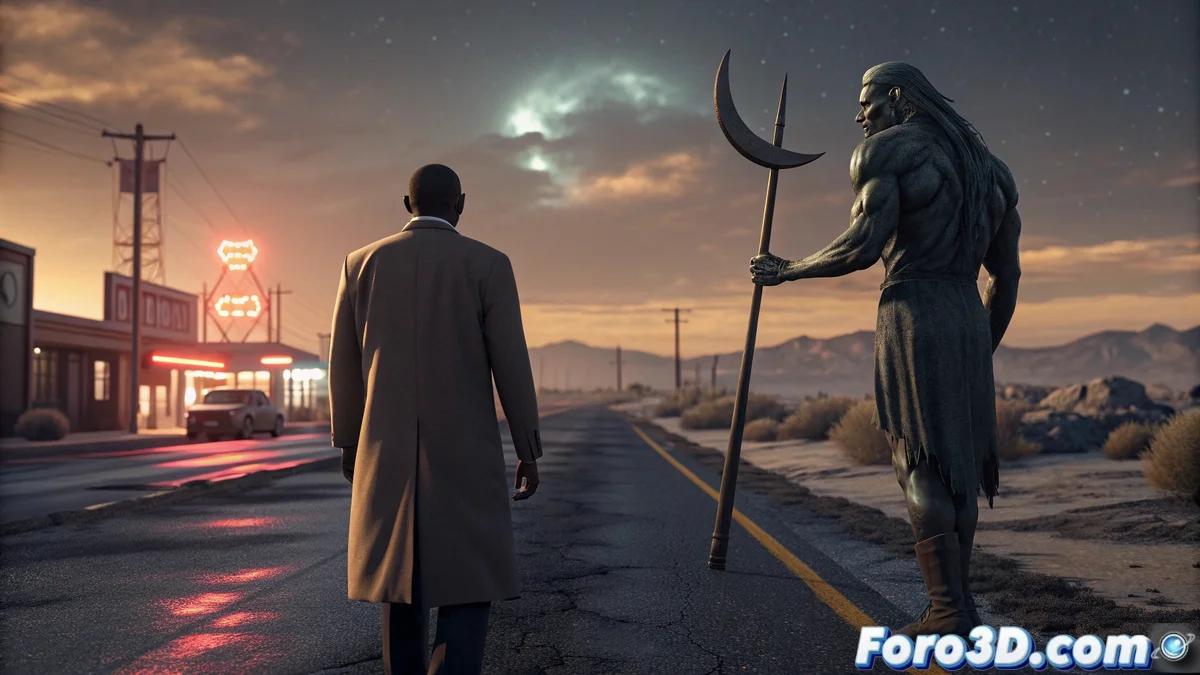
The Graphic Adaptation of American Gods by Gaiman and Russell
Neil Gaiman's celebrated novel American Gods comes to new life in the comic book format through collaboration with the talented P. Craig Russell. This graphic version transports readers to a contemporary United States where ancient divine entities and modern deities battle for relevance in today's society. The narrative centers on Shadow Moon, an ex-convict who becomes the bodyguard of the enigmatic Mr. Wednesday, progressively discovering a hidden universe populated by mythological beings that coexist with humanity. 🎭
Immersion in Folk Horror and Primordial Beings
The comic consistently integrates elements of folk horror that generate a disturbing and unsettling atmosphere. Through the depiction of secret cults and ancient rituals, the work connects with humanity's most primitive aspects. The ancient deities are visualized with designs that fuse the traditional with the contemporary, giving rise to terrifying entities that personify the fears of the modern era. These mythological figures evidence their progressive decay in today's world as they strive to preserve their influence over humanity. 👹
Key Features of Folk Horror:- Oppressive atmosphere generated through secret cults and disturbing rituals
- Visual design that combines traditional elements with contemporary aspects
- Depiction of the decay of ancestral deities in modern society
The old gods struggle to maintain their relevance in a world that no longer worships them as before
Visual and Narrative Transcendence in the Graphic Medium
P. Craig Russell masterfully succeeds in translating the complex mythology created by Gaiman into the language of comics through meticulous and detailed art that captures the dark essence of the original story. The visual sequences intelligently alternate between everyday scenes and supernatural moments, preserving the characteristic tone of magical realism that defines the literary work. The careful selection of color palettes and innovative page composition visually reinforce the central themes of the conflict between tradition and modernity. 🎨
Key Aspects of the Adaptation:- Detailed art that captures the dark essence of the original narrative
- Fluid transitions between everyday scenes and supernatural elements
- Visual composition that emphasizes the tradition versus modernity conflict
Contemporary Reflections on Divinity
In an ironic twist that reflects our time, the work suggests that even the most powerful deities might need to adapt their methods of worship to the digital age. The narrative raises profound questions about how divine entities could maintain their relevance in a society dominated by technology and the internet, where even gods might require modern communication strategies to retain their follower base. This contemporary reflection adds additional layers of meaning to the already rich narrative, inviting readers to reconsider the nature of faith and devotion in today's world. 🌐