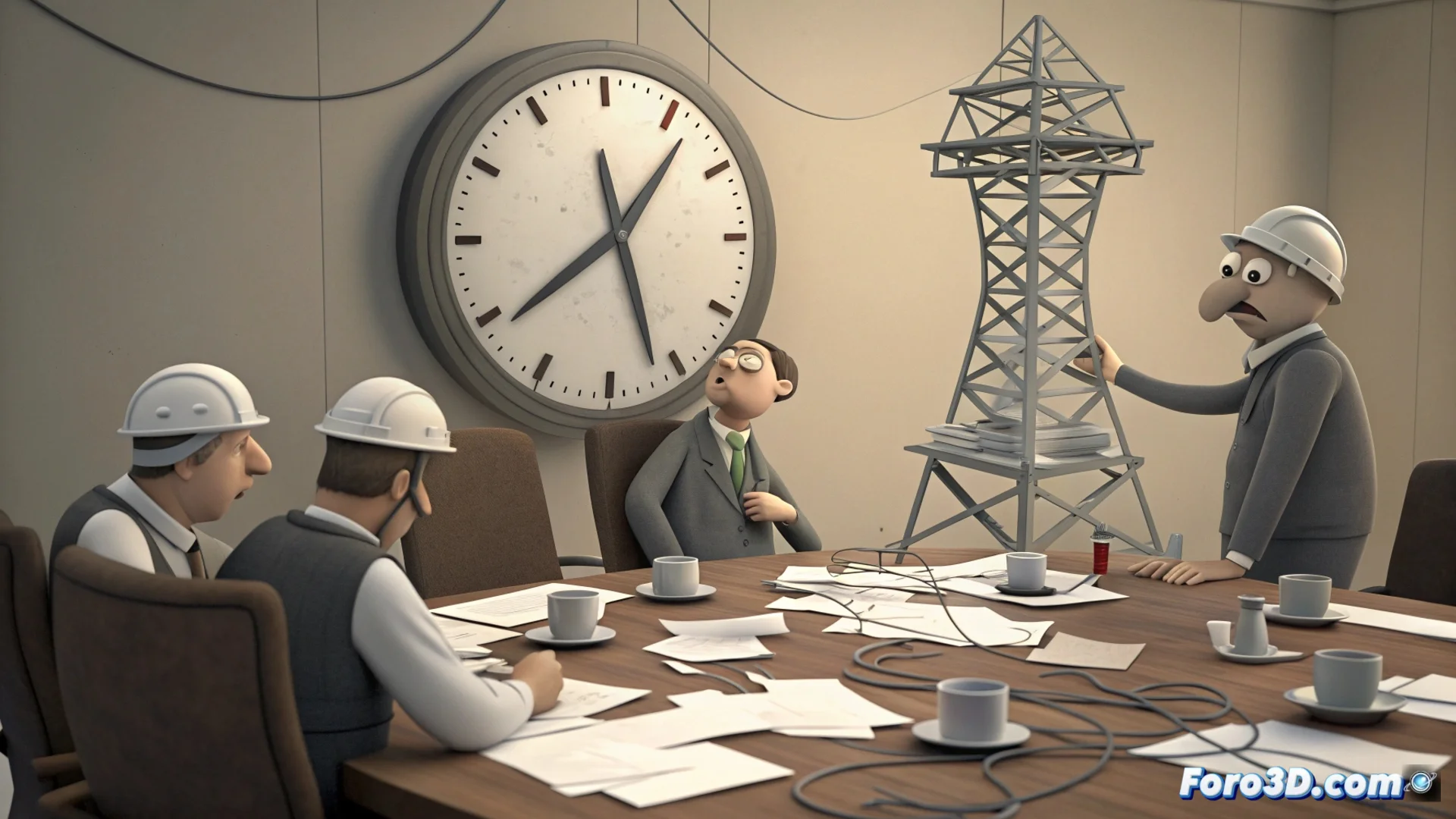
The government does not define the new electricity remuneration eleven days before the deadline
The Ministry for the Ecological Transition has not yet specified the new system that will pay electricity companies. Only eleven days remain before the extension of the current regime expires, generating great uncertainty throughout the energy sector. This delay forces the administration to quickly decide on a key model that will directly influence what companies invest in, costs for users, and the stability of the grid. ⏳
The lack of clarity halts investment projects
Not having a clear regulatory framework can delay or stop essential projects to change the energy model. Companies require regulatory certainty to plan where and how much money to allocate to building new infrastructure, such as renewable parks or improving networks. Without knowing how they will be remunerated, they must evaluate whether their initiatives will be economically viable. This scenario jeopardizes the decarbonization objectives set by the European Union.
Direct consequences of the delay:- Companies postpone decisions on long-term investments in clean energies.
- The financial risk increases for developing new generation and transmission projects.
- The pace to meet European commitments on climate and energy may slow down.
Planning without a defined remuneration framework is like trying to build a house without knowing if the foundations will be concrete or jelly.
The goal: a balance between profitability and cost
The executive is working on a model that aims to ensure a reasonable profitability for companies while controlling what consumers ultimately pay. The current system, based on parameters like the return on invested capital, could be modified. The central debate is how to pay for the assets that guarantee supply when renewable resources are not available, such as when there is no wind or sun. The final resolution will determine who bears the costs and to what extent to keep the electricity system operational.
Key elements of the new model under discussion:- Adjust the formula to calculate the return on capital invested by companies.
- Define how to remunerate the backup capacity needed when renewables are not generating.
- Balance the equation so that the final users' bill does not become more expensive.
A sector on hold
As the deadline approaches, the energy sector operates in limbo, forced to make plans on a regulatory map that the authorities have not finished drawing. Electricity companies need to know the rules urgently to organize their businesses in the coming years. This wait not only affects their planning but has profound implications for the country's ecological transition. 🔌