When Stones Guard Silences No One Wants to Hear
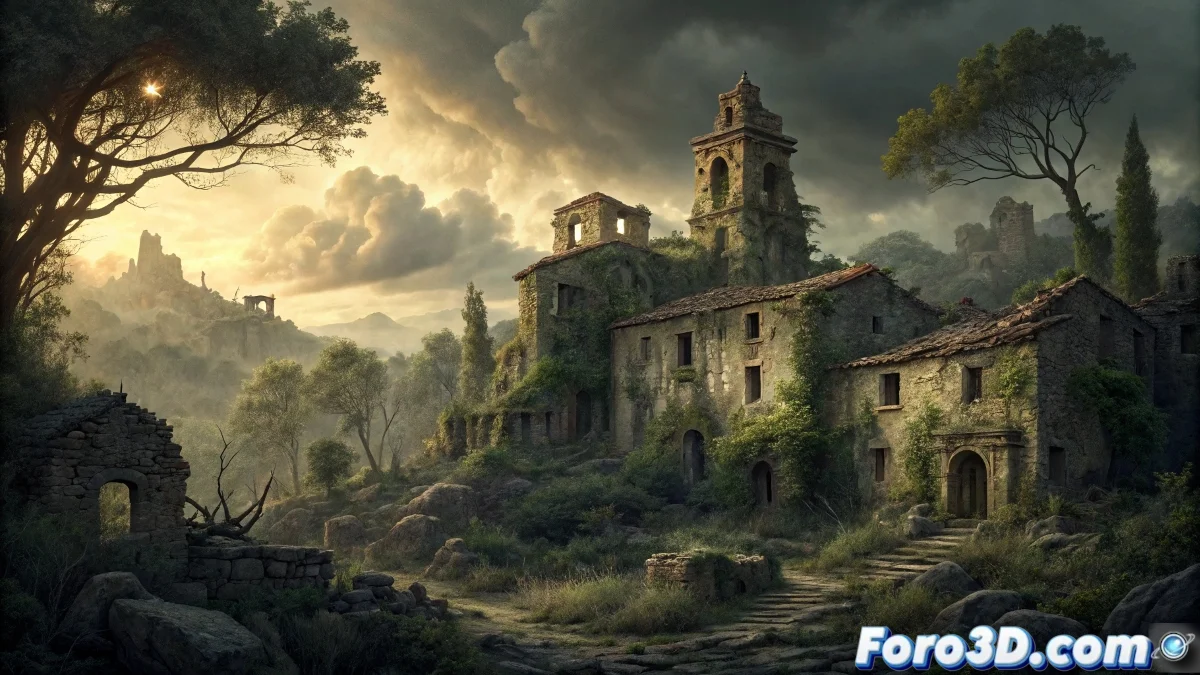
Vadillo, in the province of Cáceres, stands as a silent but eloquent testimony to how wars can reduce prosperous communities to mere architectural shadows. This ghost town, which once housed families, traditions, and daily life, now shows only the skeleton of what it was, with nature meticulously reclaiming every space that humans forcibly abandoned. The ruins speak not only of destruction, but of the abrupt end of a way of life that could never recover.
The history of Vadillo is particularly painful because it represents a progressive abandonment accelerated by successive conflicts that decimated its population and destroyed its fragile rural economy. Where voices and agricultural activities once resonated, now only peeling walls, empty windows staring at no one, and streets leading nowhere remain. The church, once the center of the community, maintains its structure but has lost its purpose, as a perfect metaphor for the town itself.
Elements Defining the Ruin of Vadillo
- Traditional Extremaduran architecture in advanced state of collapse
- Half-destroyed church with still recognizable structural elements
- Houses with collapsed roofs showing the relentless passage of time
- Streets and squares where vegetation has replaced human bustle
Historical Memory Written in Stone
Every building in Vadillo tells part of a story that official books often omit. The shrapnel marks on some facades, the projectile holes in especially thick walls, and the defensive layout of some constructions speak of a town that not only suffered abandonment, but was literally a battlefield. These architectural details constitute a physical record of violence that brutally contrasts with the current peace of the natural surroundings.
Some wounds never heal, they only get covered in moss and oblivion
The most striking thing about Vadillo is how nature has turned tragedy into beauty. Where there was human suffering, holm oaks and rockroses now grow; the ruined houses have become shelters for local wildlife, and the abandoned streets are now natural paths. This transformation does not erase history, but creates a powerful metaphor about the resilience of life against human destruction. The contrast between the violence that emptied the town and the peace that now inhabits it is deeply moving.
Testimonies Remaining in the Ruin
- Door thresholds worn by generations of inhabitants
- Communal ovens evidencing lost communal life
- Boundaries and terraces speaking of abandoned agricultural labor
- Domestic elements found among rubble that personalize the drama
For visitors, Vadillo offers an experience that goes beyond conventional ruin tourism. It represents an opportunity to reflect on the fragility of rural communities, the lasting impact of armed conflicts, and the relationship between historical memory and landscape. Every fallen stone, every vine climbing a wall that was once a home, invites consideration not only of what was, but of all that could have been and never will be.
Those who walk through the silent streets of Vadillo will probably hear echoes of a past that, though painful, deserves to be remembered to avoid repeating the mistakes that turned a town full of life into a collection of mute stones 🏚️
When Software Revives What Time Eroded
Recreating the ghost town of Vadillo in Cinema 4D represents an exercise in digital archaeology where every crack and every vine tells a story of forced abandonment. The process requires not only technical modeling skills, but also artistic sensitivity to capture the melancholy and historical weight that permeates these ruins. We will begin by building the basic architectural structure characteristic of Extremaduran towns, then meticulously apply the effects of deterioration, destruction, and renaturalization that define Vadillo.
The key is understanding that these are not just any ruins: they are the specific result of wars followed by decades of abandonment. The deterioration is neither uniform nor random, but follows specific patterns where war damage overlaps with natural erosion. In Cinema 4D, this translates into using strategic combinations of deformers, noise generators, and particle systems that credibly replicate these complex processes.
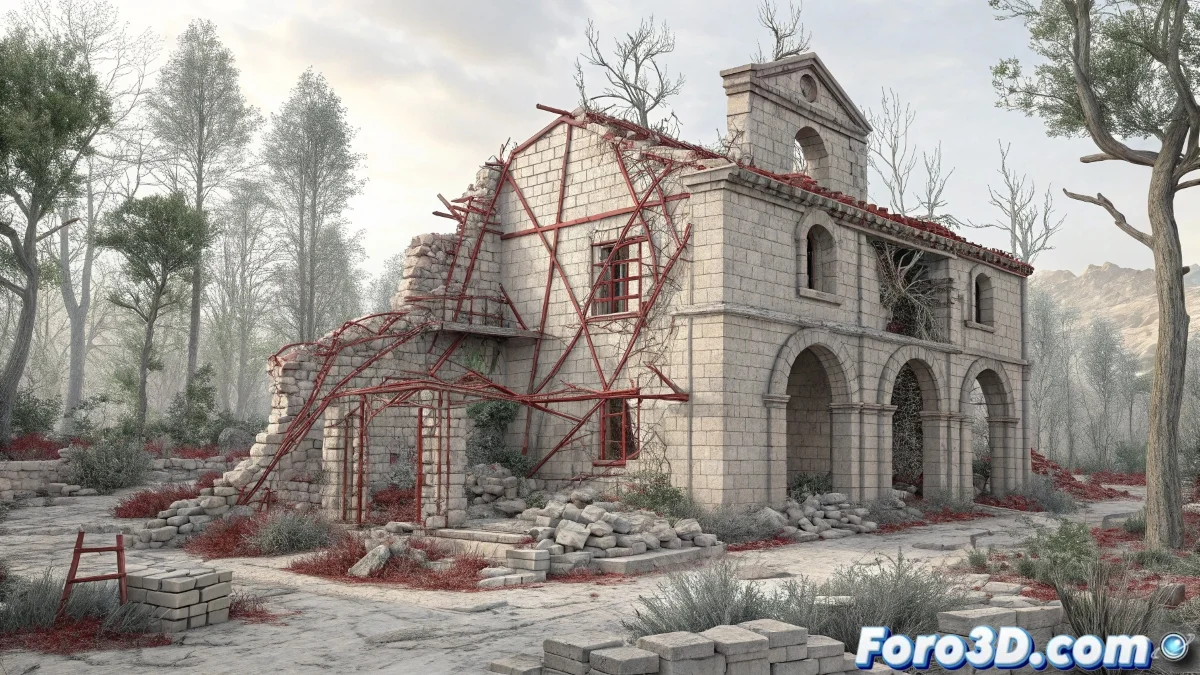
Initial Scene Setup
- Modeling of basic structures using primitives and spline tools
- Terrain creation with the Landscape plugin for Extremaduran topography
- Global illumination system configured for dramatic twilight light
- Camera setup with angles that emphasize desolation
The Art of Credible Destruction
To recreate the impact of wars, we will use a combination of non-linear deformers and Cinema 4D's powerful MoGraph system. Starting with complete buildings, we will gradually apply simulated explosion forces that create realistic destruction patterns. The key is studying real references of war damage: how walls preferentially collapse outward, how corners are more vulnerable, and how certain materials show different types of fracture.
Authenticity in ruins lies in the details you don't consciously notice
Materials require special attention to convey decades of abandonment. We will use the Physical render engine with advanced architectural materials that include layers of dirt, moss, moisture, and erosion. The triplanar mapping technique will be crucial for projecting textures consistently on complex and broken geometries, while displacement shaders will add that micro level of detail that makes erosion believable.
Specific Techniques for Invasive Vegetation
- Hair system for grasses and small plants growing in cracks
- MoGraph instances to distribute vegetation organically
- Cloners with fields to control density based on orientation and moisture
- Rigid body dynamics for vines that climb naturally
The compositing and atmosphere stage is where the scene comes to emotional life. We will use volumetric lights to create those sun rays filtering through broken windows and collapsed roofs, adding depth and mystery. Suspended dust particles, created with Thinking Particles, will contribute that heavy air so characteristic of abandoned spaces. The strategic use of depth of field and vignetting in post-production will guide the viewer's gaze toward the most narrative elements of the scene.
Narrative Elements and Finishing Touches
- Abandoned personal objects that tell individual stories
- Signs of previous life like tool marks or worn footprints
- Post-production effects to add cinematic grain and selective desaturation
- Layer compositing that balances natural and architectural elements
The final render must convey not only the physical appearance of Vadillo, but also the emotional weight of a place that witnessed so much suffering. The mastery lies in balancing architectural realism with artistic expressiveness, creating an image that works both as a historical document and a piece of visual narrative. Small details like a door that was never fully closed, a forgotten toy in the rubble, or a path disappearing under vegetation can evoke powerful emotions without the need for explicit elements.
Those who complete this tutorial will not only have mastered advanced Cinema 4D techniques, but will have learned to use the software as a tool to preserve historical memory and tell stories that time threatens to erase completely 📐