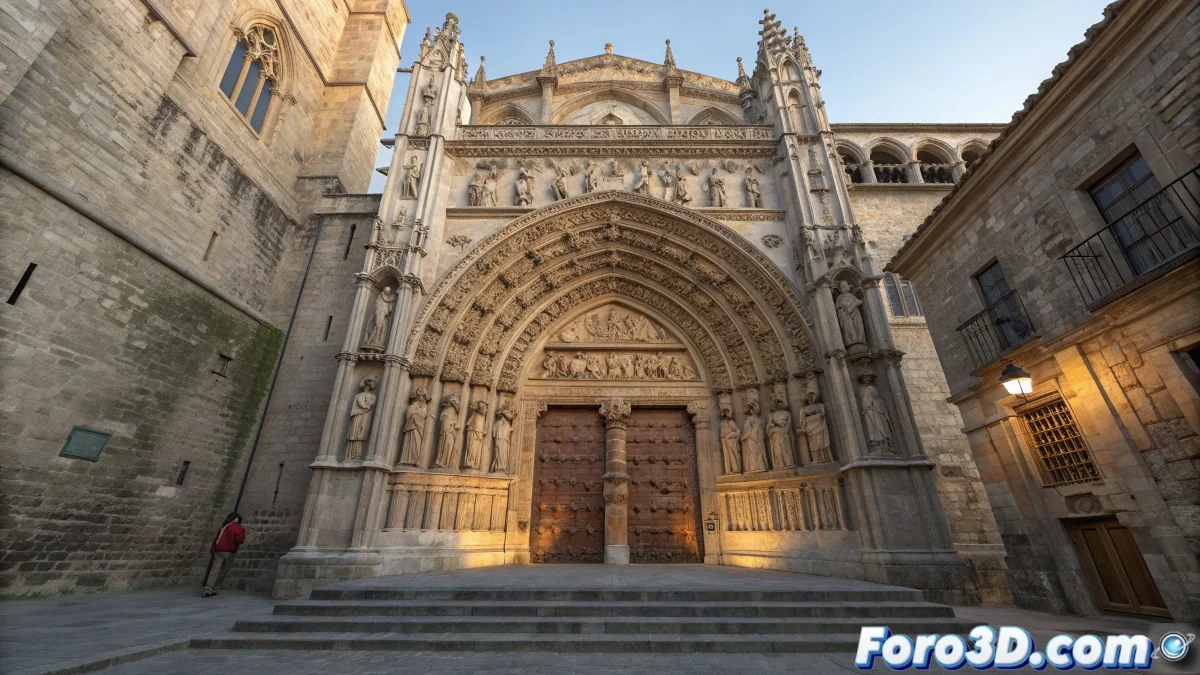
When a Gate is More Than an Entrance
On the north flank of Burgos Cathedral stands one of its most meaningful gates: the Coronería Gate, also known as the Gate of the Apostles. 🏰 While most cathedral entrances face traditional cardinal points, this one deliberately looks north, an architectural decision that hides deep ritual and practical intentionality linked to the Camino de Santiago. It was not simply an entrance, but a portal of transition for pilgrims.
A Funnel for Pilgrimage
Historical studies suggest that this gate functioned as the official exit for pilgrims who, after visiting the cathedral and prostrating before the Santo Cristo de Burgos, continued their route to Compostela. 🚶♂️ Its north orientation was not casual; it directly guided walkers toward the route they had to follow, preventing them from dispersing through the city. It was the last sacred reference point before re-entering the path, a detail that shows meticulous urban planning in service of spirituality.
This gate did not mark an end, but the continuation of a spiritual journey.
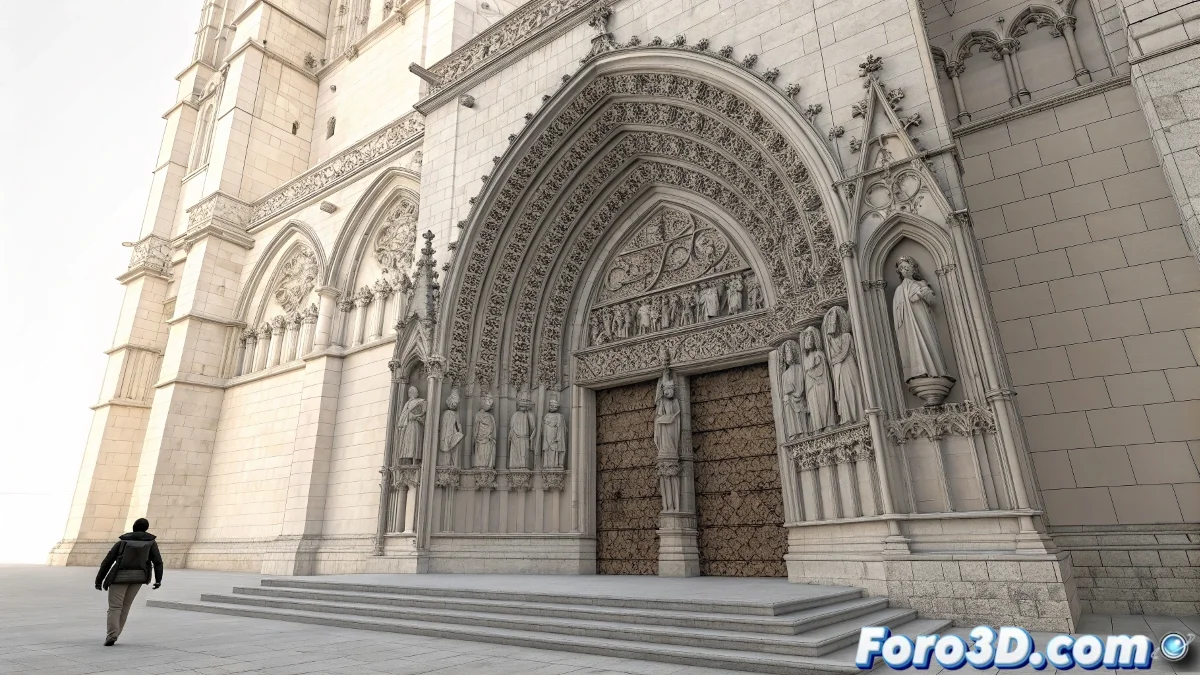
Art that Tells a Story
The gate is adorned with sculptures of the apostles, which act as silent witnesses to the eternal flow of pilgrims. 🎨 Each figure, carved with care, reinforces the sacred character of the place and offers a message of protection and guidance to those who crossed it. The sculptural ensemble was not just decorative; it was a lesson in theology in stone and a reminder of the faith community to which the travelers belonged.
- Practical symbolism: North orientation as a wayfinding guidance tool.
- Urban integration: Direct connection between the sacred space and the Jacobean route.
- Visual narrative: The apostles as symbolic companions on the path.
Recreating the Symbolism in 3D
Recreating this gate in Blender allows capturing its dual functional and spiritual nature. Modeling the arches and sculptures with precision, and applying aged stone materials, conveys the weight of history. 💡 Lighting is key; a soft lateral light, similar to that from the north, can accentuate the volumes of the sculptures and cast long shadows, evoking the sensation of a sunset on the path. Adding pilgrim figures gives scale and life to the composition.
It is ironic that, today, we need complex GPS systems to not get lost, while medieval people only needed a well-oriented gate to find their destination. 🧭 A lesson in user-centered design that is eight centuries old.