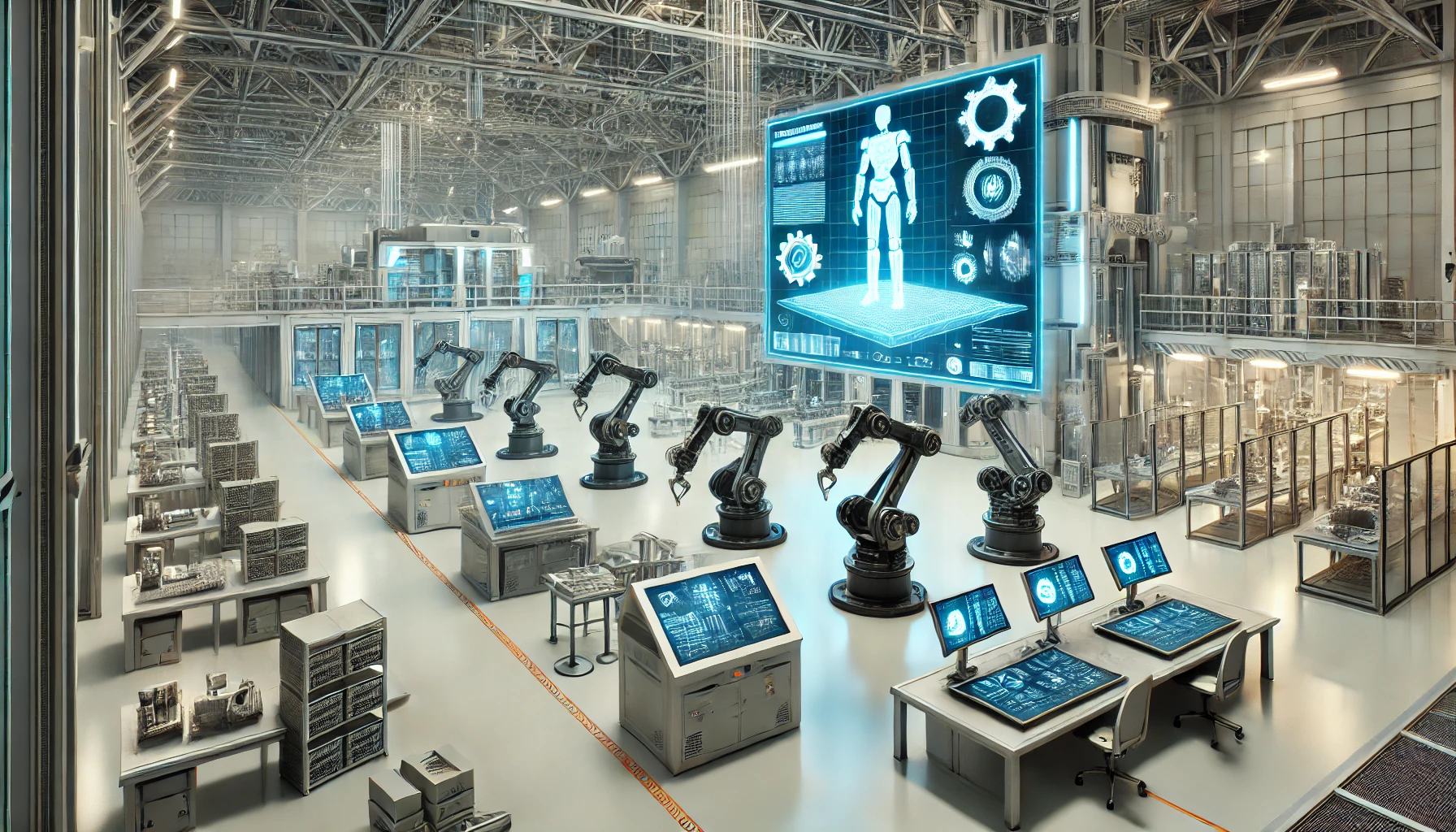
In a world where industrial production faces constant challenges, automation has become a key pillar for improving efficiency and reducing manufacturing times. In this context, a Swiss company has achieved significant advances by combining large-scale 3D printing with CNC machining in an integrated production system. This combination allows the manufacture of industrial components in considerably shorter timeframes compared to traditional methods.
Guaranteed quality with automated systems
In addition to optimizing production times, this technology incorporates an automated quality control system, ensuring that every part meets the most demanding industrial standards. Thanks to this, sectors such as automotive, construction, and aeronautics can benefit from more agile and sustainable processes.
“The combination of additive manufacturing and CNC machining opens new possibilities for precision manufacturing in various industrial sectors.”
Real-time digital quoting
One of the most innovative developments of this company is a digital quoting platform, which allows customers to obtain immediate prices after uploading their designs. This system has revolutionized the way orders are managed, reducing acquisition time from several days to just a few minutes. A case study in the automotive sector demonstrated that the implementation of composite tools printed in 3D reduced production lead times from six weeks to just one.
Autonomous factories for the next step
The goal of this initiative is not only to manufacture parts, but to redefine the way industries approach production. The company's long-term vision is the development of fully autonomous factories, capable of integrating multiple manufacturing processes in a single environment. This approach would enable:
- Optimize production without human intervention.
- Reduce operating costs through advanced automation.
- Minimize environmental impact with sustainable processes.
A new standard for the industry
With the backing of strategic investors, the company seeks to establish a new standard in global manufacturing. In a scenario where supply chains face rising costs and constant delays, the ability to deliver high-quality components quickly and reliably emerges as a differentiating factor for the future of the industry.
The future of manufacturing is hybrid
The integration of 3D printing and CNC manufacturing demonstrates that hybrid production is not only viable, but is transforming the industry. With each advance, automation becomes the central pillar of modern manufacturing, enabling faster, more precise, and accessible production for a wide range of industrial applications.