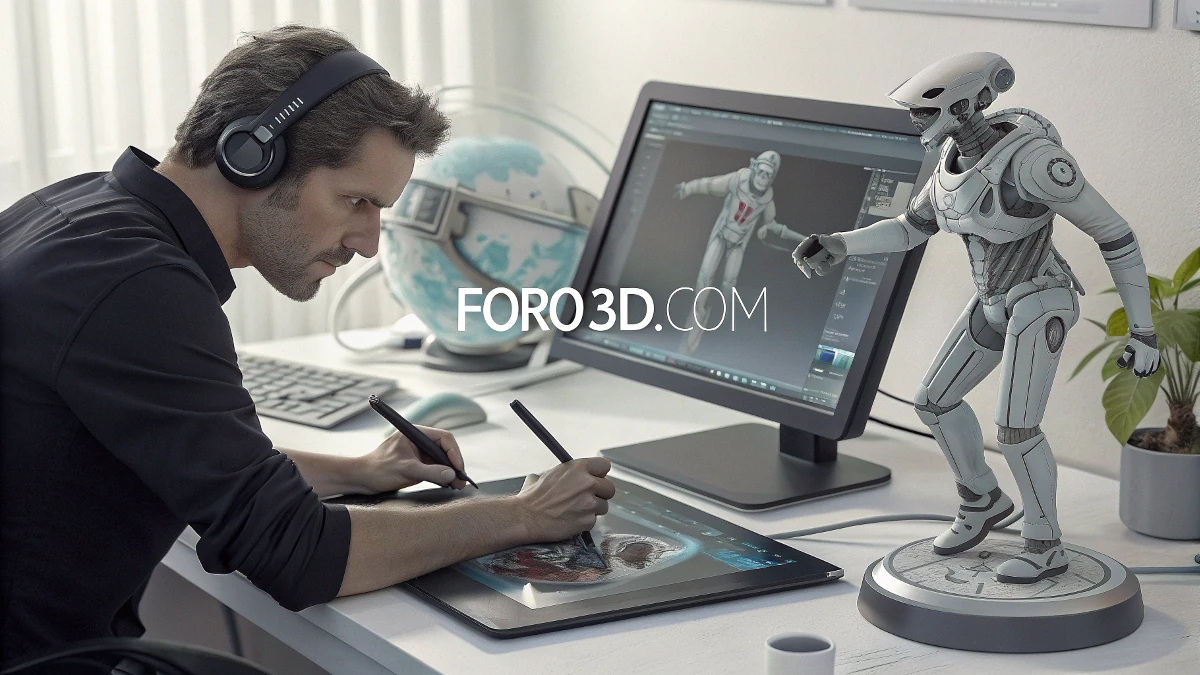
The world of 3D modeling is constantly evolving, and Blender is no exception. In recent years, its sculpting mode has experienced significant improvements in terms of speed, memory usage, and brush fluidity. However, these optimizations not only benefit the current version but also lay the foundation for the future of digital sculpting.
Optimization and Performance on Advanced Hardware
One of the biggest challenges in the evolution of any design software is making the most of the available hardware. Blender has improved its support for multi-core processors and latest-generation graphics cards, but the future promises even more advances:
- Real-time ray tracing compatibility, allowing for more realistic model visualization.
- Use of artificial intelligence to improve fluidity and software adaptability.
- Greater integration with high-performance rendering engines.
Intelligent Automation in Digital Sculpting
Artificial intelligence has become a key tool in the development of creative software. In the future, Blender could incorporate advanced features that analyze model topology and automatically adjust polygon distribution, optimizing details without compromising performance.
“Intelligent automation does not seek to replace creativity, but to enhance it, reducing tedious tasks and improving the artist's experience.”
Connectivity with Other Programs and Workflows
Currently, Blender allows exporting and importing models in formats like OBJ, FBX, and USD, facilitating integration with other modeling programs. However, the future could bring:
- Better connectivity with software like ZBrush, enabling more flexible workflows.
- Advanced synchronization with simulation tools for more precise modeling.
- Improved interoperability with video game engines and augmented reality platforms.
Non-Destructive Sculpting and Flexible Modeling
One of the most anticipated advances in the world of digital sculpting is the implementation of a non-destructive system. This would allow artists to modify details without affecting the original model structure, offering:
- Greater control over design without fear of losing previous modifications.
- A more dynamic and adaptable workflow.
- The ability to make adjustments at any stage of the process without tedious reconstructions.
Expansion of the Brush System and Dynamic Materials
The brush system in Blender has evolved considerably, but in the future, even more advanced tools are expected:
- Brushes with dynamic textures for greater realism.
- Real-time material simulation that responds to lighting and physics.
- Intelligent deformation tools for precise adjustments in complex sculptures.
A More Efficient and Accessible Future
The development of Blender follows a clear path: optimization, integration with advanced hardware, and tools that facilitate creativity without technical limitations. With an improved code infrastructure, the future of digital sculpting looks faster, more efficient, and accessible to all digital artists.