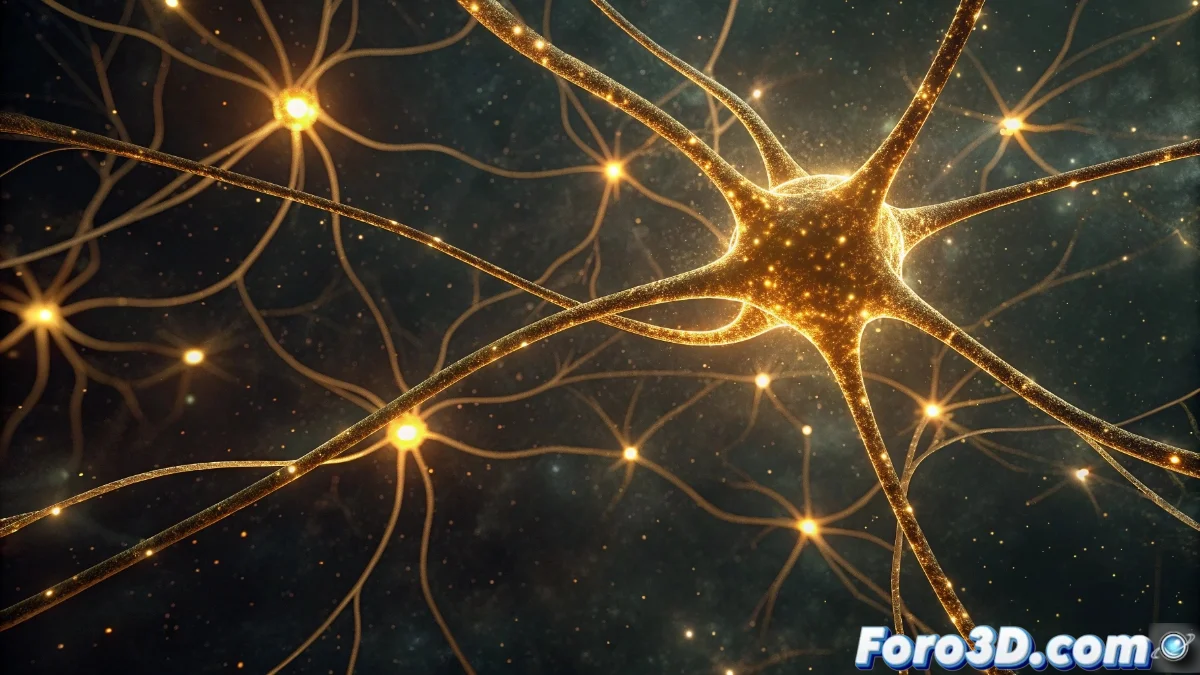
The Future of Artificial Intelligence: Integrating Causal Reasoning
Contemporary artificial intelligences rely primarily on statistical correlations, detecting patterns in massive datasets without a genuine understanding of fundamental connections. This method enables remarkable advances in areas such as visual recognition or linguistic processing, but reveals structural limitations when faced with challenges that require deep and contextual reasoning. True intelligence, comparable to human intelligence, requires understanding not only which phenomena coexist, but the reasons behind their occurrence and their mutual interactions. 🤖
Fundamentals of Causal Modeling
The science of causality offers precise mathematical tools to represent cause-effect relationships through causal graphs, counterfactual interventions, and conditional independence tests. This conceptual framework allows systems to differentiate between spurious correlations and authentic causal links. Pioneering researchers like Judea Pearl have established a hierarchy of causal reasoning that progresses from basic association to intervention and counterfactual speculation, laying the foundation for machines to understand not only the present reality, but alternative scenarios under modified conditions. 📊
Key components of causal reasoning:- Causal graphs to visualize dependencies between variables
- Interventions to simulate changes in the system
- Counterfactual analysis to explore alternative possibilities
Without understanding causality, AIs are like encyclopedias without an index: they have information but don't know how to connect it meaningfully.
Transformation in Machine Learning and Data Analysis
The integration of causal reasoning radically revolutionizes the approach to complex problems in machine learning and data science. In the medical field, it would facilitate accurately predicting the outcomes of specific therapies in individual patients. In robotics, it would allow systems to anticipate the physical consequences of their movements. Conventional statistical techniques, focused on identifying correlations, would evolve toward methodologies capable of establishing causal relationships even with observational data, reducing the need for costly controlled experiments and enabling more robust and explainable inferences. 🧠
Transformative applications:- Personalized medical diagnosis with treatment prediction
- Autonomous robotics with physical understanding of the environment
- Business analysis with root cause identification
Paradoxes of Modern Artificial Intelligence
It is paradoxical that the most sophisticated AI systems can defeat world champions in strategic games, but still stumble when it comes to understanding that dropping a glass on the floor will likely break it, unless this knowledge is explicitly included in their training data. It seems we need to teach them elementary physics before advanced algebra, highlighting the gap between pattern recognition and causal understanding of the real world. This paradox underscores the urgency of developing systems that integrate causal reasoning alongside conventional statistical learning. 💡