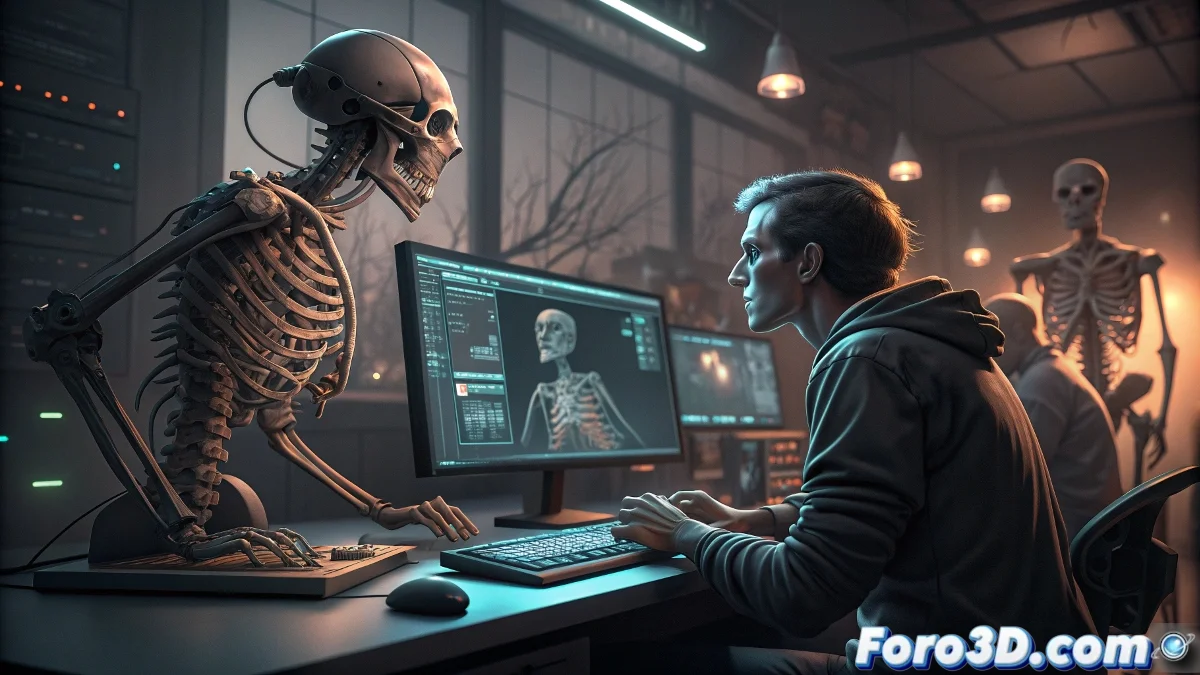
When Characters Come to Life with Words
Artificial intelligence is redefining the very foundations of digital animation, transforming processes that previously required months of specialized training into accessible workflows for creators of all levels. The ability to generate realistic animations from simple textual descriptions represents not only a technical advancement, but a democratizing revolution that could eliminate barriers that have existed since the early days of computer animation. Where years were once needed to master the art of rigging and animation, intelligent systems can now translate creative intentions directly into organic movement.
What makes this development particularly transformative is how it is redefining the relationship between the animator and the character. Instead of meticulously manipulating every control and animation curve, artists can focus on the essence of the movement - the emotion, the intention, the personality - while the AI handles the technical implementation. This paradigm shift allows creators to operate at a more intuitive and artistic level, focusing more on the "what" and "why" of the movement rather than the "how" of its technical execution.
The Magic of Intelligent Automatic Rigging
- Automatic generation of skeletons adapted to unique morphologies
- Intelligent setup of controls and deformers
- Automatic detection and correction of deformation issues
- Adaptation of existing rigs to character variations
From Text to Fluid Motion
Text-based description animation systems are democratizing access to professional-quality movements. A creator can now describe "a character walking tiredly in the rain" or "an alien creature moving with antigravity grace" and obtain results that previously required specialized teams or years of experience. This capability is especially valuable for independent studios and solo creators who need to produce convincing animations without the resources of large studios, leveling the playing field in an industry traditionally dominated by those with access to expensive specialized talent.
The real magic happens when technology allows creativity to flow without technical barriers
Integration with simplified motion capture represents another significant advancement in accessibility. Where specialized studios with dozens of cameras and expensive capture suits were once required, AI-based systems can now extract precise motion data from conventional video or even consumer-grade sensors. This hybrid approach combines the naturalness of human performance with the flexibility and control of keyframe animation, creating an ideal point where technology amplifies rather than replaces human artistic expression.
New Creative Possibilities
- Rapid prototyping of animation ideas using natural language
- Generation of performance variations for testing and iteration
- Translation of animation styles between different characters
- Automation of secondary and background animations
For the animation and rigging community, these advances do not mean the end of their art, but an evolution toward more strategic and creative roles. The ability to direct AI systems, curate results, and apply that human touch that makes an animation unique will become more valuable than ever. In this new landscape, the best animators will be those who combine artistic sensitivity with technical understanding of these new tools, creating characters that not only move realistically, but convey genuine soul and emotion. 🎭
And so, between text descriptors and deep learning algorithms, we discover that the future of animation is not about replacing the animator, but giving them superpowers - though we'll probably still need to explain to the client that "make it more epic" isn't exactly a useful description for the AI. ✨