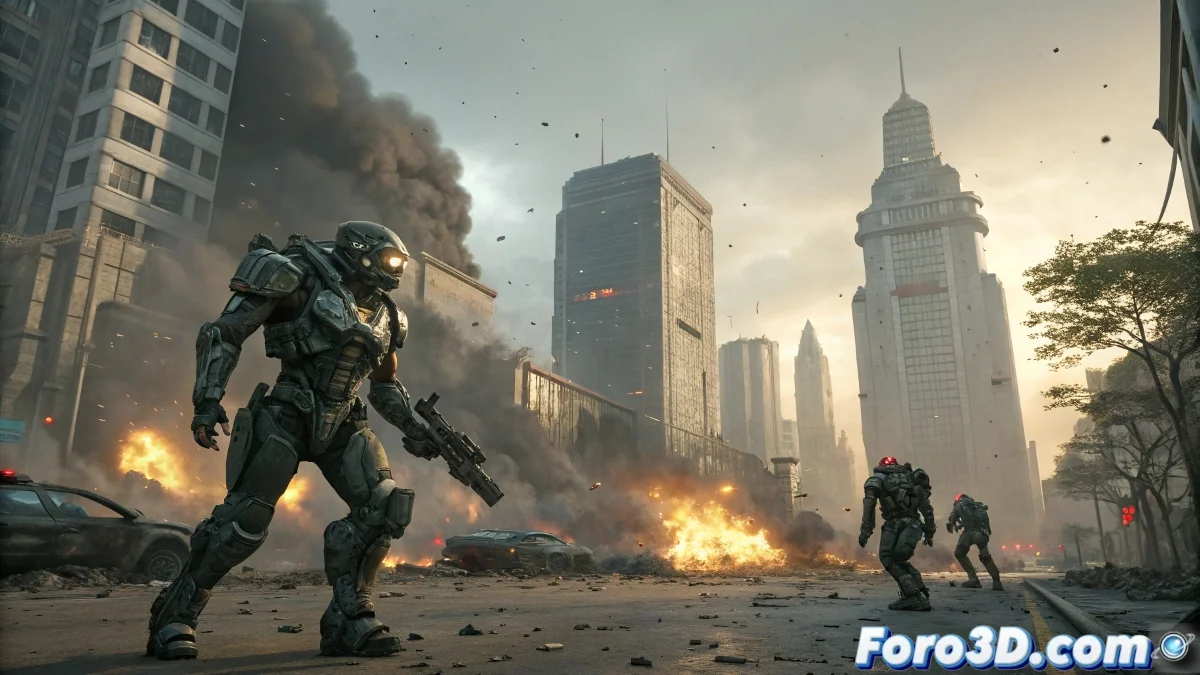
When the future needs effects from the present 💥
Creating the apocalyptic world of Warriors of Future wasn't a matter of magic, but pure digital talent. FatFace proved that to build dystopian futures, you first need to master the tools of the present... and have a lot of patience with renders.
The technological arsenal of tomorrow (made today)
For this futuristic vision, the following were needed:
- Houdini to blow up cities with realistic physics
- Maya to bring nightmare-inducing creatures to life
- Nuke to compose the chaos with Swiss precision
- Arnold to light up the end of the world with style
The result is so intense that even the CGI characters sweat. 💻
Technology in the service of destruction
"We wanted every explosion, every creature, every stray bullet to feel real. When the future looks believable, the audience believes in it"
The fluid simulations consumed more power than a nuclear plant. And that's ironic because the movie is precisely about avoiding them. ⚡
The art of making the impossible believable
Balancing frenetic action with visual realism was like piloting a mecha: it requires millimeter precision and nerves of steel. The integration of digital elements was so perfect that even the actors dodged imaginary explosions.
And that's how a believable future is built: with enough technology to make Terminator look like a toy, and enough art to make it hurt when everything explodes. Does anyone have a fire extinguisher for these scenes? 🔥
Bonus: Technical secrets of the apocalypse
For those who want to see the end-of-the-world manual:
- The creatures used digital musculature systems in Maya
- Urban destruction required fractal simulations in Houdini
- Each shot had more than 200 composition layers in Nuke
- A special pipeline was developed for catastrophic lighting
All this while maintaining that perfect balance between spectacle and visual coherence that makes the future seem as exciting as it is terrifying. Enough to stay in the present... or not. 🚀