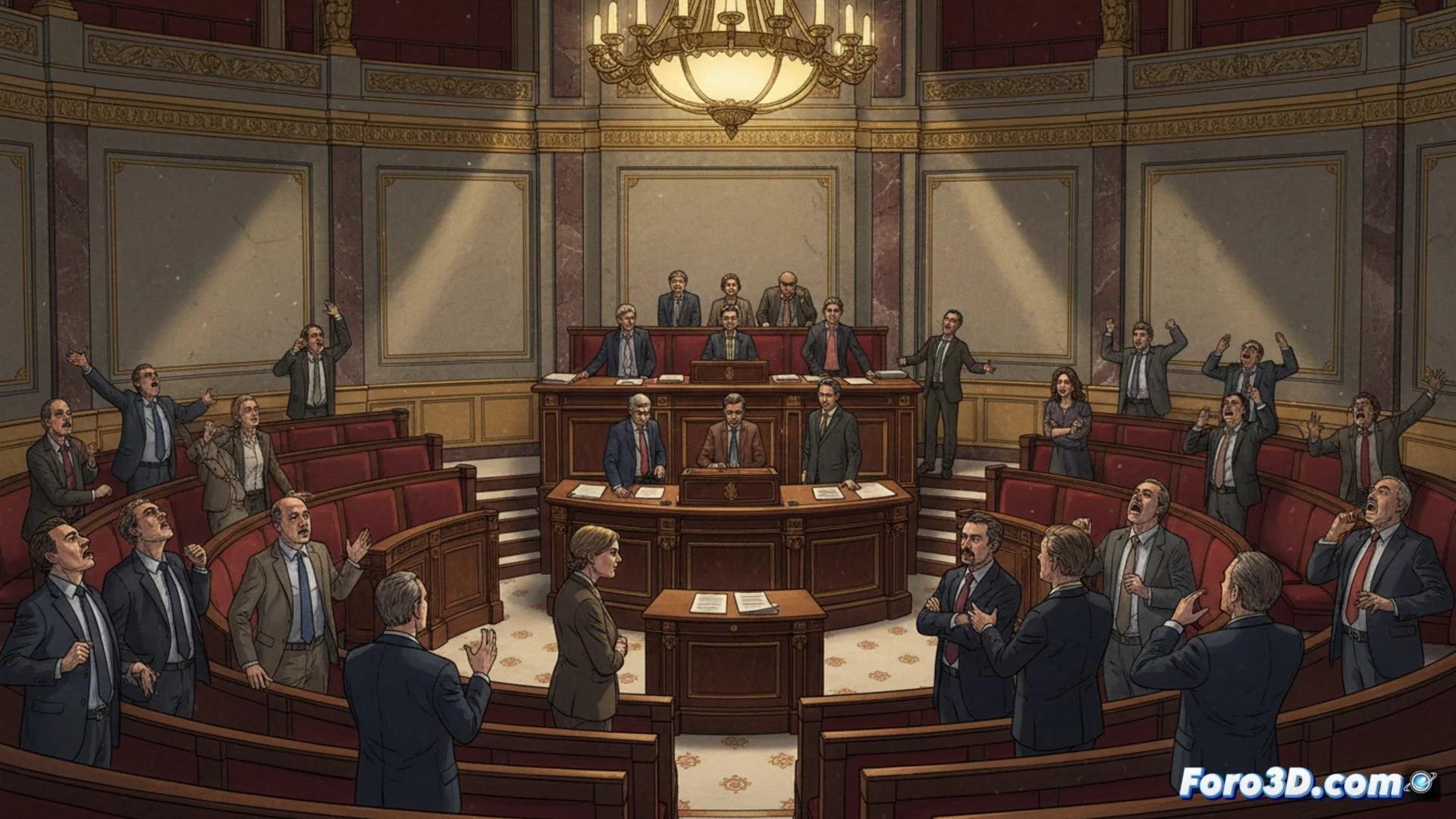
The French government overcomes two motions of no confidence and remains in office
The French National Assembly rejected two motions of no confidence presented by opposition groups, allowing the cabinet to remain in office. This political episode was triggered after the executive decided to adopt key segments of the 2026 budget bill without conducting a standard vote in parliament. 🏛️
The constitutional trigger of political tension
The conflict erupted when the government chose to invoke Article 49.3 of the Constitution. This mechanism allows the executive to have a legislative text approved without submitting it to a vote, albeit with an important condition: it opens the door for the opposition to present a motion of no confidence. By using this tool, the government assumes considerable risk, as it puts its continuity at stake if opponents manage to gather an absolute majority against it.
Key features of Article 49.3:- Allows laws to be adopted without direct parliamentary debate or vote.
- Automatically activates the possibility of presenting a motion of no confidence.
- To overthrow the government, the motion needs the support of at least 289 deputies.
In French politics, invoking 49.3 is like pressing a constitutional panic button; you avoid discussion, but you risk the entire hemicycle wanting to expel you.
The opposition fails to build an alternative majority
Left-wing and right-wing parliamentary blocs presented separate motions of no confidence, a fact that highlighted their fragmentation and lack of unity. Neither of the two initiatives managed to reach the threshold of 289 votes needed to succeed. This outcome demonstrates that, despite the discontent generated by the method used to approve the budget, the government still has sufficient support in the chamber to continue governing and negotiate the pending aspects of public accounts.
Immediate consequences of the motions' failure:- The cabinet maintains its authority and continues processing the state budget.
- It underscores the opposition's difficulty in forming a stable coalition against it.
- The 2026 budgetary procedure advances, albeit with marked political tension.
A government that persists despite the controversy
The episode concludes with the French executive consolidated in its functions, at least temporarily. The use of Article 49.3, a controversial but constitutional tool, served to accelerate part of the budgetary process, albeit at the cost of increasing polarization. The opposition's inability to garner votes reflects the current dynamics of a divided parliament, where the government finds the minimum support to implement its economic agenda. 📜