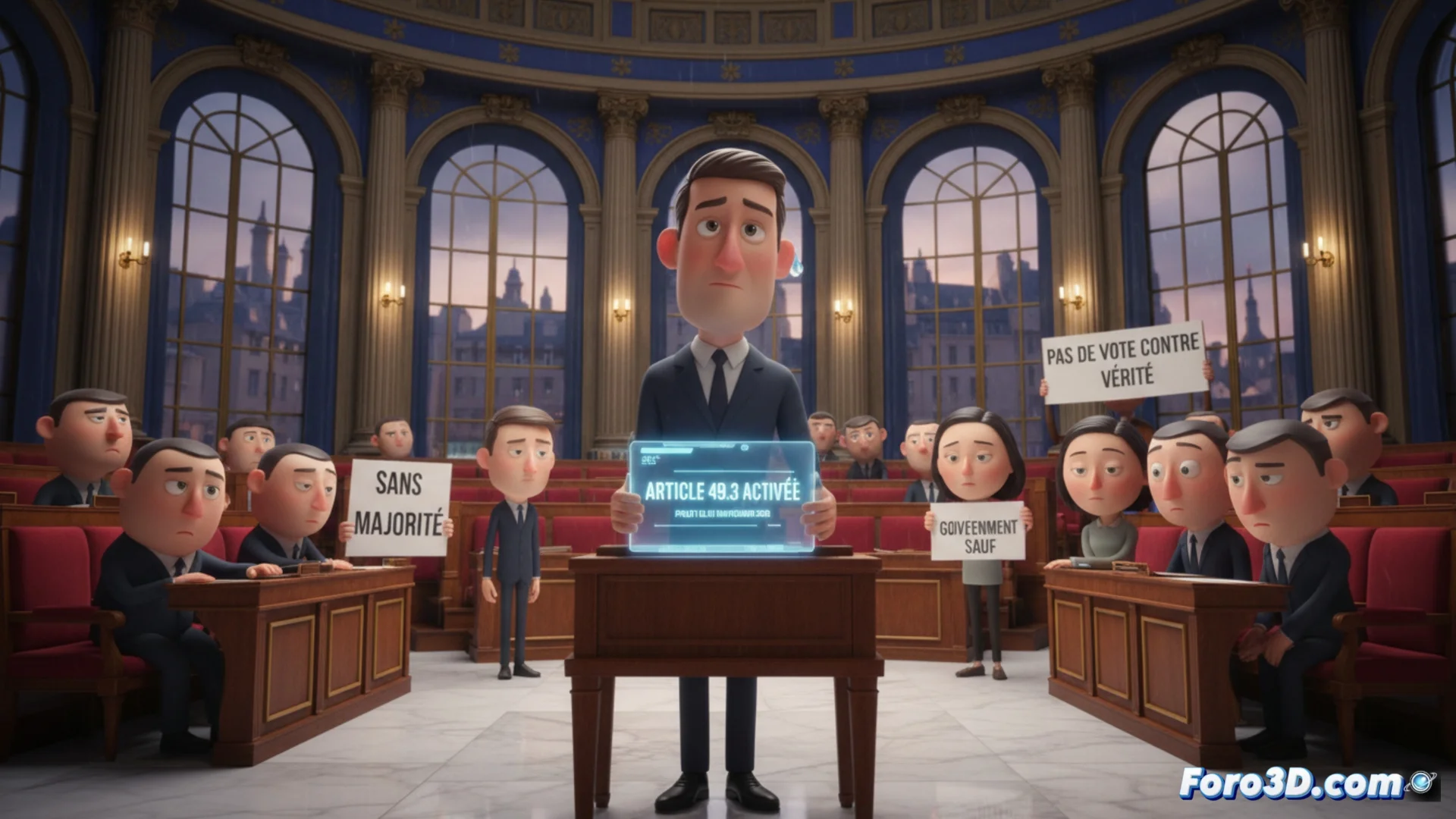
The French government uses Article 49.3 to approve the budget without voting
The Gallic executive, through its Minister of Defense and spokesperson Sébastien Lecornu, has opted to employ the controversial Article 49.3 of the Constitution. This mechanism allows the 2026 finance bill to be considered adopted without the need to submit it to a vote in the National Assembly. The decision comes after failing to secure a clear parliamentary majority to support its text, preferring this constitutional shortcut that ties approval to confidence in the government. 🏛️
The socialist opposition decides not to force a crisis
Despite harshly criticizing this maneuver, the Socialist Party, the main opposition force, has confirmed that it will not present a motion of censure. This stance avoids triggering a more serious institutional crisis. By not supporting such a motion, the budget is approved automatically, although the socialists emphasize that they are acting out of responsibility and not in support of the public accounts.
Consequences of the opposition's decision:- The government's budget moves forward without an explicit vote in favor.
- A scenario of political instability and possible fall of the executive is avoided.
- Tension between the government and the opposition remains at high levels.
The recourse to 49.3 places governability in a parliament without an absolute majority at the center of the debate.
Article 49.3 dominates the political debate
The use of this constitutional instrument now concentrates the political discussion in France. Its detractors see it as a way to bypass democratic debate, as it allows the government to have laws approved without a parliamentary vote, although it exposes the prime minister to a motion of censure. In this case, since it did not materialize, the budgetary text proceeds, but the difficulties in legislating in the current landscape are evident.
Key features of Article 49.3:- Ties the approval of a law to confidence in the government.
- Allows legislative texts to be adopted without a vote in the chamber.
- Carries the risk of a motion of censure being presented against the executive.
A fragile political balance
The final outcome shows a peculiar political balance: the government manages to have its budget approved without voting on it, and the opposition denounces it without attempting to bring it down. This scenario resembles more of a mutual wearing-down standoff than a genuine exercise of parliamentary construction and agreement. The fragmentation of the chamber remains the main obstacle to governing. ⚖️