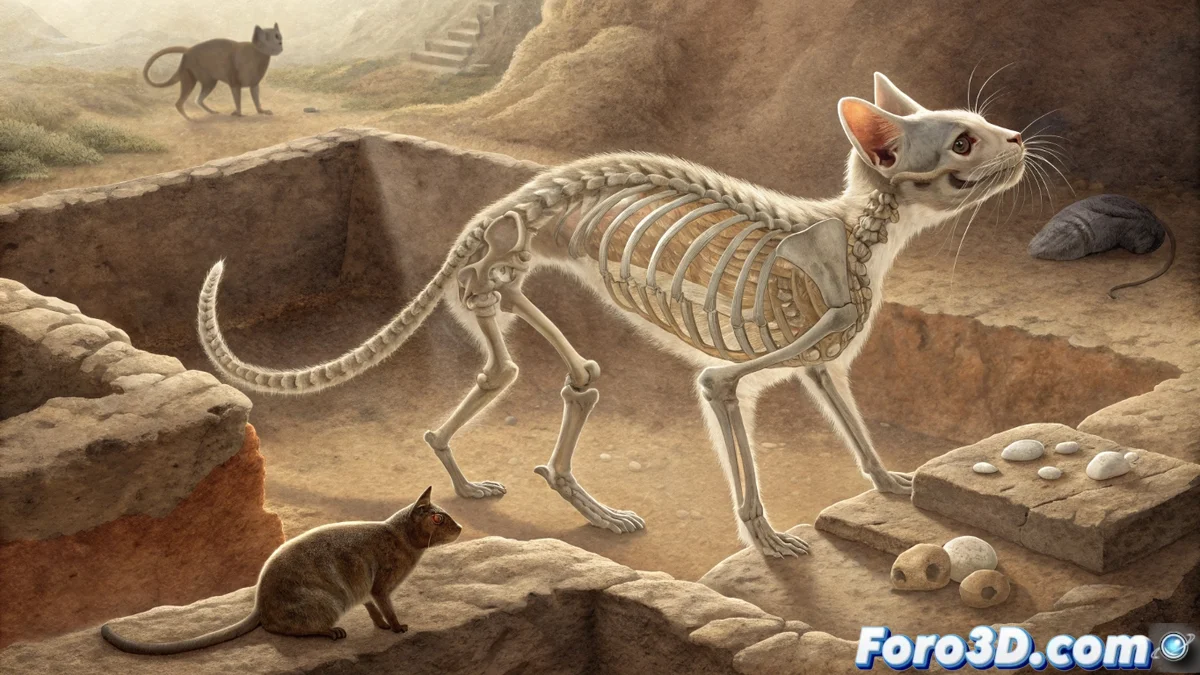
The First Domesticated Cat in China Reveals Unexpected Evolutionary Connections
A team of scientists in China has made a fascinating discovery by examining the DNA of ancient remains. The evidence points to the first domesticated cat in the region, unveiling an evolutionary plot that connects this feline to species like the majestic leopard and the humble rodent. This finding, arising from meticulous archaeological excavations, illustrates the journey of adaptation of these animals to human settlements millennia ago. 🐈⬛
Deciphering the Genetic Code of Domestication
The core of this revolutionary study lies in the comparative DNA analysis. The researchers have compared genetic sequences from the ancient cat with those of a leopard and various rodents, identifying crucial biological markers. These indicators not only confirm an early domestication process, but also reveal specific adaptations for hunting, underscoring the astonishing complexity of feline evolution in Asia.
Key Findings from the Genetic Study:- Domestication Markers: Identification of genetic variants associated with tolerance and coexistence with humans.
- Link with Big Cats: Shared sequences with the leopard suggesting a common ancestor or parallel evolutionary processes.
- Dietary Adaptation: Genetic evidence pointing to specialization in rodent hunting as part of its ecological niche.
This discovery rewrites the early chapters of our coexistence with felines, showing a symbiotic relationship forged in the granaries of antiquity.
Implications for Our Understanding of History
Beyond genetics, this discovery has profound historical and cultural implications. It greatly enriches our understanding of the origins of animal domestication and provides a tangible narrative of how cats began to integrate into society. Their initial role was probably that of pest controllers, keeping rodent populations in check that threatened food reserves, thus fostering a symbiotic relationship beneficial to both parties.
Impact on Ancient Communities:- Biological Control: Cats offered a natural and effective solution to protect grains and stored food.
- Cultural Integration: Their utility likely accelerated their acceptance and transition from wild animal to domestic companion.
- Directed Natural Selection: Rodents were not just prey, but a key factor in the selective pressure that would shape the domestic cat.
A Relationship with Deep Roots
This study reminds us that the connection between humans and cats is incredibly ancient and rooted in mutual need. It is no coincidence that, since prehistory, these felines have found a place in our homes. The historical irony is delicious: their DNA links them to powerful leopards, while their hunting instinct still targets the eternal rodents perfectly. This finding is not just a footnote in paleontology; it is the genetic confirmation of a millennial alliance that endures to our current sofa. 😸