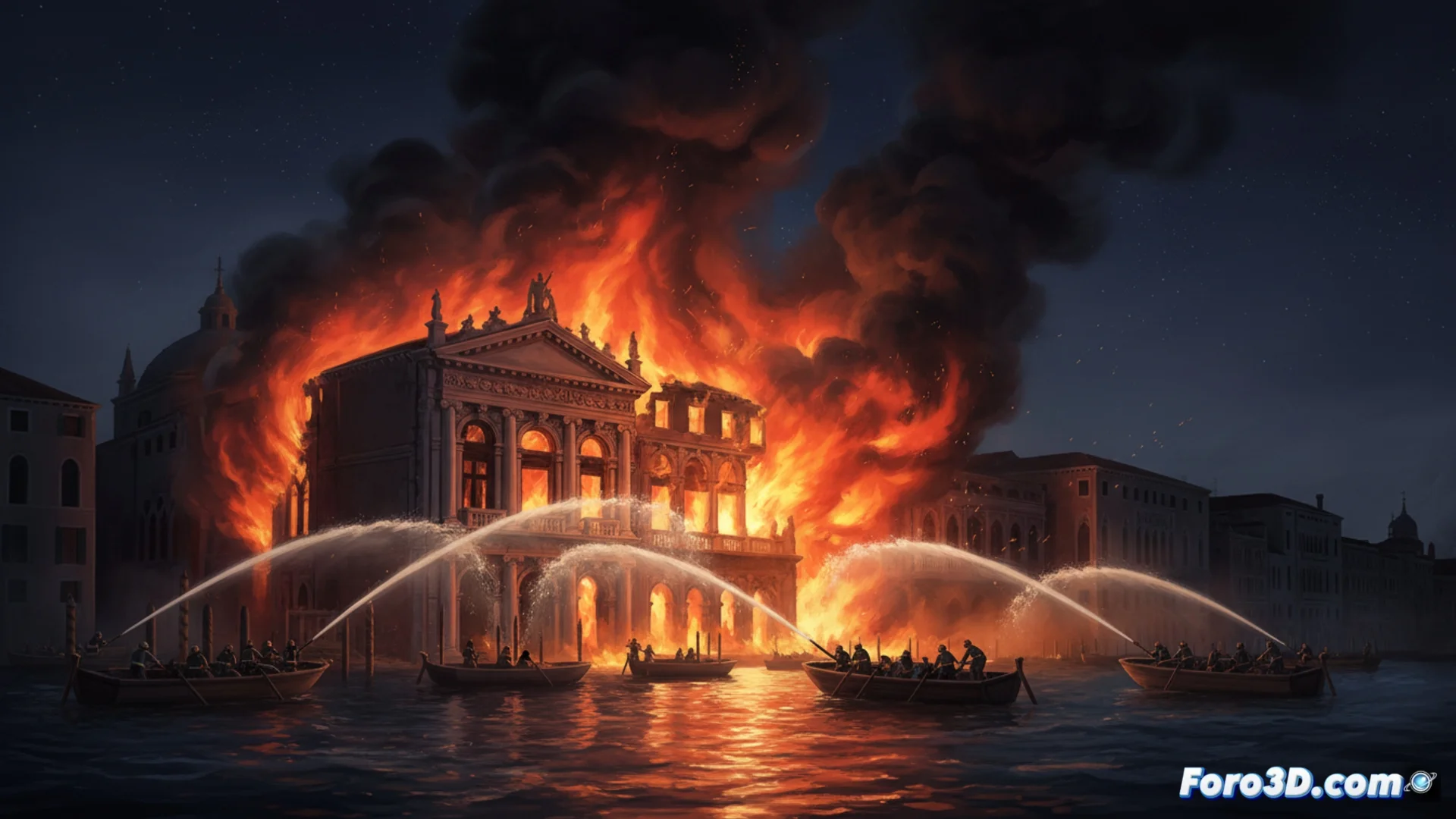
The Fire and Rebirth of the Gran Teatro La Fenice in Venice
On the early morning of January 29, 1996, during renovation works, an arson fire completely destroyed the iconic Gran Teatro La Fenice in Venice. 🔥 The flames appeared suddenly, forcing the firefighting teams to wage an intense battle that lasted for hours. The entire city watched in desolation as one of its most valuable cultural pillars disappeared. Police investigations quickly pointed to two electricians as the authors of the disaster.
A Guiding Principle to Restore the Splendor
Rebuilding the theater was a complex task full of challenges. The entire process was governed by the maxim com'era e dov'era, which translates to as it was and where it was. This commitment involved reproducing the original building with absolute fidelity in its exact location. After years of collective effort, the coliseum reopened in December 2003. The reopening event was led by a concert conducted by the prestigious conductor Riccardo Muti. 🎼
Key Details of the Reconstruction:- The principle com'era e dov'era was applied to replicate the historical essence.
- The project faced numerous technical and administrative difficulties.
- The official reopening took place in December 2003 with a concert conducted by Riccardo Muti.
"As it was and where it was": the motto that guided the faithful recovery of a Venetian symbol.
A Cultural Legacy Rising from the Ashes
From that tragic event, a new tradition also emerged for Venice. To commemorate the ability to overcome adversity and the theater's resurgence, the Concerto di Capodanno was created. This New Year's concert takes place every first day of January in the rebuilt Fenice and has become a top-tier musical event on a global level, attracting crowds of spectators and reinforcing the theater's permanent legacy. ✨
Elements of the New Legacy:- Establishment of the Concerto di Capodanno on January 1.
- The event gains notable international projection and prestige.
- It becomes a cultural and tourist engine for the city.
The Origin of an Avoidable Catastrophe
According to investigations, the electricians involved sought to avoid an economic penalty for delaying their work, so they chose to illuminate the development of events in a way no one could anticipate. However, their strategy spiraled out of control faster than an unforeseen electrical failure, leading to an incalculable patrimonial loss. 🛑