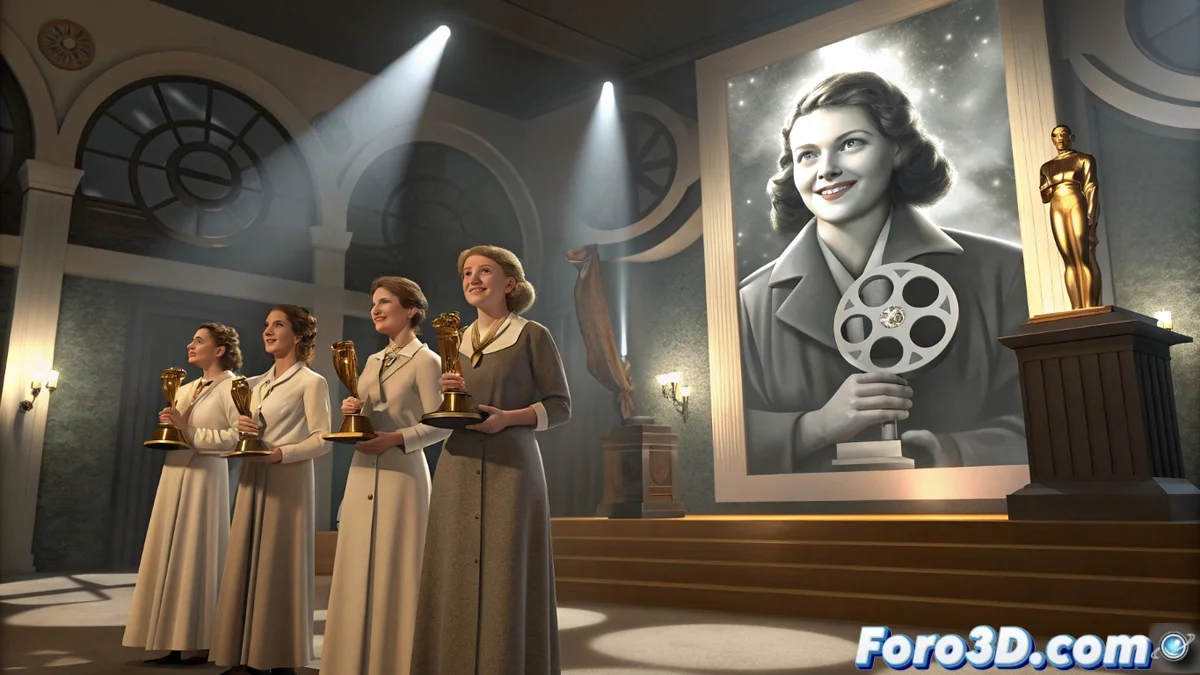
The Film Academy celebrates the awards for research on Spanish cinema
The iconic building of the Film Academy once again served as the setting for an essential event: the fourth gala of the Spanish Cinema Research Awards. Promoted by the FlixOlé-URJC Chair, these awards have a fundamental purpose: recognize and give visibility to the meticulous work of those who study and disseminate the rich audiovisual heritage of our country. The ceremony emphasizes that understanding the evolution and cultural impact of cinema inevitably involves studying and preserving it 🎬.
The award-winning researchers in this edition
In this call, the jury distinguished the excellent work of four professionals and researchers, whose studies cover different facets of Spanish cinematography. Their contributions are a clear example of how academic rigor and passion for cinema come together to generate valuable knowledge.
Winners by category:- Begoña Piña: Recognized in the Communication category for her outstanding career and work in specialized film journalism.
- Yolanda Flores and Conxita Casanovas: Awarded in the Master's Thesis category. Flores analyzed the representation of women in Spanish cinema, while Casanovas investigated film production in Catalonia during Francoism.
- María Guerra: Awarded in the Doctoral Thesis category for her in-depth research on the often overlooked figure of the producer within the film industry.
"These awards underscore the commitment to the preservation and critical study of Spanish cinema. Fostering research ensures that this knowledge is not lost and serves as a foundation for new generations."
A commitment to the memory and future of audiovisual media
The celebration of these awards goes beyond the delivery of distinctions. It represents the firm commitment of institutions such as Rey Juan Carlos University and the FlixOlé platform to audiovisual memory. By incentivizing research from the university and professional spheres, it ensures that the history of Spanish cinema is documented, analyzed, and transmitted. This work is the cornerstone for future generations of filmmakers, critics, and scholars to build on solid foundations 📚.
Impact and objectives of the initiative:- Preservation of heritage: Prevent knowledge about Spanish cinema from falling into oblivion.
- Crucial dissemination: Keep the cultural conversation about the audiovisual legacy alive.
- Meeting point: Establish the ceremony as a space for networking and dialogue for the research community.
Final reflection on the industry
Events like this remind us of the importance of looking to the past to understand the present and shape the future of cinema. While honoring those who scrutinize our film history, that other "pending research" of a more playful nature remains in the air: deciphering why movie theater popcorn has a profit margin that rivals that of a superhero blockbuster 🍿. A curiosity that, undoubtedly, some scholar of the economic-cultural sector could address someday.