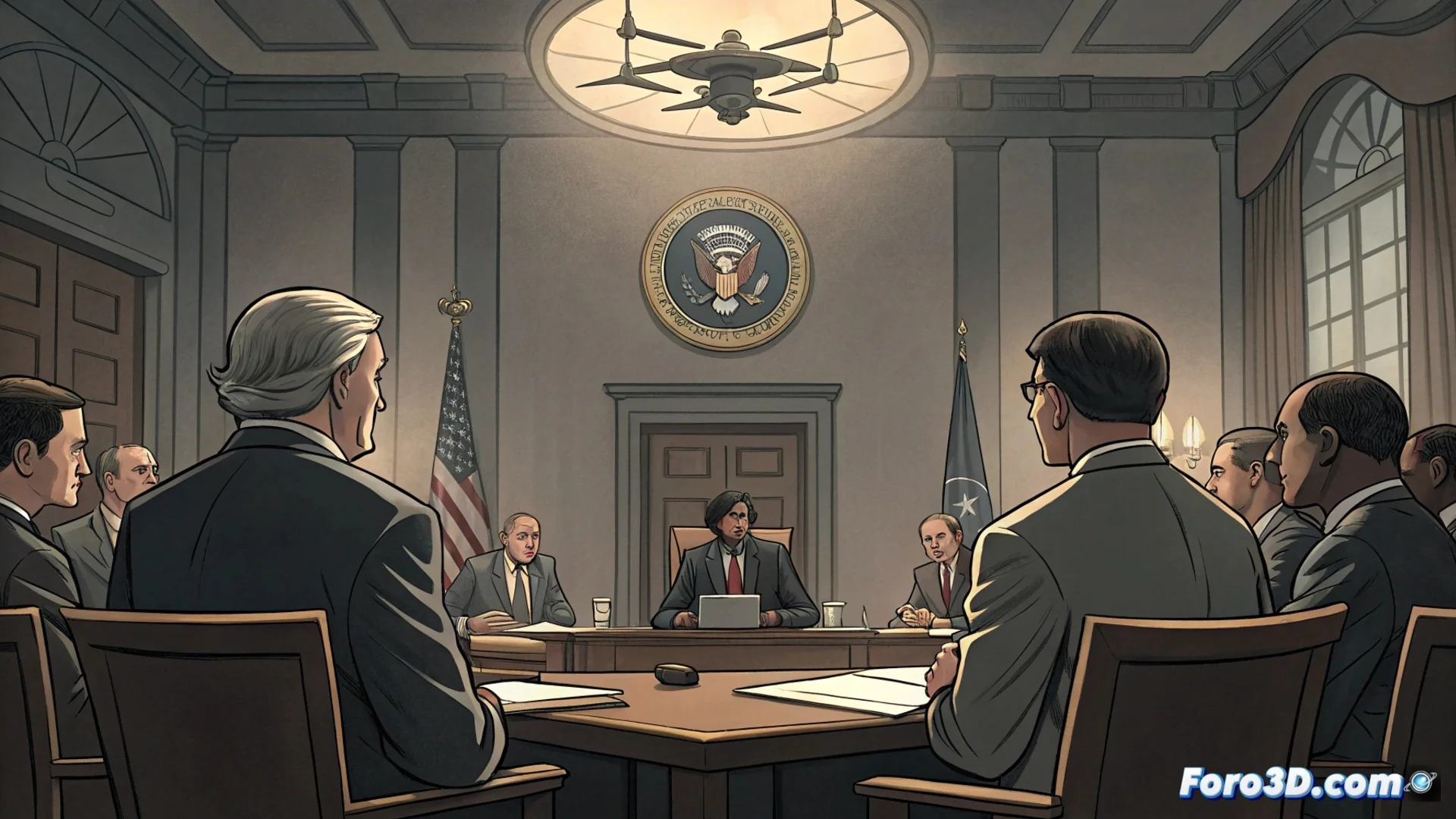
The FCC Prohibits Importing New Foreign Drones into the United States
The Federal Communications Commission of the United States has implemented a new rule that prevents the introduction into the country of new drones manufactured outside its borders. This decision, documented in an official file, only contemplates exceptions if the Department of Defense or the Department of Homeland Security approves a specific model. The move shakes a market dominated by the Chinese manufacturer DJI. 🚫
The Focus on Protecting Critical Networks
The regulatory agency acts primarily due to fears about the security of communication networks and the country's essential infrastructure. By limiting which telecommunications equipment can enter, authorities seek to control the devices that connect to their systems. This policy extends previous actions against technology of Chinese origin, assessing that some manufacturers could threaten national cybersecurity.
Key Points of the Regulation:- Prohibits importing new drones manufactured outside the U.S.
- Only allows exceptions with explicit recommendation from the Department of Defense or Homeland Security.
- Aligns with a broader strategy to restrict Chinese technology considered risky.
National security bureaucracy now decides which drones can fly in American skies.
Consequences for Market Leader DJI
DJI controls the global civilian drone market and its products are widely used by consumers, businesses, and even local government agencies in the U.S. The new rule halts the entry of its latest models, which may force users to seek alternatives from national manufacturing or allied countries. Although some federal agencies already limited the use of Chinese drones, this import-level prohibition is a broader and more severe step. 🛸
Immediate Impact on the Sector:- Blocks the commercialization of DJI's latest models in the U.S.
- Forces users and professionals to explore alternatives, possibly more expensive.
- Generates uncertainty among hobbyists and businesses that depend on this affordable technology.
A Sky with New Rules
While some sectors applaud protecting critical infrastructure, the drone-using community—from filmmakers to surveyors—faces an uncertain future. The measure redefines access to aerial technology, prioritizing geopolitical and cybersecurity considerations over innovation and commercial accessibility. The balance between flying and protecting has shifted decisively. 🇺🇸