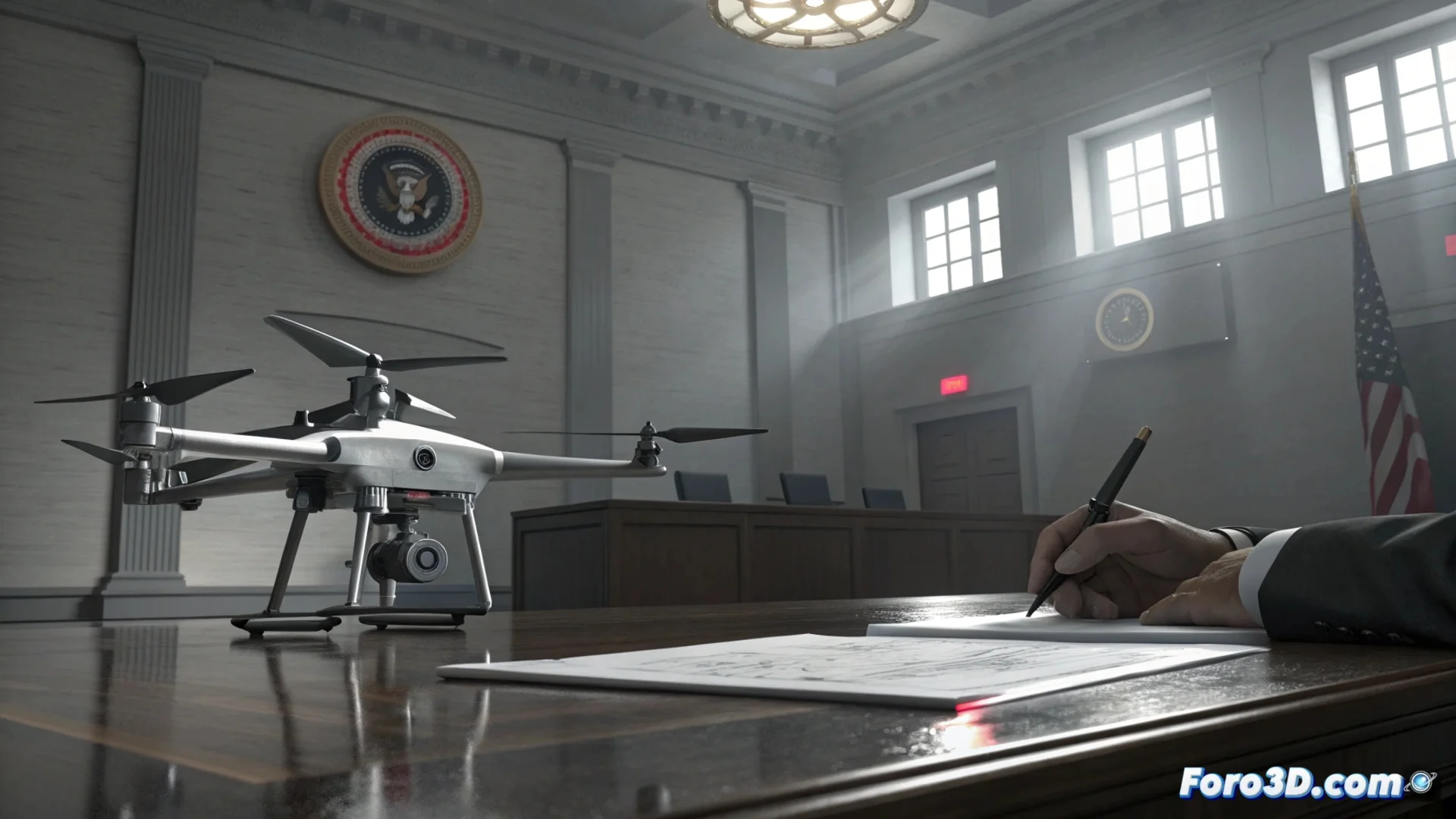
The FCC Must Decide Whether to Ban DJI Drones in the US
The Federal Communications Commission (FCC) in the United States faces a deadline imposed by Congress. It must determine whether to revoke authorization for drones manufactured in China, with the giant DJI at the center of the controversy. This pressure arises from the law known as the Secure Equipment Act. 🚁
Legal Framework and Political Pressures
The US Congress approved this legislation in 2021, setting a deadline until 2022 for the agency to implement the rules. Various lobby groups and legislators argue that these devices could send sensitive information to servers in China, posing a risk. DJI, for its part, rejects these claims and assures that its customers have full control over their data.
Key Points of the Controversy:- The law requires the FCC to stop authorizing telecommunications equipment it considers a security threat.
- DJI is the world's leading drone manufacturer, amplifying the impact of any decision.
- The debate centers on whether flight, video, and location data could be accessible by third parties.
“Our products give users full control over their data. The accusations of security risks are unfounded.” - DJI's Stance.
Consequences of a Potential Ban
If the FCC acts and revokes authorizations, it would prevent the legal sale of new DJI equipment in the country. This would disrupt operations in multiple industries that rely on this affordable and reliable technology.
Sectors That Would Be Affected:- Precision Agriculture: For monitoring crops and optimizing resource use.
- Emergency Response: Fire and rescue teams use them to assess disasters.
- Cinematographic and Audiovisual Production: Essential tool for capturing aerial shots.
The Uncertain Future of the Market
A ban would create an immediate void, forcing users to seek alternatives, often more expensive. Additionally, there is a real risk of activating a gray market of parallel imports, where drones would circulate without the regulatory controls that the law itself seeks to impose. This could, ironically, make it harder to monitor their use and mitigate the alleged risks, rather than resolving them. The FCC's decision will set a crucial precedent for the intersection between global technology and national security. ⚖️