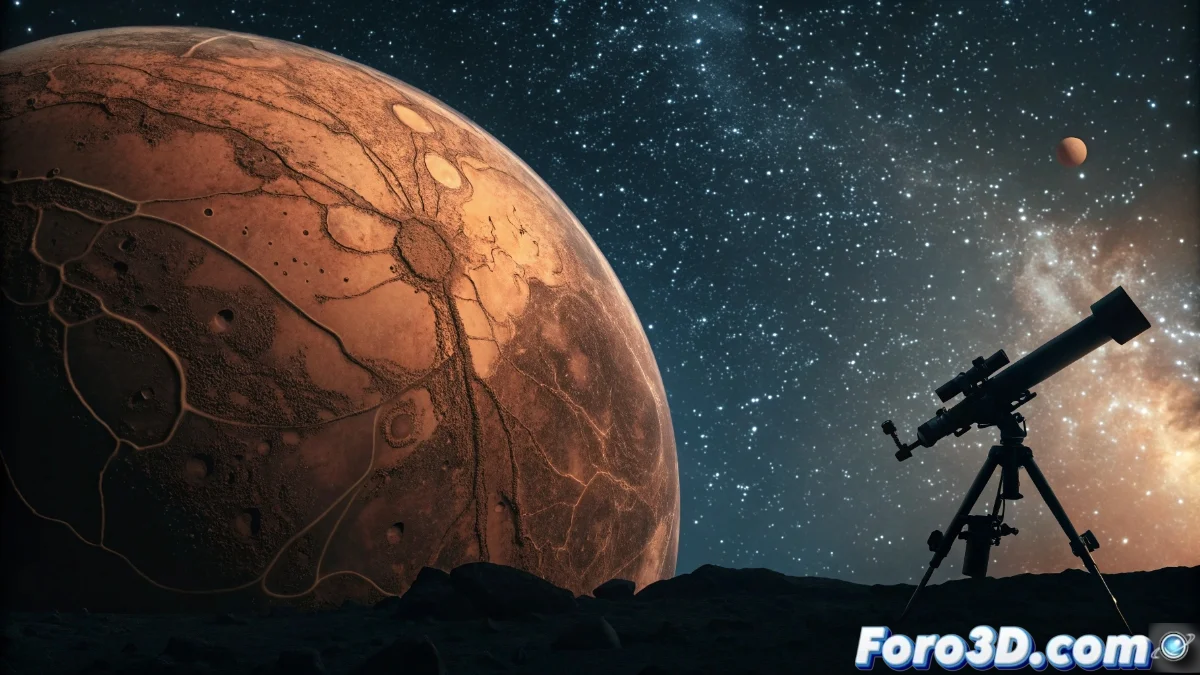
The Fascination with Martian Canals and Their Cultural Impact
At the end of the 19th century, observational astronomy experienced a peculiar phenomenon with the spread of the idea that Mars had artificial canals. Percival Lowell and other astronomers interpreted dark lines on the surface as evidence of an advanced civilization, which not only revolutionized scientific research but also permeated popular culture with fascinating narratives 🌌.
Influence on Science and Society
The hypothesis of the Martian canals drove figures like Giovanni Schiaparelli to create detailed maps, fostering an intense scientific debate. Although advanced technologies, such as more powerful telescopes and space missions, revealed that they were optical illusions, the myth endured in the collective imagination. This concept inspired authors like H.G. Wells, whose works explored extraterrestrial life and drew public attention to space exploration 🚀.
Key aspects of the phenomenon:- Initial telescopic observations that misinterpreted natural formations as constructed structures
- Percival Lowell's contribution to popularizing the theory through publications and lectures
- Integration of the idea into literature and cinema, reinforcing the notion of Mars as a habitable world
Scientific errors, like the belief in the canals, often open doors to unexpected discoveries and technological advances.
Legacy in Science Fiction and Modern Exploration
The book The Martians by David Baron examines how these historical misunderstandings shaped powerful narratives in science fiction. Additionally, the curiosity generated by the supposed canals motivated space agencies, including NASA, to prioritize the search for life on Mars. Today, missions focused on detecting water and biosignatures are a testament to how wrong ideas can lead to significant achievements 🔍.
Lasting consequences:- Inspiration for space programs investigating Martian habitability
- Reflections in contemporary works on the relationship between scientific error and innovation
- Reminder that human curiosity transforms erroneous perceptions into progress
Final Reflections on the Phenomenon
The story of the Martian canals illustrates the interconnection between science and culture. Although the theory proved unfounded, its legacy endures in space exploration and artistic creativity, demonstrating that even erroneous interpretations can ignite the spark of innovation and discovery 🌠.