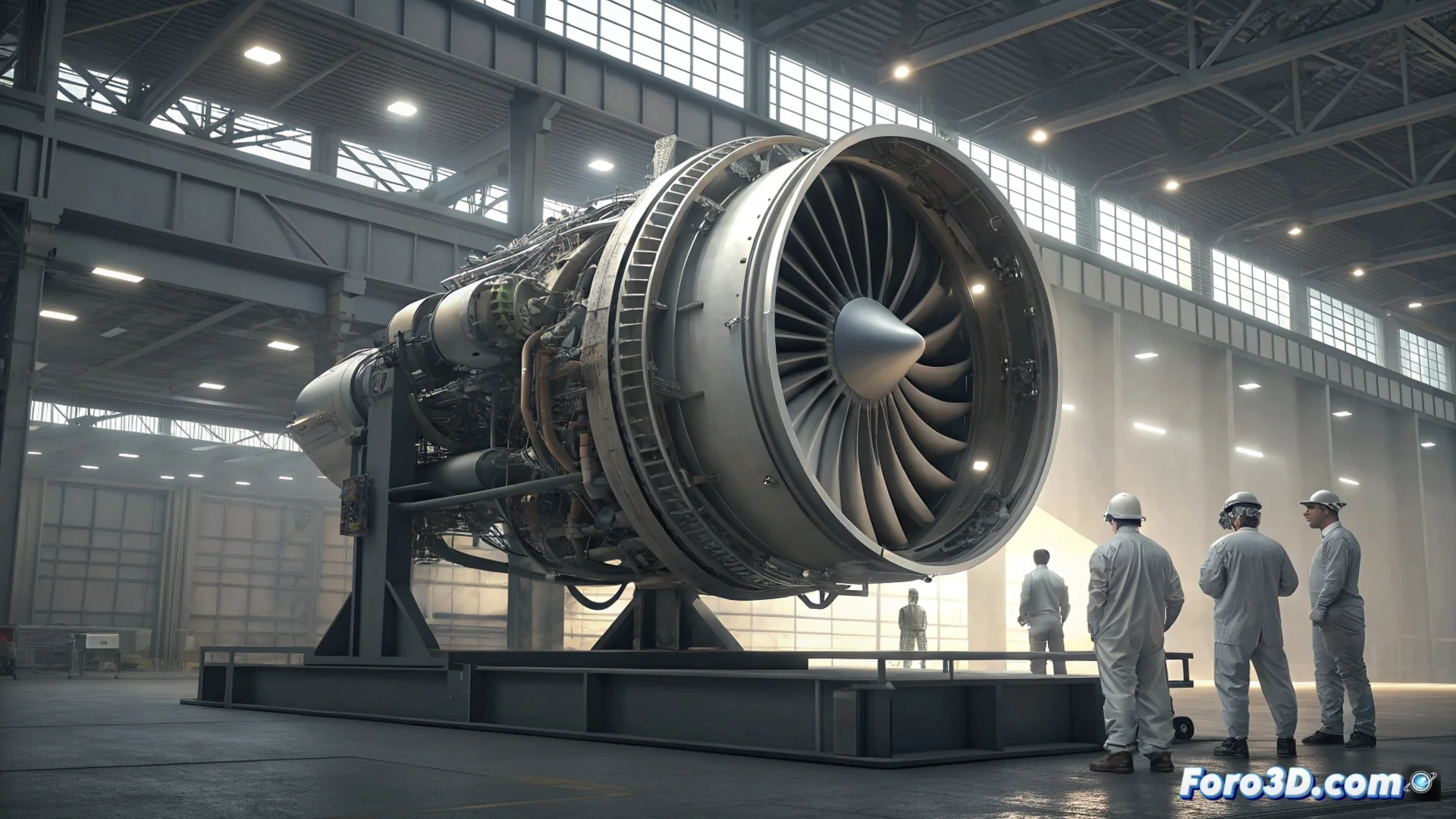
The F918 Turbofan Engine Successfully Completes Its Ignition Tests
The Chinese aerospace industry marks a milestone with the F918 engine, developed in Chengdu by Tianfu Light Power Technology. On December 26, this propulsor passed its ignition tests, a crucial step to validate its design and functionality. It is designed to power high-altitude drones and medium and light utility aircraft, generating 2,000 kilograms of thrust. This achievement addresses a key need in the sector for domestic engines of considerable size. ✈️
Optimized for Long-Duration Missions and Extreme Altitude
The F918 was specifically designed for aircraft weighing between 5 and 15 tons. Its architecture allows operation at altitudes of up to 20 kilometers and sustained transonic cruise speeds of Mach 0.9. To achieve these parameters, it integrates advanced technologies that optimize fuel combustion and improve the sealing of critical components. These innovations are essential for executing missions exceeding 30 hours, even in demanding operational environments.
Key Technical Features of the F918:- Nominal Thrust: 2,000 kilograms, ideal for medium-sized aircraft.
- Service Ceiling: Capability to fly at 20 km altitude.
- Cruise Performance: Efficiently maintains transonic speeds of Mach 0.9.
A good engine doesn't make noise, but the F918's ignition surely silenced many skeptics about China's technological potential in propulsion.
Integration of Intelligent Systems for Greater Reliability
An improved variant of the engine incorporates intelligent control and management systems. These platforms monitor the propulsor's status in real time, detect anomalies, and predict potential failures. This approach significantly increases safety and operational reliability, allowing aircraft to operate with a higher degree of autonomy and the ability to prevent technical issues before they occur.
Advantages of Intelligent Control Systems:- Real-Time Monitoring: Continuously supervises the engine's vital parameters.
- Predictive Failure Detection: Anticipates problems to schedule maintenance.
- Greater Operational Autonomy: Allows aircraft to operate with less human intervention.
A Strategic Advance in Propulsion
The success of the F918 turbofan tests represents more than a technical achievement; it is a strategic advance. It demonstrates China's capability to develop and produce powerful medium-to-large class aeronautical engines, reducing external dependencies. Its application in high-altitude drones and utility aircraft promises to expand surveillance, logistics, and specialized service capabilities, consolidating the country's technological presence in the global aerospace sector. 🚀