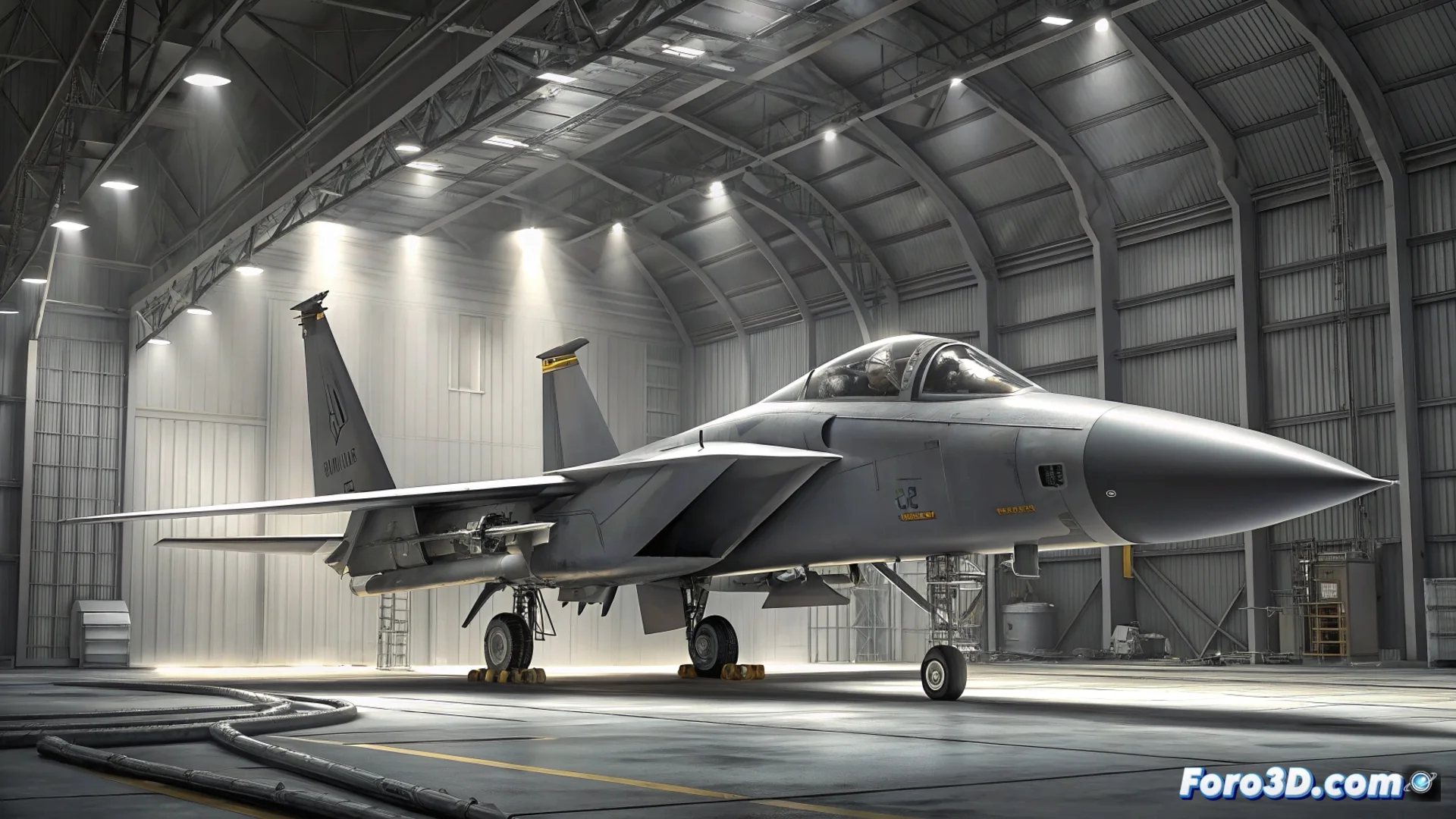
The F-15EX Eagle II: Guide to Modeling the Most Advanced Fighter Jet
The F-15EX Eagle II represents the definitive evolution of the iconic air superiority fighter. This 4.5th generation platform integrates crucial advances to process data and execute complex missions, maintaining the recognizable silhouette of its predecessor but with expanded capabilities. Its fuselage measures 19.43 meters in length, with a wingspan of 13.05 meters and a height of 5.63 meters. 🛩️
Geometry and Structural Details for the Modeler
To recreate this aircraft with fidelity, it is essential to capture elements such as its wide wings and the square air intakes that define its profile. The cockpit features a glass canopy design with digital screens, eliminating analog instruments. The large conformal fuel tanks along the fuselage extend its range without compromising aerodynamics, a key visual detail.
Critical Aspects for an Accurate Model:- External Load Capacity: It has 12 attachment points under the wings and fuselage, which drastically define its silhouette when fully armed.
- Detail Components: The reinforced landing gear, numerous access panels, and antenna distribution require meticulous attention.
- Operational Profile: The heavy armament configuration can make the aircraft appear to defy gravity when on the ground, affecting its static posture.
The flexibility to load different combinations of weapons on its multiple pylons is a crucial aspect that the modeler must consider to represent a specific mission.
Configuring Armament and Mission
Its primary arsenal includes an internal 20 mm M61A1 cannon. The platform can carry up to 22 missiles, combining types such as the AIM-120 AMRAAM and the AIM-9X Sidewinder with precision-guided bombs. This versatility allows simulating pure interception roles or surface attack.
Elements to Consider in Armament Modeling:- Research the exact location of the pylons for each type of weapon or tank.
- Represent how heavy loads visually affect the aircraft's geometry on the ground.
- Choose a specific mission configuration (interception, multirole attack) to give context to the model.
Final Tips for Your Project
When modeling the F-15EX Eagle II, prioritize capturing the relationship between its classic aerodynamic shape and the modern additions that define it. Pay special attention to how the 12 attachment points modify its profile and to the realism of detail components like the landing gear. A good model not only replicates the shape but also suggests the power and operational flexibility of this formidable aircraft. ✈️