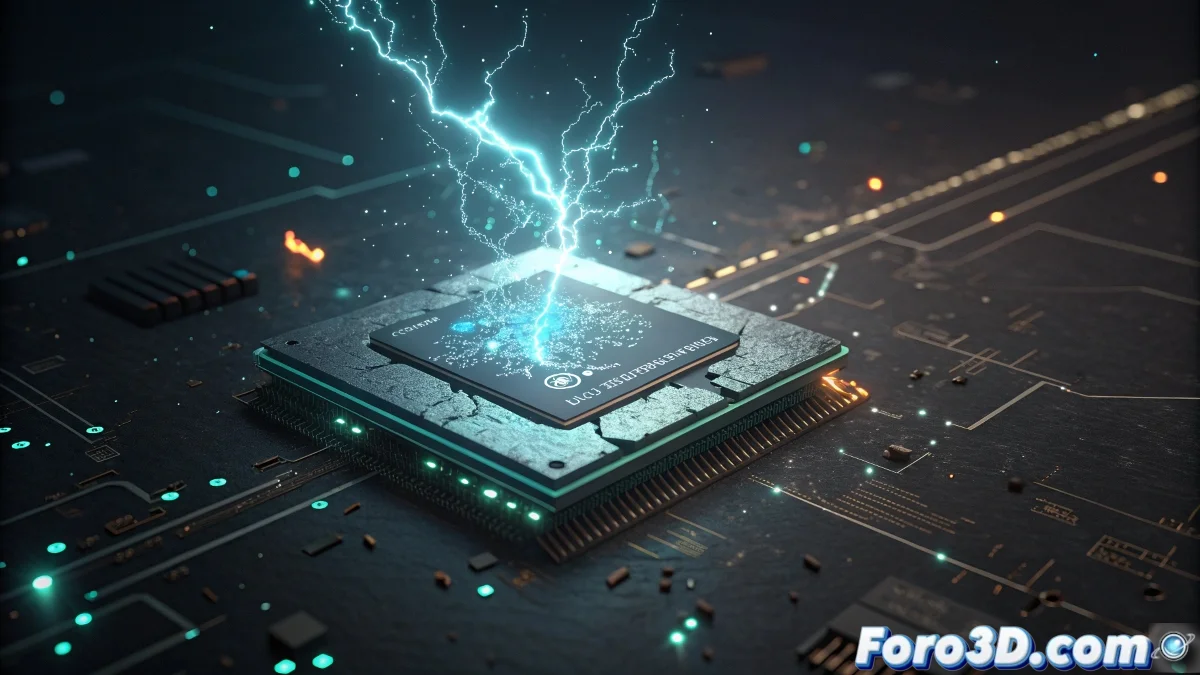
The Fleeting Reign of AI Chips in Our CPUs
Buying hardware with integrated artificial intelligence capabilities has become an act of faith against time. The evolution speed in this segment is so dizzying that what's new today will be ancient history tomorrow. Users of creative applications that rely on AI acceleration know this frustrating technological race all too well.
The lifecycle of these components is measured in months, whereas traditionally it was measured in years. What seemed revolutionary at the time of purchase is soon surpassed by more efficient architectures and expanded capabilities. This reality poses budgetary and logistical dilemmas for studios and independent professionals. ⏳
Investing in AI hardware today is like buying fresh milk: you have to use it quickly before it technologically spoils
Why AI Chips Age So Poorly
Several factors converge to accelerate the obsolescence of these specialized components. Research in machine learning algorithms advances at an exponential rate, requiring increasingly specific and powerful hardware.
- Specialized architectures that are quickly surpassed by more efficient designs
- Compatibility with AI frameworks that constantly evolve
- Precision capabilities that fall short against new requirements
- Energy efficiency improved in each new generation
Developers of creative software often optimize their applications for the latest architectures, leaving behind those that have only been on the market for a few months. This phenomenon is particularly evident in AI rendering tools and image processing applications. 🔄
Strategies to Navigate This Accelerated Obsolescence
Smart users adopt pragmatic approaches to maximize their investment without falling technologically behind. The key lies in balancing current performance with relative future-proofing.
- Prioritize architectures with better long-term support based on the manufacturer's history
- Consider cloud solutions for more demanding AI tasks
- Maintain realistic expectations about hardware lifespan
- Plan upgrades in shorter but strategic cycles
Some studios opt for hybrid configurations where local hardware handles basic workflows while specialized tasks are outsourced to cloud services with constantly updated hardware.
The Uncertain Future of AI Acceleration
This technological race shows no signs of slowing down. Major manufacturers compete fiercely to dominate the integrated AI segment, launching new iterations at an overwhelming frequency.
Creative sector professionals must develop a new mindset regarding hardware investments. The technological stability that was once taken for granted is now a luxury of the past, requiring more dynamic and flexible planning. 🚀
And if you're waiting for the perfect AI chip to come out, you might as well plant a tree whose wood you'll use to build the desk where you'll work when you finally buy it... if by then we aren't working with quantum chips 😉