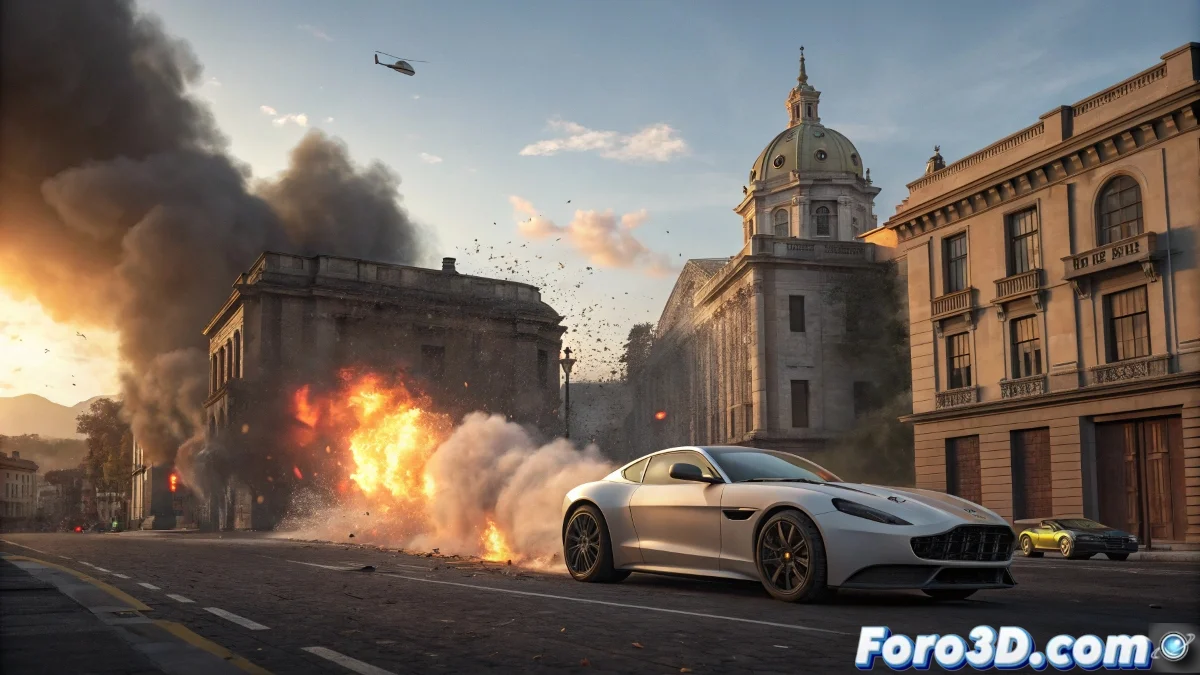
When Espionage Needs Explosive Effects
In No Time to Die, DNEG proved that even James Bond needs a bit of digital magic 💥🕴️. They transformed controlled explosions into cinematic art, where every piece of debris flies with millimeter precision... almost always.
Ingredients for a Perfect Explosion
The visual survival kit included:
- Houdini Simulations that made cars fly (sometimes too much)
- Extended Environments in Maya so Bond never runs out of spectacular places
- Compositing in Nuke so perfect that even Q would approve
The most Bond-like moment: when a digital car flew so high it almost reached the villain's satellite. Happy error that lasted only one render.
How to Recreate This Action in Blender
- Realistic Explosions: Smoke and fire simulations with the Mantaflow engine
- Procedural Destruction: Cell Fracture modifiers and rigid body physics
- Integration: Nodal compositing to blend real and CG elements
The Science of Elegant Chaos
The technical challenges included:
- Coordinating hundreds of elements without the scene looking like a 90s music video
- Maintaining realism in sequences that defy the laws of physics
- Compositing in Nuke that respects the classic Bond aesthetic
The result was so convincing that viewers dodged imaginary debris... with varying levels of success 🍸.
Lessons for Action Artists
This production taught that:
- A good explosion effect must impress without distracting
- Simulation errors sometimes inspire new ideas
- Even the most sophisticated agents need digital help
So the next time you see Bond dodging an explosion, remember: behind every digital piece of debris there's a VFX artist who probably dreamed of chases that night... and faster renders than an Aston Martin DB5 🚗💨.