The Executioner's Journey: Ogami Itto and the Quest for Redemption in Feudal Japan
The saga of Lone Wolf and Cub presents one of the rawest and most poetic narratives in manga. Its protagonist, Ogami Itto, embarks on a path of no return after falling victim to a trap that stains his honor as the Shogun's executioner. Turned into a wandering warrior, his only companion is his young son, Daigoro, in a brutal contrast that defines the entire work. 🗡️
The Artistic Seal of Goseki Kojima
The visual strength of the series is undeniable. Goseki Kojima employs a brush technique that prioritizes movement and emotional intensity. His pages are dominated by ink blots and energetic strokes that not only illustrate the action but make it palpable, setting a visual standard for graphic chambara.
Key Features of the Art:- Pure Dynamism: Every combat scene flows with choreographed violence, where the ink seems to splatter off the page.
- Expressive Economy: Kojima masterfully uses black and white, creating oppressive atmospheres or desolate landscapes with few strokes.
- Stylized Brutality: The representation of physical damage is direct and visceral, reinforcing the ruthless tone of the feudal world.
Kojima's stroke does not draw samurai, it sets them free. His ink is the edge of the katana itself.
An Odyssey of Honor and Survival
Beyond revenge, the story delves into the condition of the disgraced warrior. Itto embodies the perverted samurai ideal, forced to sell his sword to survive, while Daigoro's presence introduces an element of humanity and constant vulnerability. His journey is a continuous exploration of loyalty, redemption, and the price of justice.
Fundamental Narrative Pillars:- The Path of Meifumadō: The protagonist's physical and spiritual journey, accepting jobs as a hired assassin to fund his quest.
- The Father/Son Duality: Daigoro is not a mere companion; he is Itto's moral anchor and ultimate motive, in a world that has taken everything from them.
- Conspiracy and Drama: The main plot intertwines with episodic missions, gradually revealing the web of betrayal that pursues them.
The Irony of a Destiny Forged in Steel and Wood
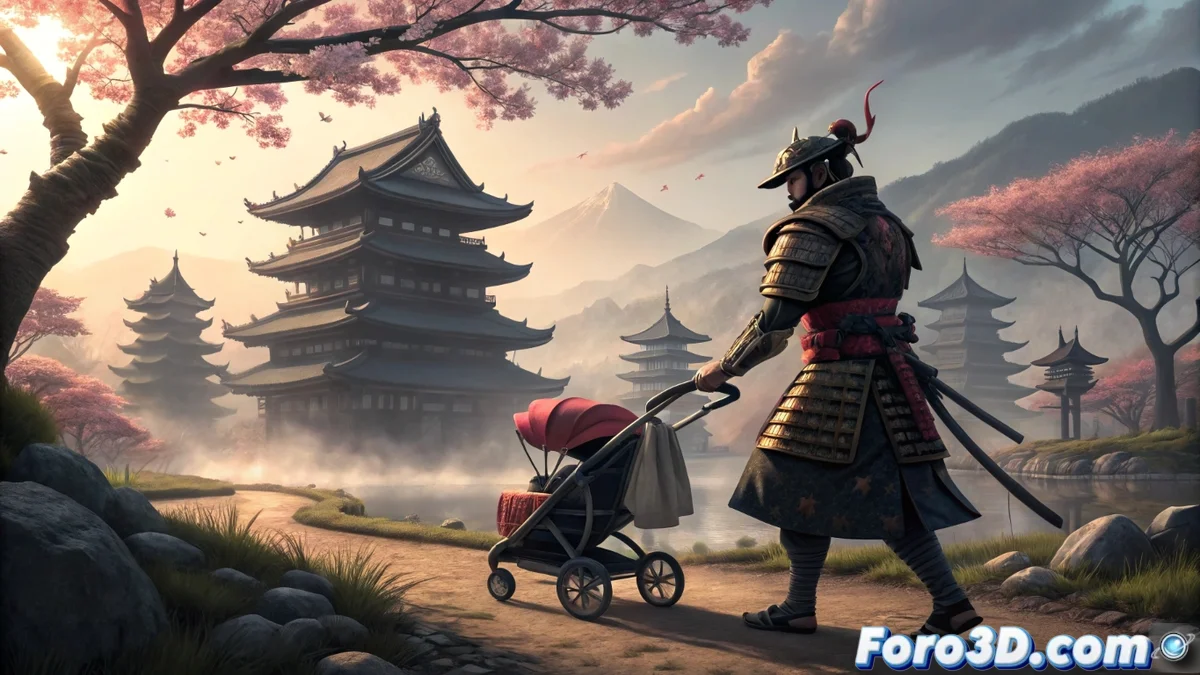
There is a deliberate and powerful irony in the iconic image of Japan's most fearsome samurai pushing a baby cart. This visual element is not a mere comic device, but a constant narrative symbol. It represents the burden of fatherhood on a path of death, vulnerability amid massacre, and an absurd reminder that even tragic heroes have everyday responsibilities. It is the paradoxical heart of the saga. 👶