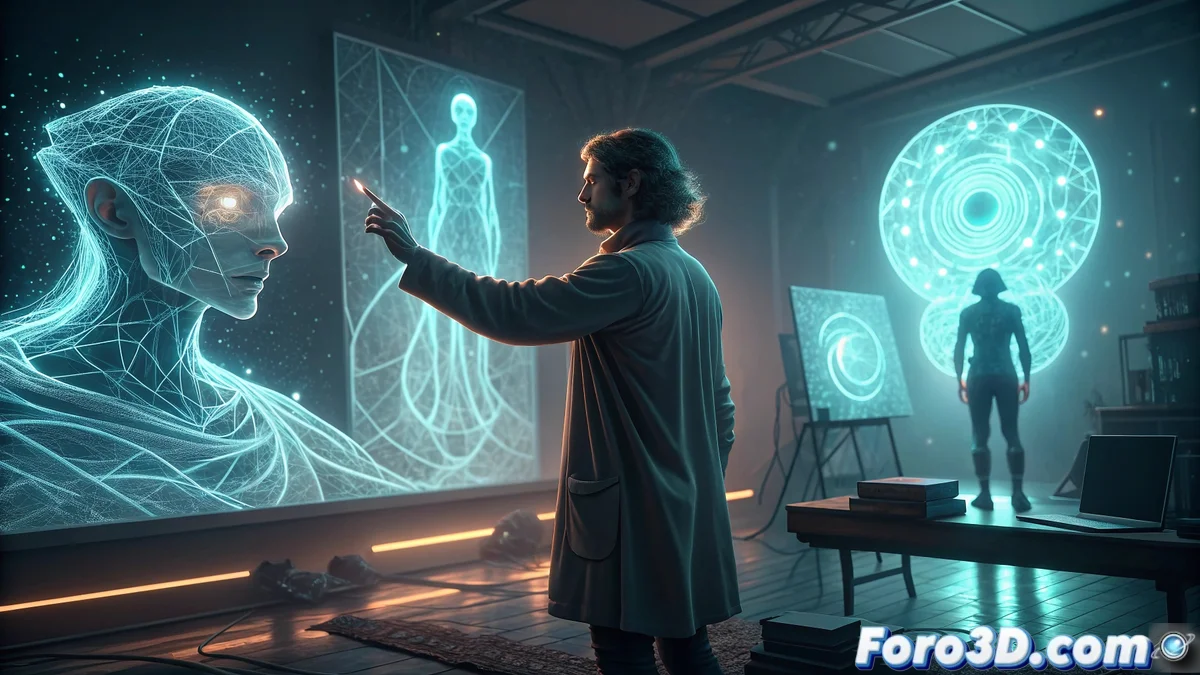
The Evolution of the 3D Artist in the Age of Artificial Intelligence
The creative landscape for 3D artists is undergoing a radical transformation where artificial intelligence tools are completely redefining professional competencies and traditional workflows. It is no longer primarily about manipulating vertices or adjusting render settings, but about developing skills to effectively communicate artistic concepts to systems that can produce sophisticated results with minimal instructions. This transition places us in a position closer to that of creative directors overseeing and refining algorithmically generated results 🎨.
From Technical Mastery to Creative Articulation
Generative platforms like Stable Diffusion, Midjourney, and DALL-E have revolutionized access to visual creation, allowing complex ideas to materialize in a matter of seconds through well-structured instructions. This shift is moving the artist's focus from the time invested in mastering specific software towards the ability to formulate coherent visions with aesthetic consistency. Technical expertise now manifests in understanding how different descriptors, referential styles, and visual parameters influence results, creating a new language of specialization where the skill to iterate and refine prompts becomes an autonomous artistic discipline 💡.
New Essential Competencies:- Precise articulation of visual concepts using natural language
- Deep understanding of how different styles and references affect generative results
- Ability to rapidly iterate between multiple variations and refinements
The true value of the contemporary artist no longer lies in direct technical execution, but in their ability to guide, refine, and imbue with artistic intention what machines produce.
Curation as a Core Skill
In this emerging ecosystem, the artist functions as a curator of infinite possibilities, filtering through numerous generated variations to identify those that best materialize their original vision. This process demands a trained eye to detect subtle aesthetic differences and conceptual distinctions, as well as the insight to recognize when an unexpected result may surpass the initial intention. True mastery is no longer measured by the ability to create from scratch, but by the skill to efficiently direct the creative potential of AI towards results that reflect artistic coherence and visual quality, balancing algorithmic serendipity with deliberate creative control 🎯.
Dimensions of Creative Curation:- Filtering and selecting among multiple generated variations
- Identifying results that exceed initial expectations
- Balancing intentional direction with algorithmic discovery
The Artist as Technical Poet
Paradoxically, we now spend more time describing what we want to create than creating it directly, as if we have become technical poets whispering to dreaming machines while we wait for our visual metaphors to materialize into perfect pixels. This transformation represents a fundamental shift in professional identity, where narrative ability and conceptual precision become tools as valuable as traditional technical skills. The 3D artist of tomorrow will be the one who can fluidly navigate between human creative intuition and the generative potential of artificial intelligence, creating synergies that expand the boundaries of the visually possible ✨.