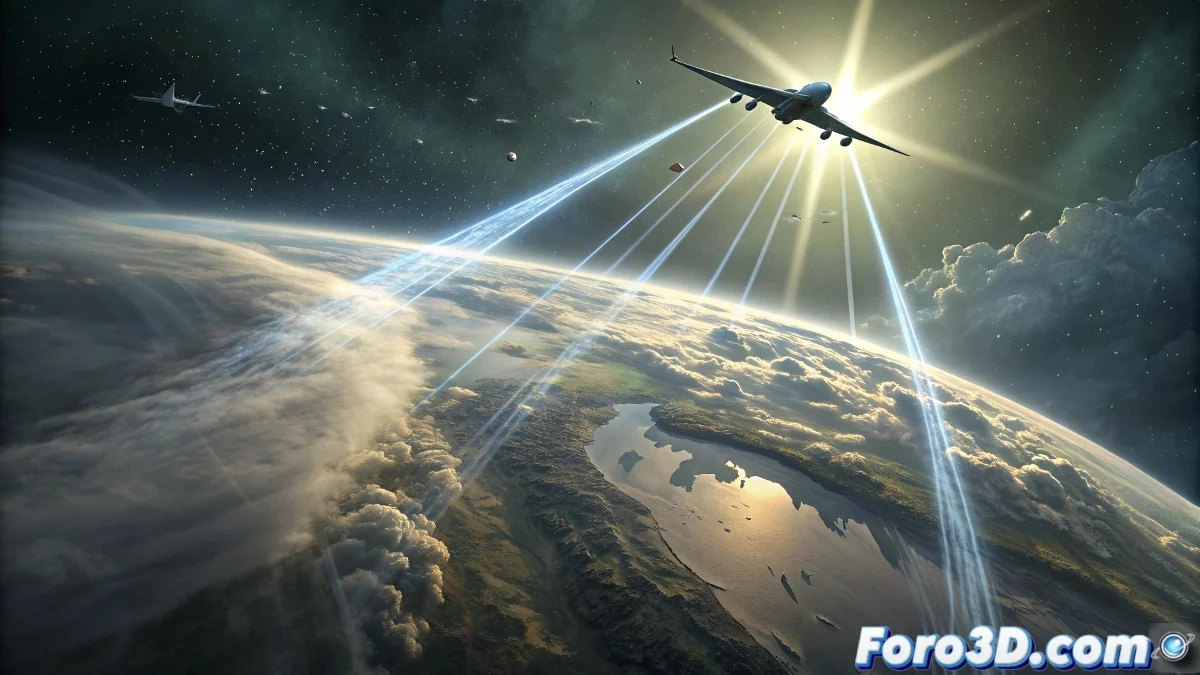
The Evolution of Solar Geoengineering as a Response to Climate Change
Intentional climate manipulation has transitioned from scientific speculation to becoming an emergency technology seriously considered by the international community. What began as observation of natural phenomena like volcanic eruptions now emerges as a potential technical solution to accelerated global warming 🌍.
Technological Development and Ethical Considerations
The advancement of solar geoengineering has paralleled the rise in global climate concerns. As computational models became more sophisticated, so did the debate over the risks and moral implications of intervening in natural systems on a planetary scale. This technology represents a fundamental shift in how humanity relates to its environment.
Main evolutionary milestones:- Observation of volcanic cooling effects in the 1990s
- Development of advanced climate simulation models between 2005-2015
- Creation of international research protocols post-2020
"Solar geoengineering is not a magic solution, but a tool for managing extreme climate risks that requires responsible global governance" - Dr. Elena Martínez, Climatologist
Visual Representation Techniques in Illustrator
Creating precise scientific illustrations requires mastery of specialized tools. Adobe Illustrator offers unique capabilities for visually appealing and technically accurate representation of complex solar radiation management concepts.
Initial Setup and Structure:- 1920x1080px document with RGB color mode for screen
- 2P perspective grid system with central vanishing point
- Organization into 6 main layers with clear naming
Detailed Technical Guide for Illustrator
To create scientific illustrations of solar geoengineering in Illustrator, follow these specific steps:
Document Preparation:- Open Illustrator and create new document: File → New → 1920x1080px, RGB, 72ppi
- Set up perspective grid: View → Perspective → 2 Point Perspective Grid
- Set up layers: F7 for layers panel → Create "Background", "Planet", "Atmosphere", "Technology", "Effects", "Text"
- Select Ellipse Tool (L) → Hold Shift and create 600px diameter circle
- Apply gradient: Appearance panel → New fill → Radial gradient blue (#1E3A8A) to green (#065F46)
- For continents: Pen Tool (P) with 2pt stroke color #1F2937, fill #374151
- Aircraft: Rounded rectangle 80x20px, 5px radius, color #DC2626
- Reflective particles: Custom scatter brush size 3-15px, 80% spacing
- Atmospheric effects: Gaussian blur 15px + Screen blend mode 60% opacity
- Solar radiation: Radial gradient yellow (#FBBF24) to transparent, Screen mode 70%
- Particle-light interaction: Effect → Blur → Gaussian blur 8px + Transparency 40%
- Atmospheric shadows: Ellipse with black to transparent gradient, Multiply mode 30%
- Always use separate layers for different elements
- Save incremental versions with descriptive names
- Experiment with different blend modes for atmospheric effects
- Create symbols for repetitive elements like aircraft
- Use gradient meshes for realistic atmospheric effects
- Apply distortion effects for atmospheric flow patterns
Cultural Impact and Future Perspectives
Solar geoengineering has transcended the scientific realm to become a topic of cultural and political discussion. Its representation in media and art reflects both technological hope and ethical concern about our capacity to modify fundamental planetary systems. The future of these technologies will depend on both technical advances and global social consensus 🌐.