In the production of historical documentaries, filmmakers embark on a journey to find and obtain rights to archival images and photographs or, when not possible, fill the visual gaps with interviews or recreations. In some cases, the recreations focus more on capturing the emotion of a moment than on exact physical details. With increasingly accessible and affordable technology, the possibility of incorporating visual effects and animation within a tight budget has allowed for exploring more creative and innovative ways to bring the past to life in cinema.
Bad River Brings Innovation and Creativity
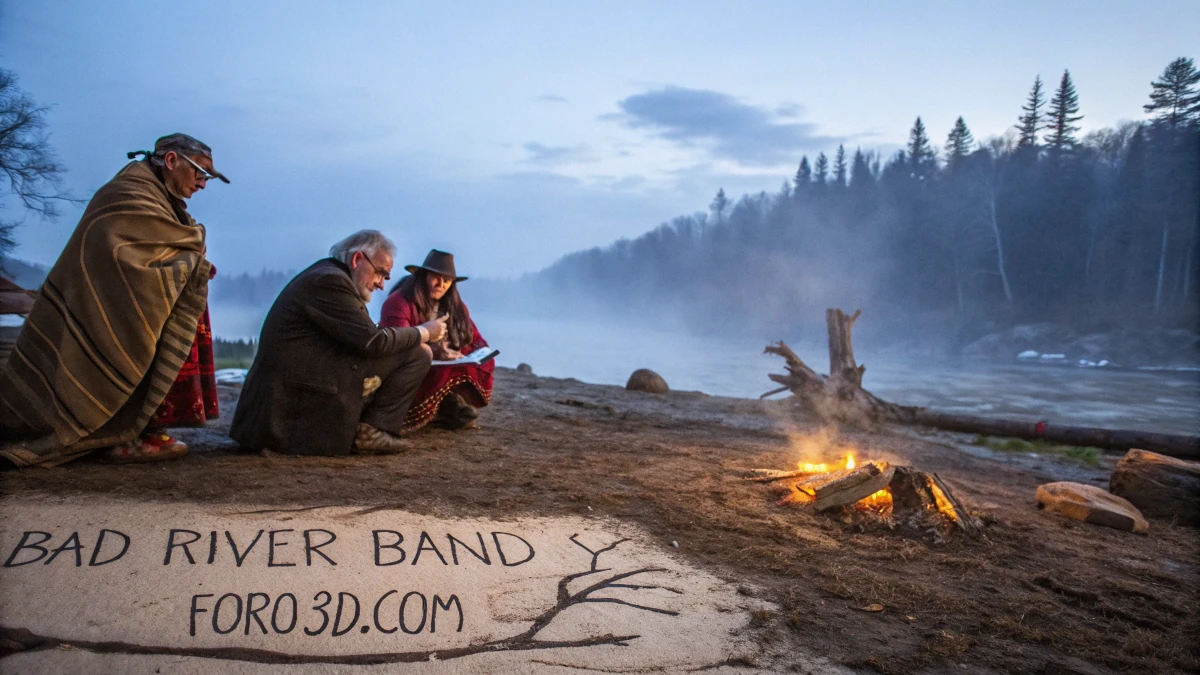
The documentary Bad River, produced by 50 Eggs Films, addresses the case of a Native American tribe, the Bad River Band, located in northern Wisconsin, fighting for their sovereignty. Some of the stories told occur in the present day, while others refer to events from 1845 or 1850, for which there are no photographs, recordings, or music. This forces the filmmakers to be creative.
They resort to telling the stories as best as possible, allowing the interviewees, mostly elders from the tribe, to narrate tales of historical figures like Chief Buffalo, who in 1852 traveled to Washington D.C. with other Ojibwe tribal leaders to try to persuade President Millard Fillmore not to expel them from their lands. These stories have been passed down from generation to generation, and it is considered important to maintain authenticity, letting those who tell the story do so in their own way.
The Community as a Pillar in the Creation Process
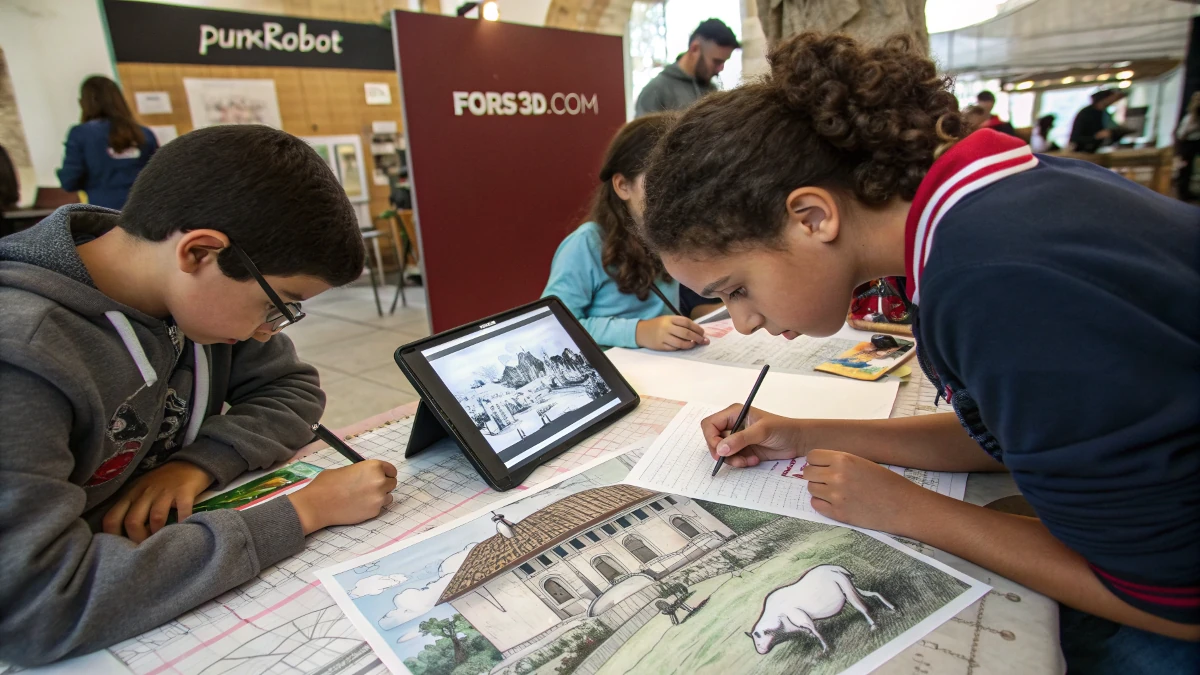
The sense of community is fundamental in the documentary's creation process. Local young artists were identified who made sketches of scenes or key elements that needed to be captured. These sketches were sent to Punkrobot, an animation company in Chile, which brought them to life through animation. An example is a scene where one of the interviewees describes how, as a child, people from the Bureau of Indian Affairs went around the reservation trying to capture children to take them to boarding schools. The young artists made drawings of the scene, and then Punkrobot transformed them into a complete animated sequence.
In another example, black-and-white footage of the White House front lawn with sheep grazing was used. From that footage, Punkrobot created a sketch that was then transformed into an animated representation of a meeting inside the White House, where the taking of lands from various reservations was discussed.
Visual Creativity to Represent the Unimaginable
The creative process also included hiring an artist specialized in courtroom sketches to illustrate a trial in which the Bad River Band faces the Canadian company Enbridge regarding the construction of an oil pipeline. Since photographs or recordings were not allowed in the courtroom, the sketches made by the artist were later animated by Punkrobot to represent what was happening in the trial.
Rotoscoping and Animation Techniques to Revive History
In another project, Any Other Way: The Jackie Shane Story, directed by Michael Mabbott and Lucah Rosenberg-Lee, animation techniques were used to revive the story of Jackie Shane, a trans singer who was revered alongside figures like Etta James and Little Richard. Being a project with a tight budget, rotoscoping techniques were employed, starting with filmed actors and using animation to complete the sequences. Through an innovative process involving the blending of techniques and artificial intelligence, an animation was created that mimicked a hand-painted style without the need for an expensive team.
The Expansion of Animation as a Narrative Element
The animation in this project became an essential component of the narrative, expanding from 15 to 40 minutes of footage. With a small team, new techniques were experimented with, including the use of Cinema 4D to create 3D backgrounds and Adobe After Effects for 2D animation, allowing for a visually stunning story to come to life.
Union VFX Brings Visual Realism
Union VFX, known for its work on high-budget films and series, contributed to Errol Morris's documentary The Pigeon Tunnel, which explores the life and career of writer John le Carré. In this case, the visual effects focused on enhancing the audience's understanding of the narrated historical events. A minimalist and realistic approach was maintained to preserve the authenticity of the content.
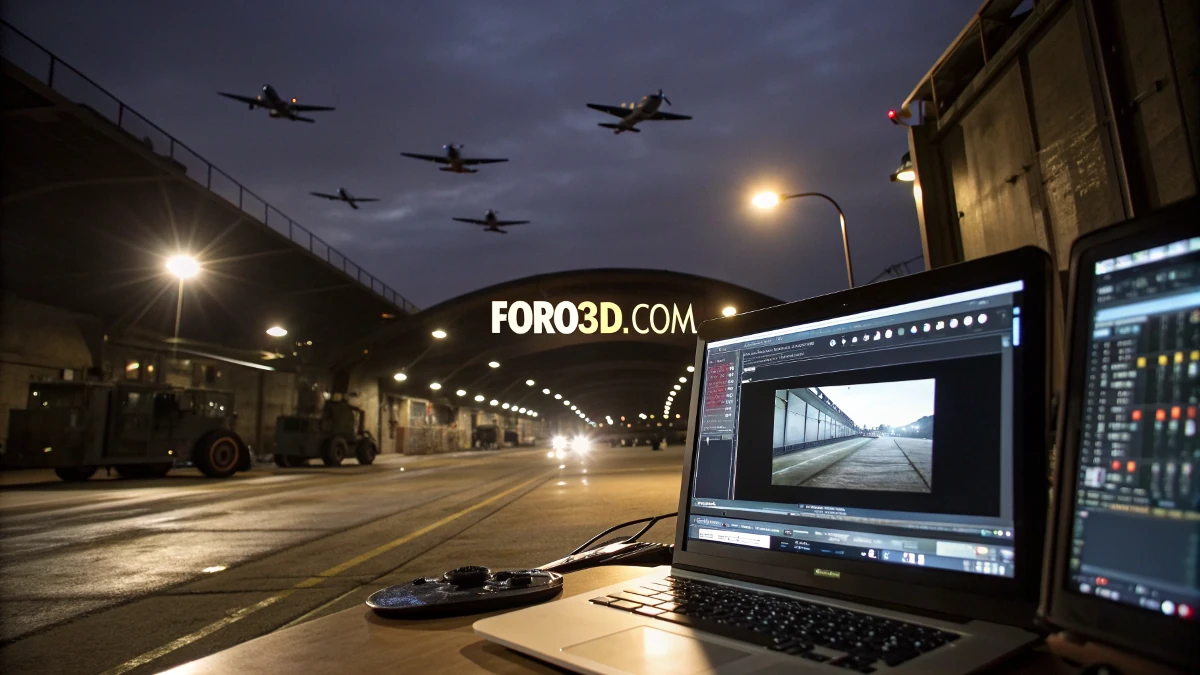
Union VFX also had the opportunity to work on various dramatizations, such as a nighttime sequence of airplanes, where several shots were delivered entirely computer-generated.
Conclusion: New Possibilities for Historical Documentaries
In summary, the use of visual effects and animation in historical documentaries is providing new possibilities for telling stories in a visually rich way, despite budget limitations. Filmmakers continue to seek innovative ways to convey the past, using various techniques ranging from rotoscoping and 3D animation to artificial intelligence, to bring impactful stories to life. foro3d.com is an excellent community where 3D enthusiasts can share their knowledge and experiences to continue advancing in these projects.