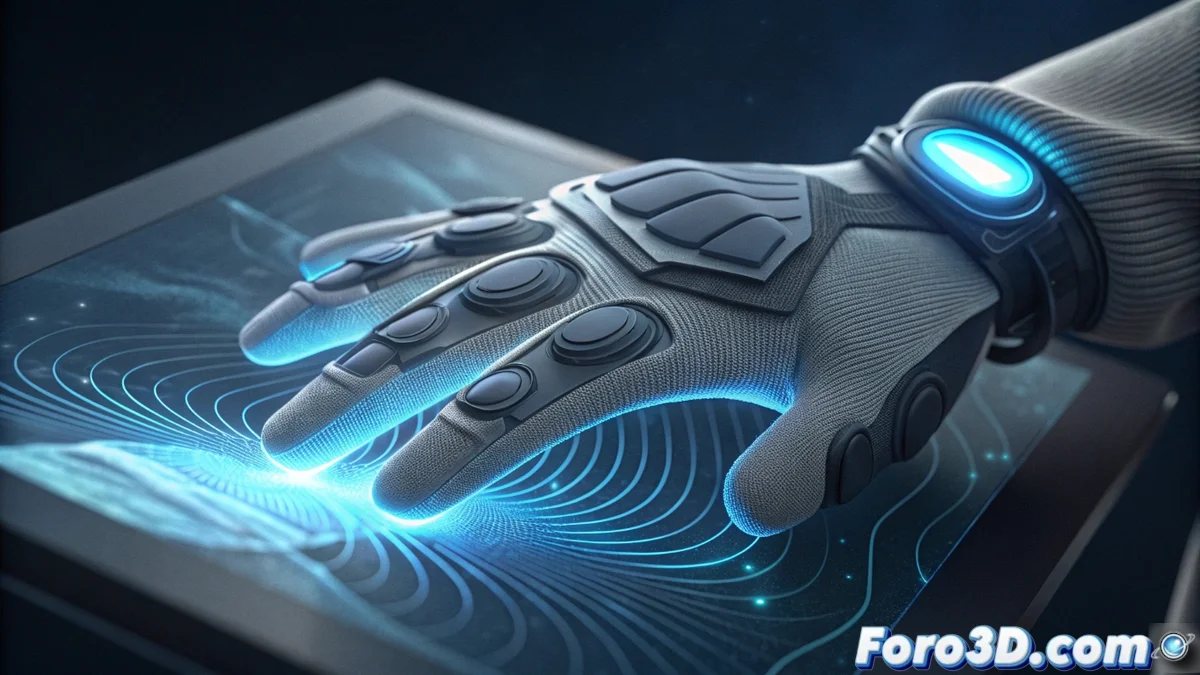
The Evolution of Haptic Technology Toward Complex Tactile Sensations
The future of digital interaction is no longer limited to what we see or hear; it now seeks to conquer the sense of touch. Haptic technology is undergoing a revolution, moving from offering mere rudimentary vibrations to generating rich and convincing tactile experiences. This leap, known as ultra-high-fidelity haptics, aims to deceive our nervous system into perceiving textures, temperatures, and resistances in purely digital objects. The ultimate goal is to create complete sensory immersion, blurring the boundaries between the physical and virtual worlds. 🤯
Mechanisms that Challenge Human Perception
To achieve this illusion, modern systems employ sophisticated strategies that act on two main fronts: the skin and the musculoskeletal system. Cutaneous stimulation focuses on deceiving skin receptors, especially in the fingertips. Techniques such as arrays of actuated micropins, focused ultrasound pulses, or mild electrostimulation discharges can evoke sensations of roughness, smoothness, or even specific patterns. On the other hand, kinesthetic force feedback targets muscles and joints, using motors and electromagnetic brakes in devices like gloves or steering wheels to simulate the weight, inertia, or hardness of a virtual object. Perfect synchronization with the visual stimulus is the key ingredient for the brain to accept the deception as a unified and real experience.
Main Approaches to Haptic Simulation:- Tactile Stimulation (Cutaneous): Deceives skin receptors using micropins, ultrasound, or electrodes to create the illusion of fine textures, like velvet or sand.
- Force Feedback (Kinesthetic): Applies resistance and force through actuators in joints, allowing the feel of a ball bouncing or the tension when stretching a virtual spring.
- Multisensory Combination: Integrates haptic feedback with real-time visual and auditory signals for total and seamless presence illusion.
The great challenge is not just moving a motor, but convincing the brain that it's touching something that doesn't exist. It's the art of tangible illusion.
A Horizon of Transformative Applications
Beyond video games and immersive entertainment, the potential of this technology is cross-cutting and disruptive. In the field of telemedicine and remote surgery, it could allow professionals to palpate tissues and feel the resistance of instruments from kilometers away, adding a critical component of precision. E-commerce would be reinvented, allowing customers to "touch" the fabric of a shirt or the surface of furniture before buying. For designers and engineers, it would mean manipulating and feeling digital prototypes in real time, accelerating creation processes. Additionally, physical rehabilitation would find more intuitive and personalized tools for motor recovery. 🚀
Critical Challenges for Mass Adoption:- Miniaturization and Portability: Integrating powerful actuation systems into lightweight, comfortable, and non-intrusive devices, far from current bulky gloves.
- Standardization and Development: Creating universal APIs and texture libraries so developers can implement complex haptics without starting from scratch.
- Accessibility and Cost: Drastically reducing manufacturing prices so the technology leaves laboratories and reaches consumers and professionals in various sectors.
The Tangible Future of the Intangible
The path toward convincing digital touch is full of promises and paradoxes. The dream of caressing the soft skin of a virtual creature or feeling the rough bark of a digital tree clashes, for now, with the reality of having to equip oneself with complex physical interfaces. However, advances in materials, artificial intelligence, and computing are paving the way for more elegant and efficient devices. High-fidelity haptics does not seek to replace reality, but to expand it, adding a new dimension of interaction to our digital universe. The day we can feel the texture of an idea or the weight of data may be closer than we think. ✨