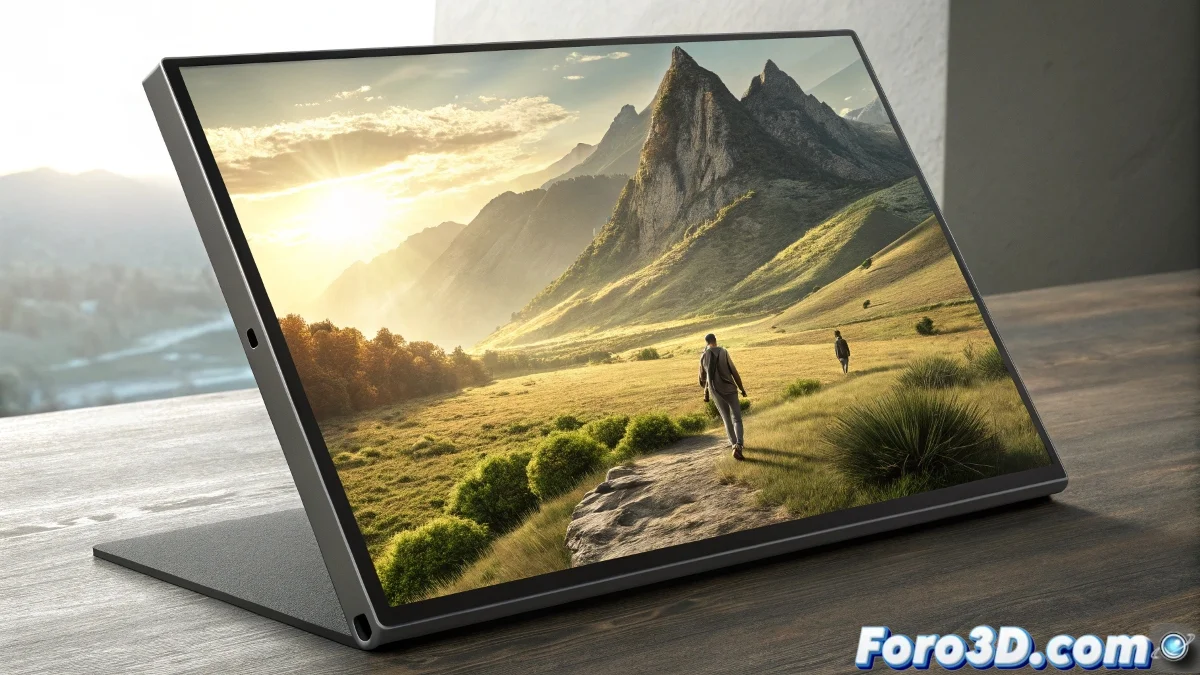
The Evolution of E-Ink: From Digital Paper to Color Video
The reflective display technology known as e-ink represents one of the most significant advances in low-power displays. Initially developed at the MIT Media Lab, this revolutionary solution has transformed our way of interacting with digital content on devices where energy autonomy is a priority 📱.
Origins and Fundamental Principles
The first prototypes of e-ink appeared at the end of the 20th century as an alternative to traditional emissive screens. The distinctive feature that marked its success was the near-zero power consumption in static state, allowing weeks of autonomy in e-book readers. The technology is based on microcapsules containing electrically charged particles that reorient according to the applied electric field.
Current Innovative Applications:- Digital price tags in retail that can be updated remotely
- Portable medical devices for continuous patient monitoring
- Outdoor public information screens with perfect solar visibility
The true magic of e-ink lies in its ability to maintain an image without power, like the page of a traditional book but with the versatility of the digital.
Implementation in CryEngine: Realistic Simulation Step by Step
Creating a convincing simulation of e-ink screens in CryEngine requires meticulous attention to optical and temporal behavior details. The key is to faithfully replicate the unique properties of this technology through custom shaders and specific rendering configurations 🎮.
Initial Project Setup:- Start CryEngine 5.7+ and select New Level from the File menu
- Set r_ColorGrading to 1 and r_HDRGrainAmount to 0.0 for maximum color purity
- Set r_AntialiasingMode to 4 (TAA) with r_TemporalAASamples to 16 to reduce flickering
- Create a dedicated rendering layer called "EInkDisplay" with priority 5
Development of the Specialized Material
The custom shader is the most critical component to achieve the optical realism characteristic of e-ink screens. It must replicate the diffuse reflectivity similar to paper and the absence of intense specular highlights that define this technology.
Specific Material Parameters:- Set Glossiness to 0.15-0.25 for a matte surface
- Set Specular Level between 0.05-0.12 to minimize reflections
- Adjust Diffuse Color to RGB 0.95, 0.95, 0.92 to simulate paper background
- Enable Subsurface Scattering with value 0.08 for depth effect
Simulation of Temporal Behavior
The limited response time of the pixels is a distinctive feature that must be faithfully replicated. Implement a post-processing system that adds the characteristic motion artifacts during rapid image transitions.
Motion Effects Configuration:- Create a Color Grading layer with high contrast (1.4-1.6)
- Set r_MotionBlur to 0.01-0.03 for subtle ghosting
- Implement a Lua script that dynamically modifies r_Chroma during frame changes
- Set r_Sharpening to 0.3-0.5 to maintain sharpness despite ghosting
Optimization for Different Scenarios
For beginner users, I recommend starting with the default values of the "PaperLike" material available in CryEngine's Asset Library. Advanced users can experiment with custom shader graphs that incorporate subtle normal maps to simulate paper texture.
Performance Tips:- Use Texture Streaming with high priority for the screen material
- Set r_TexturesStreaming to 2 for simulated mobile devices
- Reduce r_ShadowPoolSize to 512 for small screens
- Enable e_ShadowsMaxTexRes to 128 to optimize performance
Future and Technological Perspectives
The continuous development of advanced e-ink promises to expand its applications into domains currently dominated by LCD and OLED screens. Research focuses on improving refresh rate and color gamut without compromising the energy efficiency that defines this revolutionary technology 🚀.