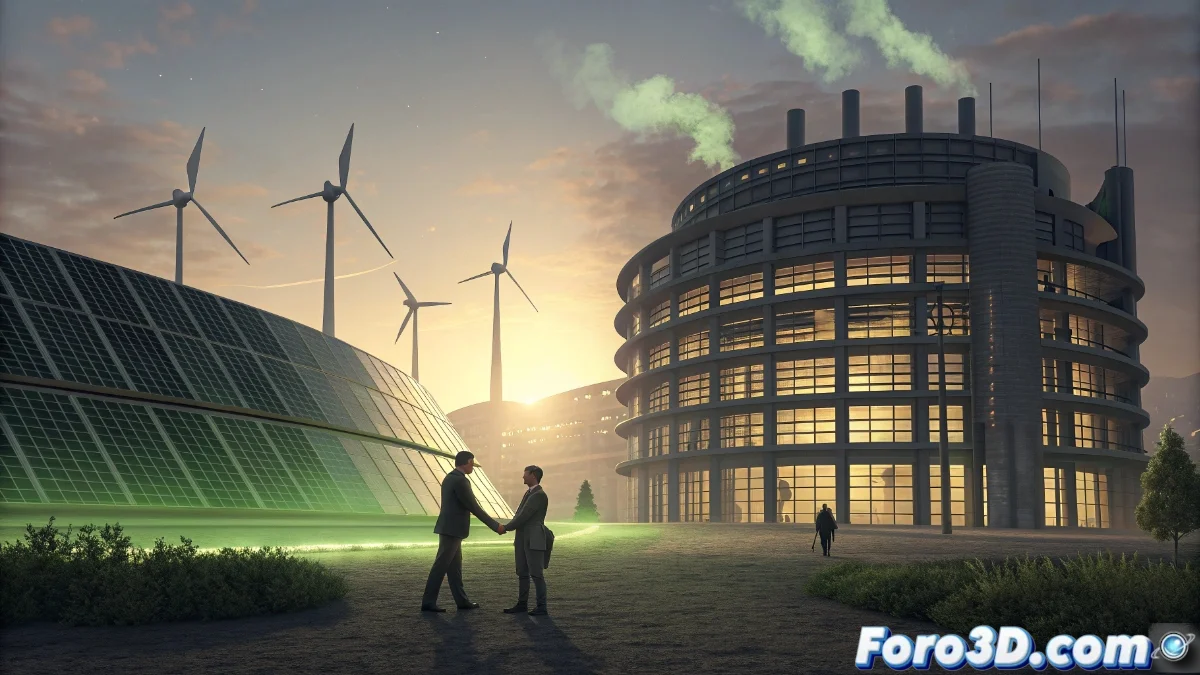
The European Union Reaches Historic Agreement to Reduce Emissions by 90% by 2040
The twenty-seven member states of the European Union have achieved an unprecedented pact that establishes the reduction of 90% of carbon dioxide emissions by the year 2040, taking as a base the levels recorded in 1990. This fundamental milestone in Europe's ecological transition represents a crucial advance toward climate neutrality, although it has required complex negotiations and significant concessions among the participating countries to reach the necessary consensus. 🌍
Strategic Flexibilities for Sectors in Transition
The climate agreement incorporates progressive adaptation mechanisms for those economic sectors with the greatest dependence on fossil fuels, including freight transport, heavy industry, and agricultural activities. These special provisions seek to facilitate an orderly and sustainable transformation that considers the technical and economic particularities of each production sector.
Implemented Support Measures:- Extended deadlines and gradual targets for high-energy-intensity industries
- Specific funding programs for innovation in green technologies
- Economic incentives targeted especially at regions with greater structural challenges
"The ecological transition must be fair and viable for all productive sectors, without compromising global climate objectives" - Official Statement from the European Council
Questions About Practical Effectiveness
Various environmental organizations have expressed serious reservations about the agreement's real capacity to meet the established targets, pointing out that the concessions granted could dilute the expected environmental impact and delay the effective achievement of the committed climate objectives.
Main Concerns Identified:- Possible relaxation of emissions verification and control mechanisms
- Uncertainty about the availability of sufficient and timely green financing
- Risk that commitments do not translate into real and measurable reductions
Balance Between Climate Ambition and Realism
The European agreement represents a paradigmatic example of the delicate balance that must be maintained between environmental urgency and the socioeconomic realities of the member states. While some celebrate the consensus achieved, others warn of the need for more robust mechanisms that ensure the effective fulfillment of the commitments assumed in this crucial battle against climate change. ⚖️