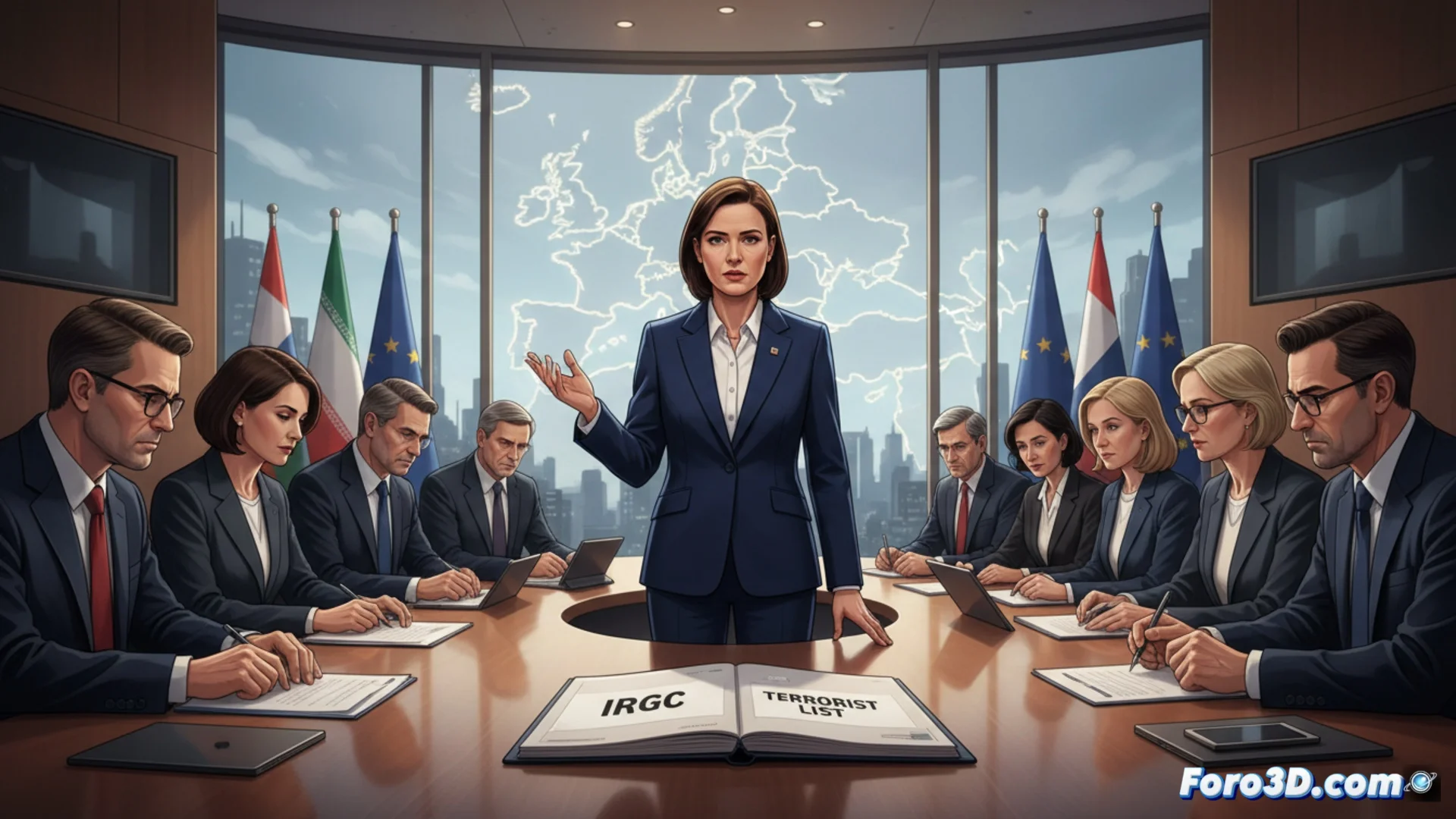
The European Union plans to label the Iranian Revolutionary Guard as terrorist
The community bloc is preparing for an unprecedented step: including the Islamic Revolutionary Guard Corps of Iran in its register of terrorist entities. The High Representative for Foreign Affairs, Kaja Kallas, confirmed this initiative ahead of a key meeting of ministers in Brussels. This action is part of a new set of restrictive measures that the EU is promoting due to Tehran's internal repression and regional activities. 🏛️
A step that requires unanimous consensus
For this designation to be activated, it is essential that the 27 member countries of the European Union approve it. If they reach agreement, it would place this Iranian military institution on the same level as groups like Al‑Qaeda or the Islamic State in European records. The central objective is to increase pressure on the Iranian regime.
Immediate consequences of the designation:- Apply severe financial restrictions and limit the mobility of its members.
- Send a powerful symbolic message condemning Tehran's actions.
- Deter the Iranian government from continuing policies that Brussels considers destabilizing.
Countries like Spain, France, and Germany strongly support this initiative, reflecting a tougher European stance.
The contundent response from Tehran
Iranian authorities have already warned that including the Revolutionary Guard on that list will severely harm ties with Europe. This corps is not just a military force; it is an institution with vast economic control and decisive political influence within Iran. Therefore, the government perceives any sanction against it as a direct attack on the state itself. 🇮🇷
Impact on bilateral relations:- Adds an extra layer of complexity to already highly deteriorated ties.
- Could freeze existing channels of dialogue and cooperation.
- Generates a scenario of greater diplomatic confrontation in the region.
Final reflection on the diplomacy of lists
The European diplomatic machinery advances with determination, although doubts arise about the real effectiveness of these lists. Some analysts wonder if they become mere name files that generate headlines but little tangible change. Meanwhile, in some office in Brussels, an official updates a database with a new and significant field: terrorist. This decision, beyond the technical, marks a point of no return in the already tense relationship between two key geopolitical actors. ⚖️