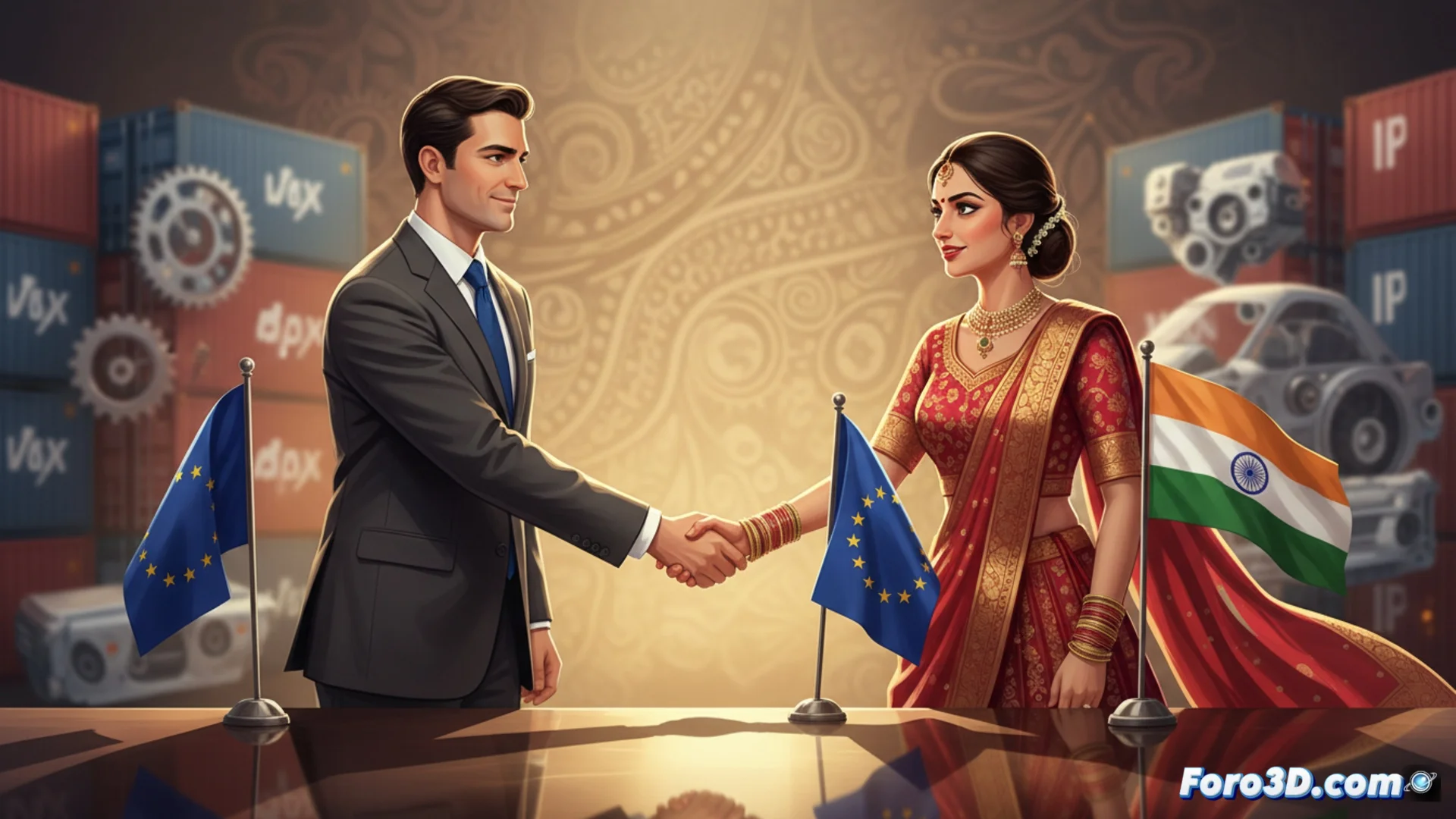
The European Union and India Sign a Historic Trade Pact After Twenty Years of Negotiations
After a process that spanned nearly two decades, the European Union and India have managed to close a far-reaching free trade agreement. This treaty aims to transform the economic relationship between both blocs by reducing or eliminating customs duties on a wide range of products. 🤝
A Pact That Goes Beyond Tariffs
The agreement not only focuses on eliminating barriers for goods such as automobiles, textiles, and industrial products. It also creates an environment that is more integrated and predictable for companies to exchange services and make investments. The EU has stated that the pact respects sensitive areas for India, such as the agricultural sector, while covering a substantial volume of exports and imports from both sides.
Key Elements of the Agreement:- Market Access: Facilitates the entry of European products such as cars into India through specific quotas and protects sensitive Indian goods such as milk and cereals.
- Economic Security: Provides long-term certainty for value-added industries, including textiles and footwear.
- Regulatory Adaptation: Details are still being defined regarding worker mobility and how companies must adjust to mechanisms such as the EU's carbon border adjustment mechanism.
"This pact generates long-term economic certainty and supports key sectors," Maros Sefcovic, EU Trade Commissioner.
Economic Consequences and Path Forward
This treaty marks a turning point in the trade ties between two of the world's largest economies. It is expected to boost growth, create jobs, and open new opportunities for businesses on both sides.
Next Stages for Implementing the Agreement:- Technical Negotiations: The teams will continue working to refine the final details of the treaty text.
- Ratification Process: The agreement must be formally approved by the European Parliament and India's legislature, a process that may require additional time.
- Implementation: Once ratified, the progressive application of its provisions will begin.
A New Chapter in Bilateral Relations
Finally, after twenty years of talks, Europe and India have concluded that liberalizing trade was a strategic decision. This pact not only strengthens economic ties but also establishes a robust framework for cooperation in the years ahead, demonstrating that perseverance in trade diplomacy can yield significant results. 🌍