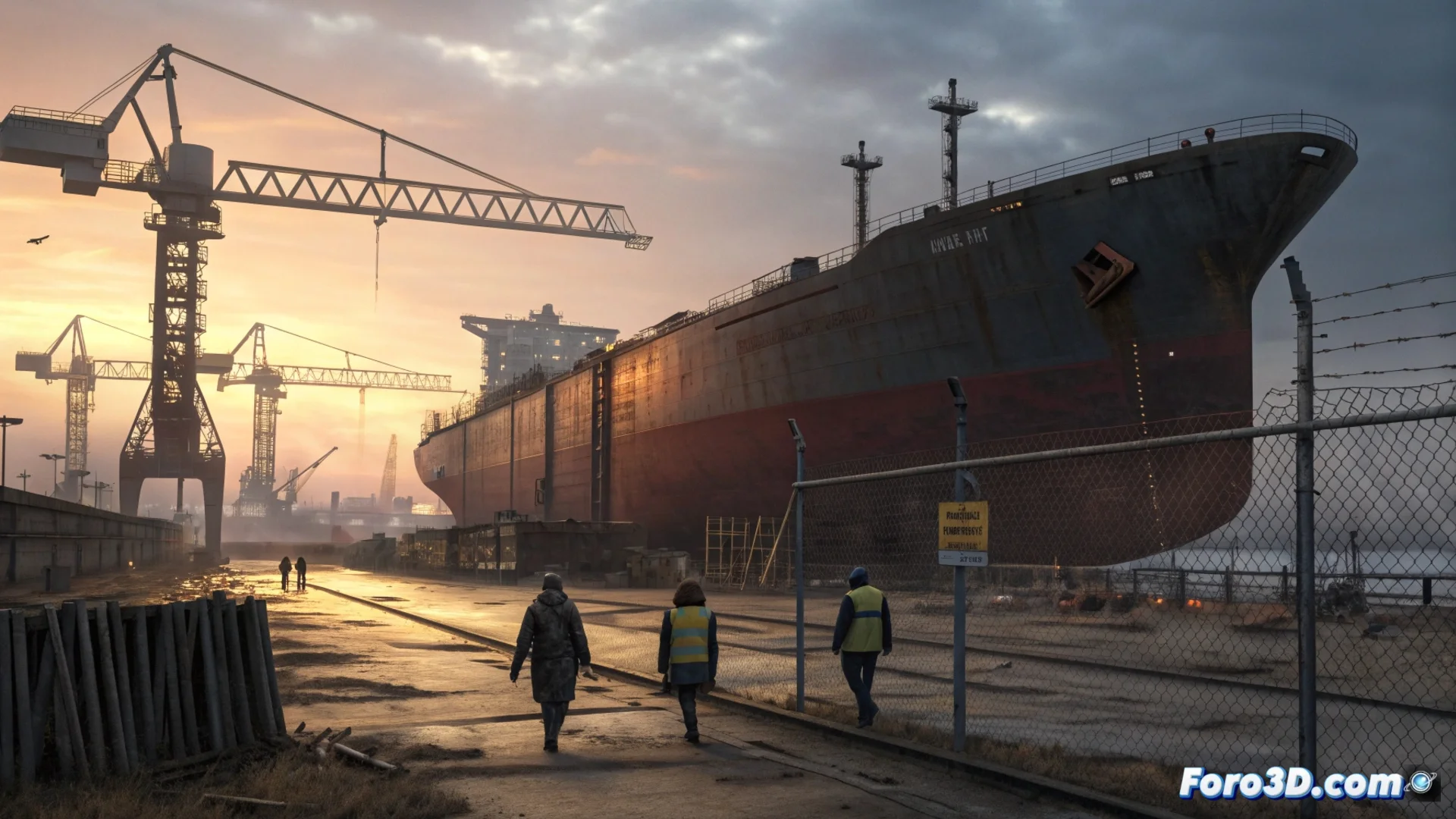
The European state aid policy and its impact on shipbuilding
The regulatory framework of the European Union on state aids defines how governments can finance their shipyards. Its main objective is to prevent competition from being distorted within the single market. For a sector that needs to invest large sums and competes globally, these rules have direct and significant consequences. 🏗️
A regulatory brake for the community naval industry
Community rules restrict the type of public support that a member state can give to its shipbuilders. This makes it difficult for European shipyards to obtain the necessary support to modernize their facilities or secure major orders. The result is a structural competitive disadvantage compared to other international players that operate with broader state support.
Immediate consequences of the regulation:- Shipyards have more problems obtaining crucial public financing.
- Capacity to compete for large international contracts is reduced.
- Specialization in high-value niches becomes a necessity, not an option.
The strict application of competition rules coincides with a period of deep restructuring in the European naval sector.
The industrial and social cost of the restrictions
The rigidity in applying these policies has accelerated an adjustment process in the industry. Shipyards with a long history in several EU countries have had to close or completely change their activity. According to estimates from the sector itself, around forty thousand jobs have been destroyed in recent years. At the same time, the volume of business generated by shipbuilding has fallen between three and five billion euros each year.
Measurable effects on the economy:- Massive loss of skilled jobs in industrial regions.
- Substantial decrease in annual industrial value added.
- Economic void that other industries fail to fill.
The pressure of unfair global competition
European shipyards do not compete on equal terms. Rivals from South Korea and China operate with strong government support and lower production costs. The EU lacks a truly powerful trade defense mechanism to counter this, and limitations on internal aids worsen the situation. This external pressure forces the closure of facilities that fail to specialize in areas such as cruise ships, research vessels, or military ships. ⚓
While some nations explore formulas within the law to support their shipyards, others simply watch as they decline. This process is often presented as a strategic reconversion, but in practice it translates into fewer ships built and more port infrastructure left unused. The future of the sector in Europe depends on finding a balance between competition rules and the need to maintain a sovereign industrial base.