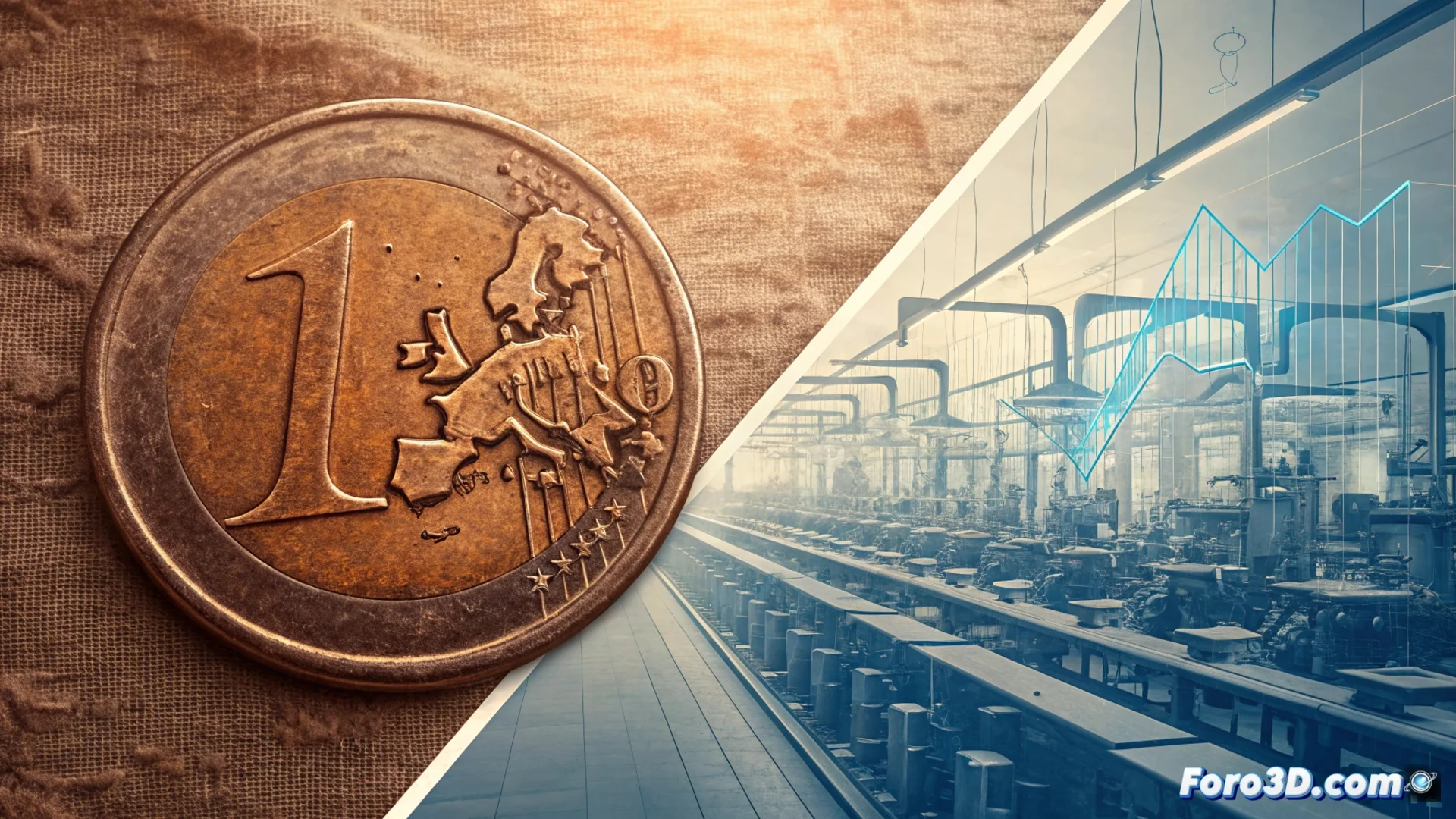
The Euro and Its Impact on Italian Industrial Competitiveness
The transition from the lira to the euro as the single currency represented a profound structural change for the Italian economy. By abandoning its national currency, the country gave up a fundamental economic policy instrument: the power to devalue to adjust its competitiveness in global markets. Now it operates with a currency whose value responds to the joint performance of the eurozone, not just its own. 💶
The Lost Tool: No Longer Able to Devalue
Without the option to modify the exchange rate, Italian companies, especially manufacturing SMEs, face constant pressure on their costs. They compete with nations that have lower structures but use the same strong currency, which reduces their margins and can slow investment. The solution now lies in increasing efficiency or cutting internal expenses, processes that are slower and socially more complex than a simple monetary adjustment.
Direct Consequences for Industry:- Pressure on labor costs without being able to compensate with a weaker currency.
- Need to optimize productivity to maintain export prices.
- Risk of discouraging investment in a key industrial sector.
The weak lira used to mask productivity problems that the common currency now forces to be addressed head-on.
The Economic Gap Within the Monetary Union
The Italian economy grows at a slower pace and manages a higher public debt than key partners like Germany. This divergence is accentuated in the monetary union. While Germany benefits from a relatively weak euro for its powerful export sector, Italy suffers from the strength of the same currency. The single policy of the European Central Bank seeks a balance for the entire bloc, which does not always align with Italy's specific needs.
Factors Widening the Gap:- Structurally slower growth in Italy.
- Significantly higher public debt level.
- A common monetary policy that cannot address the particularities of each economy.
A Future That Demands Internal Adjustments
The path for Italy involves directly confronting its inefficiencies. The adoption of the euro eliminated a quick buffer, forcing the country to undertake structural reforms to improve its competitiveness from within. This process, although complex, presents itself as the only viable remedy within the framework of the single currency, where exchange rate adjustments are no longer an option. 🔧