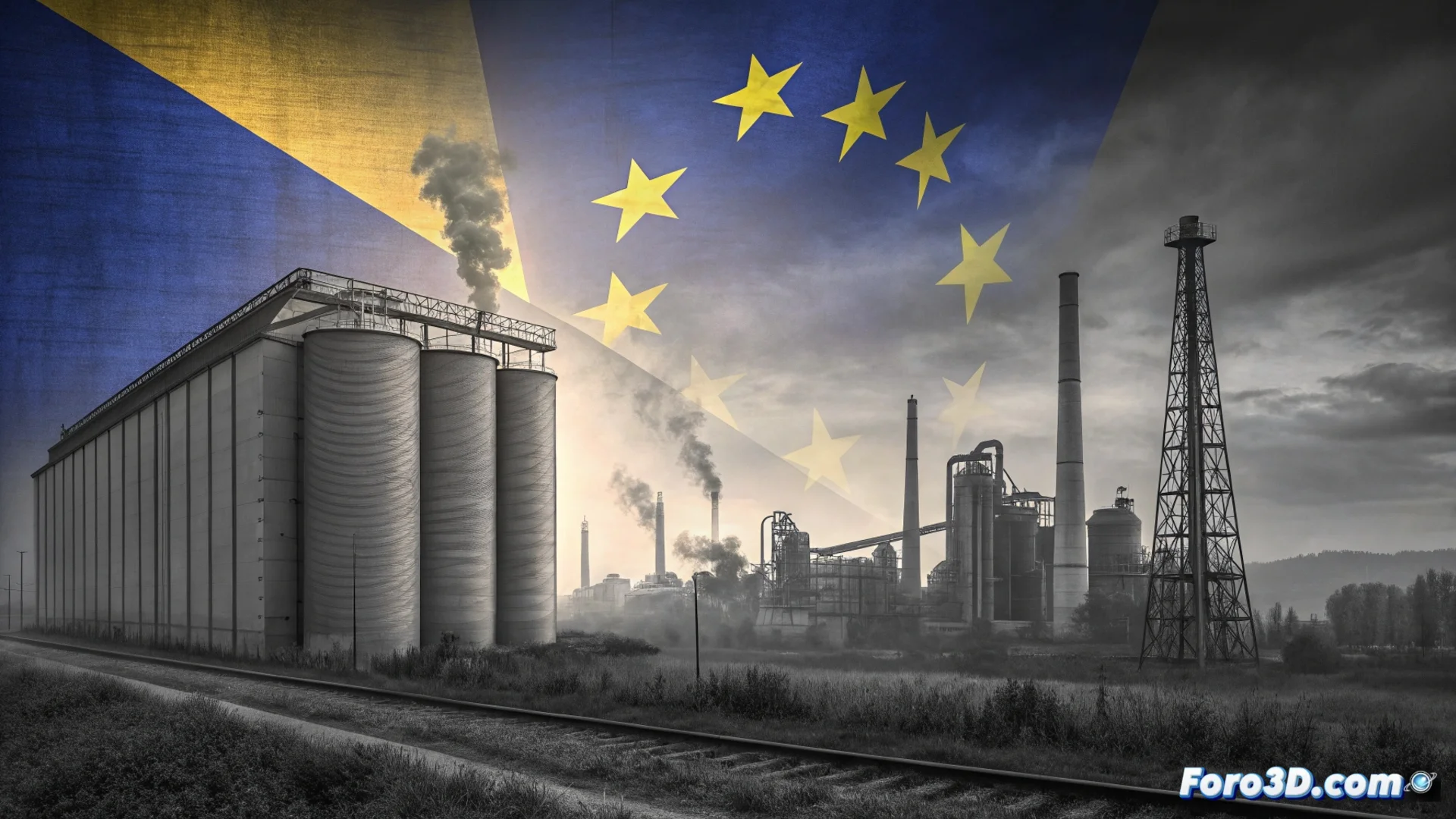
The EU Implements CBAM and Affects Construction Costs in Spain
The European Union has begun to apply CBAM (Carbon Border Adjustment Mechanism), a regulation that some call a climate tariff. This system already taxes key imports such as steel, cement, and electricity. Its main goal is to make goods entering the European market pay for the carbon emitted during their production, thus leveling the playing field with local industry that already complies with community environmental rules. This directly increases costs for sectors like construction in countries dependent on importing these materials, such as Spain 🏗️.
How does the carbon border tax work?
The mechanism initially targets products with high carbon intensity and a risk that companies will relocate production to countries with laxer environmental standards, a phenomenon known as carbon leakage. Now, importers must declare the embedded emissions in their goods and acquire equivalent digital certificates. If the foreign producer has already paid a carbon price in their country, that payment can be deducted. This process aims to protect European industry from unfair competition while the EU advances in reducing its own emissions.
Key pillars of CBAM:- Declare emissions: Importers must calculate and report the carbon footprint of the products they introduce into the EU.
- Purchase certificates: Digital permits are acquired whose price is linked to the carbon cost in the European market (ETS).
- Deduct prior payments: If the foreign manufacturer has already paid a similar tax at its origin, that cost is subtracted to avoid double taxation.
Now, building a house not only requires bricks and effort, but also a certificate saying how much the atmosphere has coughed to manufacture them.
Direct impact on the Spanish economy and construction
For Spain, a major importer of steel and cement, CBAM means a direct price increase in these essential raw materials. This increase inevitably transfers to the final costs of building homes and developing infrastructure. Spanish companies are forced to review their supply chains and learn to accurately calculate the carbon footprint of the materials they use. In the long term, this mechanism is expected to push global suppliers to decarbonize their manufacturing processes, but in the short term, it represents a considerable economic challenge for sectors already under pressure.
Immediate consequences for Spain:- Cost increase of raw materials: Rise in prices of imported steel and cement, the basis of construction.
- Supply chain adaptation: Companies must seek suppliers with a lower carbon footprint or optimize their purchases.
- New administrative burden: Need to develop systems to measure, report, and verify product emissions.
A greener future with high initial costs
CBAM marks a turning point in global climate policy, internalizing the cost of emissions in international trade. While protecting European industry, it also pressures trading partners to adopt cleaner technologies. For Spain, the challenge is to manage this transition without excessively harming the competitiveness of its basic sectors. The path to a decarbonized economy now involves paying a real price for carbon, from the factory to the construction site 🏭➡️🏠.