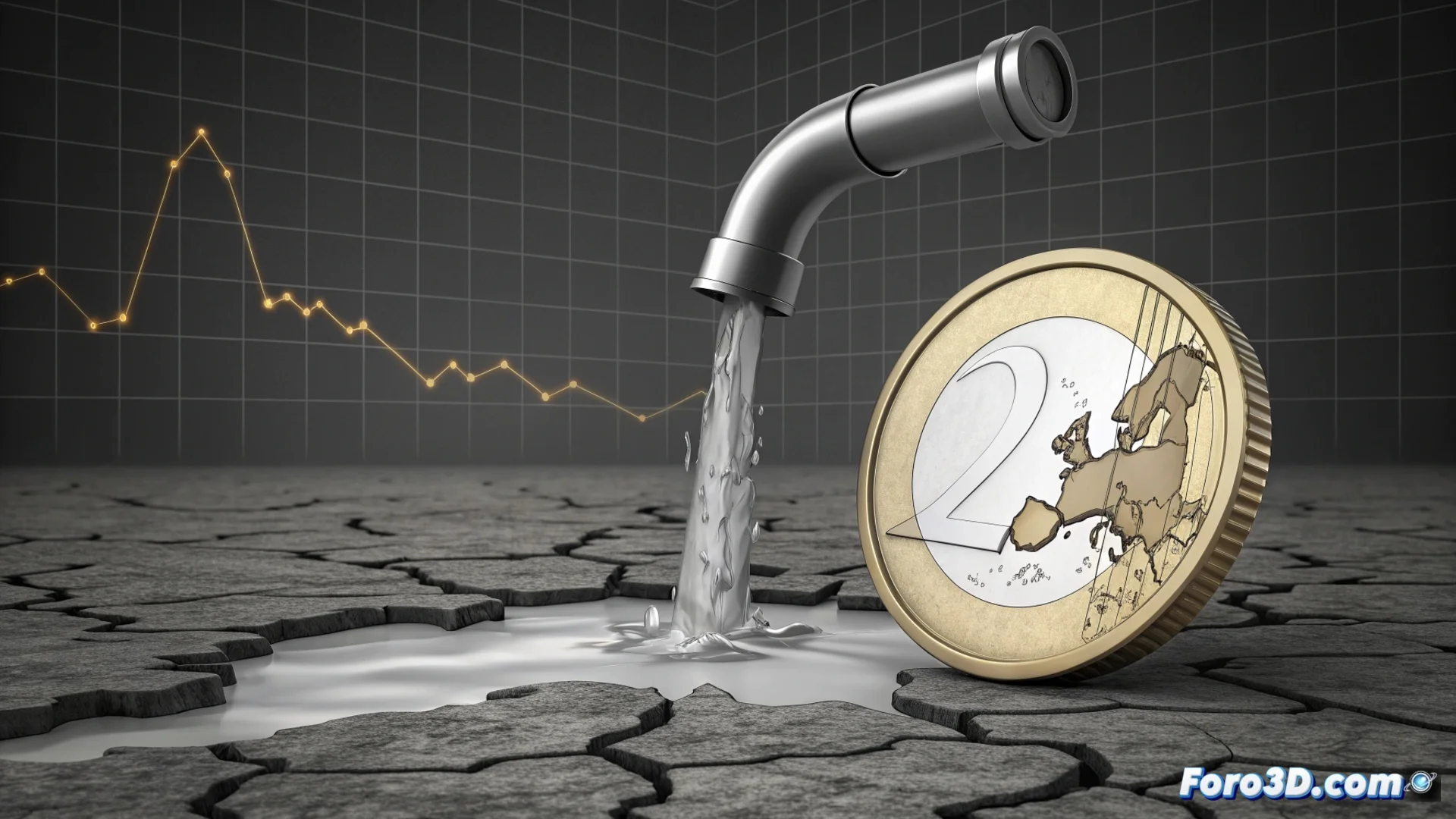
The EU Economy in 2026: Persistent Inflation and Dependence on Funds
The economic scenario for several European Union member states in 2026 is characterized by constant pressure. Although levels have decreased from historical highs, inflation remains above the European Central Bank's 2% target. This reality directly affects citizens, who see their money buy less, and businesses, which face higher production costs. 🏛️
A Double Challenge: High Prices and Unbalanced Public Accounts
Parallelly, governments continue with a high level of spending that their revenues fail to cover. This imbalance generates a fiscal deficit that repeats year after year, which crucially limits these nations' capacity to invest in infrastructure, education, or innovation, key elements for their future. The financing to plug this hole has a clear origin.
The Pillars of the Current Problem:- Inflation erodes the real value of families' wages and savings.
- National budgets show a chronic failure between what is spent and what is received.
- This situation weakens public investment in the long term, necessary to transform economies.
"When European funds programs end, a structural void could be revealed if deep reforms are not adopted now." - Economists' analysis.
Brussels' Financial Crutch and Its Risks
The main avenue to balance accounts and execute projects comes from the EU's recovery and cohesion funds. States thus consolidate a growing dependence on these transfers. However, this external capital does not by itself build a self-sufficient economic base. Analysts highlight the risk: when this flow ends, the lack of competitiveness and reforms could expose serious weaknesses.
Consequences of Depending on External Aid:- Necessary reforms in administration and labor markets are postponed.
- Insufficient private investment that generates stable employment is not attracted.
- A false sense of solvency is created that masks underlying problems.
The Complex Path to Economic Autonomy
The European Commission urges countries to use the funds to transform, not just to sustain daily spending. This implies modernizing the administration, digitizing services, and reducing bureaucracy to create an environment that attracts businesses. The main challenge is to generate endogenous growth that allows reducing debt and this dependence. The process requires political consensus to implement changes that, although they may be unpopular in the short term, are essential to ensure stability. Some governments, however, operate with the hope that Brussels will always provide more resources, a strategy as effective as trying to fill a bucket with holes. 💧