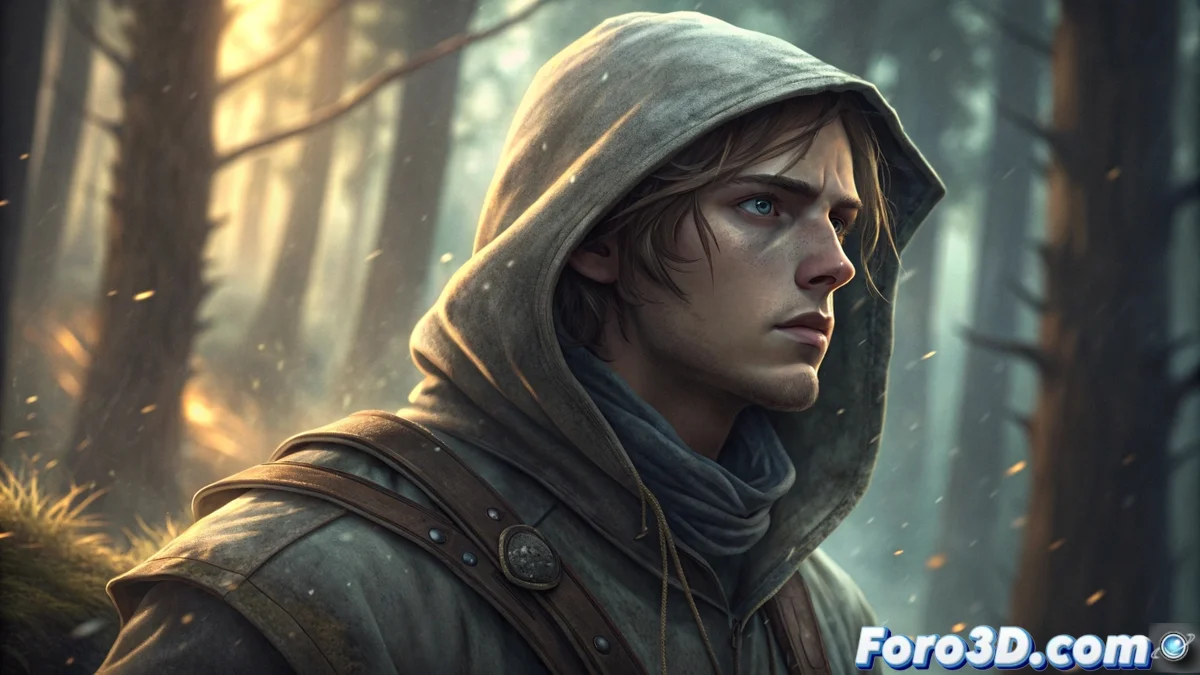
The Error of Aggressive Blur in Digital Portraits
A common mistake when editing portraits is using a background blur that is too intense and with an abrupt cut around the figure. This technique, popularized by the first portrait modes on mobile phones, produces a result that the brain perceives as fake and poorly integrated. Instead of suggesting depth, the image looks like a flat composition of two layers. 🎭
Why the Eye Rejects This Artificial Effect
Natural depth of field does not feature abrupt changes between sharp and blurry areas. Our vision interprets the transition as a smooth gradient, where the blur increases progressively with distance. By imposing a hard blur edge, this visual expectation is broken. The brain immediately deduces that there is a cut-out figure overlaid on a diffuse background, destroying any illusion of a coherent and unified three-dimensional space.
Key problems generated by this method:- Cut-out effect: The subject looks pasted on, not part of the scene.
- Visual flattening: The sense of volume and distance is lost.
- Evident artificiality: The final result resembles basic editing work or a generic filter.
A character with an unreal sharpness halo, floating over a background turned into a shapeless smudge, is the hallmark of poorly applied blur.
Techniques to Achieve Credible Depth of Field
The goal is to simulate how a real photographic lens handles focus. The key is to avoid uniformity and work with gradual transitions. The entire background should not be blurred with the same intensity.
Steps to integrate the subject with their environment:- Apply blur with gradation: Use layer masks with smooth transitions (feathering or gradients) so that the effect increases in intensity the farther an element is from the focal plane.
- Blur selectively: Vary the strength of the effect in different areas of the background according to their perceived distance, adding realism.
- Integrate the subject's edges: Apply light blur effects to parts of the character itself that would naturally be out of the main focus, such as loose hair strands, moving clothing, or limbs receding into space. This blends the figure with the scene's atmosphere.
Conclusion: Prioritize Naturalness
To avoid your digital portraits looking like a collage of two layers, abandon aggressive and hard-edged blur. Adopting an approach based on progressive gradation and selectivity is essential. By imitating natural optical behavior, you will make the character inhabit a believable space, gaining depth and superior visual quality. ✅